

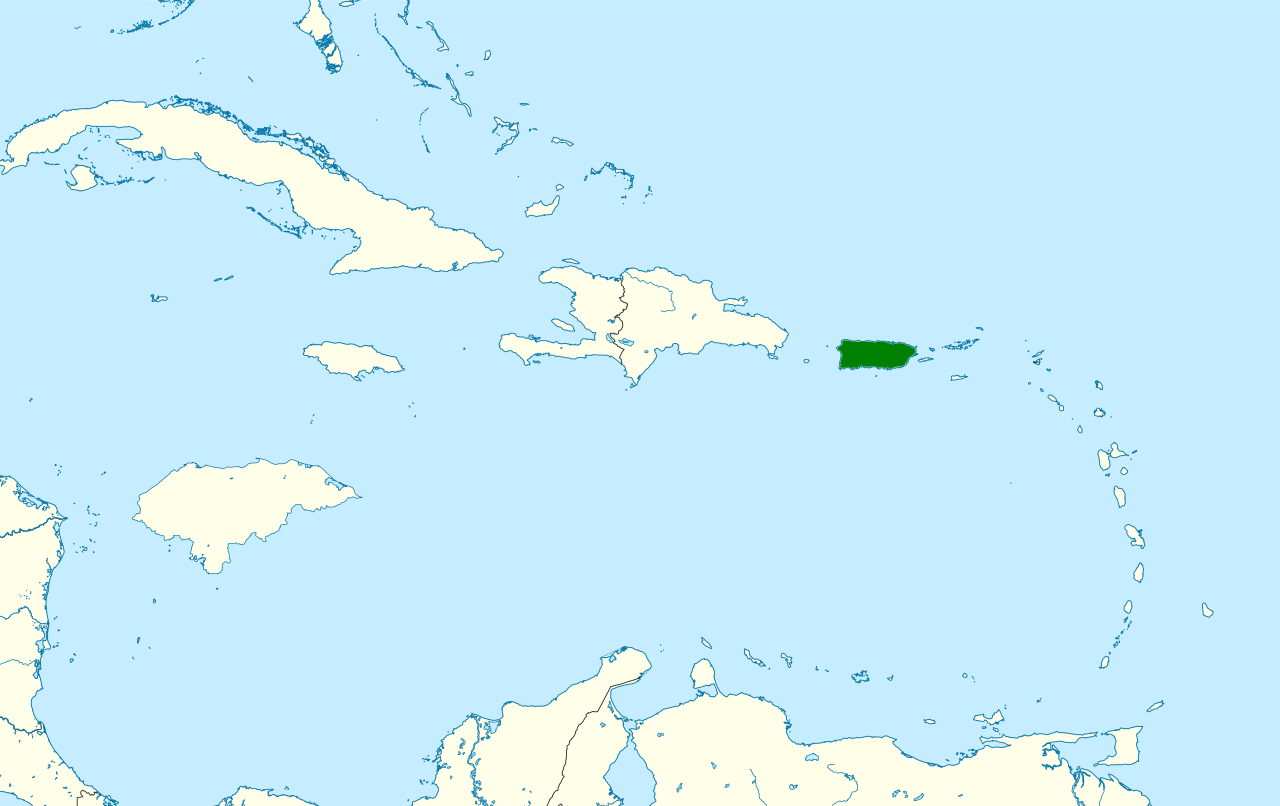
The Puerto Rican euphonia is a bird species in the finch family, Fringillidae that is endemic to the island of Puerto Rico in the Caribbean. It was formerly considered as a subspecies of the Hispaniolan euphonia.
Region
Caribbean
Typical Environment
Endemic to Puerto Rico, where it occupies lowland to foothill forests, wooded edges, and second-growth thickets. It is most often encountered in areas with abundant fruiting shrubs and trees, including mistletoes. The species also uses coffee plantations and rural gardens when suitable canopy and fruit resources are present. It generally forages in the mid to upper canopy but will descend to lower strata where fruits are available.
Altitude Range
Sea level to 1000 m
Climate Zone
Tropical
Ease of Keeping
Beginner friendly: 1/5
The Puerto Rican euphonia is a small, brightly colored finch-like songbird restricted to Puerto Rico. It was formerly treated as a subspecies of the Hispaniolan euphonia but is now often recognized as a distinct species based on vocal and plumage differences. It favors fruiting trees and mistletoes and is sometimes affected by trapping for the cage-bird trade. Protection of mature and secondary forests with abundant fruit resources is important for its persistence.
Temperament
social and active
Flight Pattern
short rapid wingbeats
Social Behavior
Usually seen in pairs or small family groups, sometimes joining mixed-species flocks when feeding. The nest is a small globular structure with a side entrance, placed in dense foliage. Breeding pairs are attentive and vocal around the nest, with both sexes participating in care.
Migratory Pattern
Resident
Song Description
A series of clear, sweet, musical notes and trills delivered in short phrases. Calls are thin, high-pitched chips used to keep contact while foraging.
Plumage
Male with glossy dark bluish-black upperparts and bright yellow underparts; forehead often with a small golden crown patch. Female is olive-green above with dull yellow underparts and a cleaner, plainer face. Both sexes show short, neat plumage with a smooth, compact appearance.
Diet
Primarily small fruits and berries, especially mistletoe and other soft fruiting species, which are often swallowed whole. Supplementary diet includes seeds and occasional small insects or arthropods, especially during breeding. By moving between fruiting trees, it helps disperse seeds across the forest.
Preferred Environment
Forages in the mid to upper canopy of forests, forest edges, and second-growth. Also uses shaded coffee farms and gardens with fruiting trees. Often follows a circuit of known fruiting plants.


