

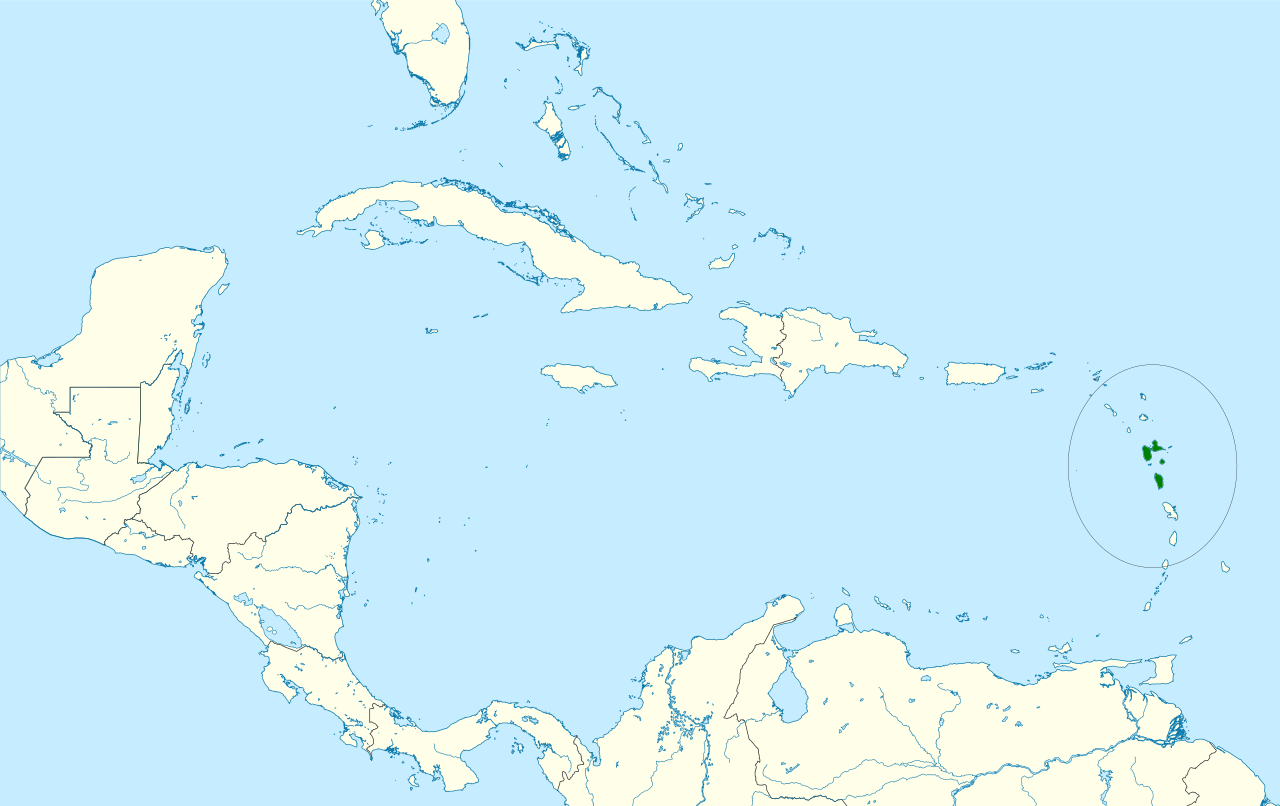
The plumbeous warbler is a species of passerine bird belonging to the family Parulidae, the New World warblers. This species is found only in Dominica and Guadeloupe in the Lesser Antilles. Its natural habitats are subtropical or tropical dry forest and subtropical or tropical moist lowland forest.
Region
Lesser Antilles
Typical Environment
Occurs on Dominica and Guadeloupe in subtropical to tropical forests, including moist lowland and foothill forests as well as drier semi-evergreen woodland. It favors dense understory, vine tangles, and forest edges, and is frequently found along stream valleys and ravines. The species readily uses secondary growth and forest edges, especially where native vegetation persists. It forages from near ground level to the mid-canopy, gleaning insects from leaves and twigs.
Altitude Range
Sea level to 1200 m
Climate Zone
Tropical
Ease of Keeping
Beginner friendly: 1/5
The plumbeous warbler is a small New World warbler restricted to the islands of Dominica and Guadeloupe, where it forages actively through dense foliage. Its name refers to its lead-gray plumage, which helps it blend into shaded forest understory. It often joins mixed-species flocks and can be surprisingly confiding along forest trails. While currently not at risk, it is vulnerable to severe storms and habitat degradation on small islands.

Temperament
active and inquisitive
Flight Pattern
short rapid wingbeats with quick flits between perches
Social Behavior
Typically seen singly or in pairs during the breeding season, maintaining small territories. Outside of breeding, it often joins mixed-species flocks that move through the understory and midstory. Nests are cup-shaped and placed low to mid-level in dense vegetation.
Migratory Pattern
Resident
Song Description
Song is a rapid series of thin, buzzy notes and trills delivered from concealed perches. Calls include sharp chips and soft tsit notes used to keep contact within pairs or flocks.
Plumage
Uniform slate-gray to plumbeous overall with slightly paler throat and underparts; subtle, narrow wing bars may be present. Feathers appear smooth and sleek, often giving a matte gray impression in shade. Tail is often flicked and slightly rounded.
Diet
Primarily consumes small insects, spiders, and other arthropods gleaned from leaves, twigs, and vine tangles. It inspects leaf undersides and probes into clusters of dead leaves. Occasionally takes small berries or other soft plant matter, especially when insects are scarce.
Preferred Environment
Feeds in dense understory and low to mid-canopy layers of moist and semi-evergreen forests. Frequently forages along forest edges, stream corridors, and secondary growth where insect prey is abundant.


