

The pintado petrel, also called the Cape petrel, or Cape fulmar, is a common seabird of the Southern Ocean from the family Procellariidae. It is the only member of the genus Daption, and is allied to the fulmarine petrels and the giant petrels. It is an abundant seabird, with an estimated population of around 2 million.
Region
Southern Ocean
Typical Environment
Breeds on cliffs and rocky slopes of Antarctic and subantarctic islands, including around the Antarctic Peninsula, South Georgia, the Crozet and Kerguelen archipelagos, Heard and McDonald Islands, and New Zealand’s subantarctic islands. Outside the breeding season it disperses widely across the Southern Ocean, often north to the Subantarctic Front. Frequently forages along pack-ice edges and in upwelling zones. Typically remains far offshore, approaching land mainly to breed.
Altitude Range
Sea level to 600 m
Climate Zone
Polar
Ease of Keeping
Beginner friendly: 1/5
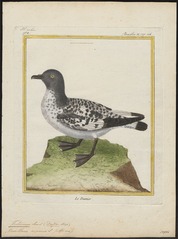
Also known as the Cape petrel or Cape fulmar, this striking seabird is the sole member of the genus Daption. Its name 'pintado' comes from Spanish for 'painted', referring to the bold black-and-white checkered plumage. Like other tubenoses, it produces energy-rich stomach oil and can eject it as a defense. It often follows ships and forages in noisy, competitive flocks.


Temperament
social and active
Flight Pattern
soaring glider with strong, stiff wingbeats
Social Behavior
Breeds colonially on rocky ledges and scree slopes, often in dense, noisy groups. Forms long-term monogamous pairs; both sexes incubate and feed the chick. Nests are simple scrapes or shallow bowls among rocks, usually close to the sea.
Migratory Pattern
Seasonal migrant
Song Description
Generally quiet at sea, but very vocal at colonies with sharp, chattering and cackling calls. Displays include bill clapping and harsh squawks during territorial disputes.
Plumage
Boldly patterned with checkered black-and-white upperparts, mostly white underparts, and a dark head and neck. Underwings show strong black-and-white contrasts with a dark leading edge and mottled coverts.
Diet
Feeds mainly on Antarctic krill, small fish, and squid, and readily scavenges offal from fishing vessels. Takes prey mostly from the surface by seizing and pattering, and occasionally by shallow plunges. Often gathers in large, competitive flocks at rich food patches.
Preferred Environment
Open pelagic waters of the Southern Ocean, especially near polar fronts and pack-ice edges. Frequently follows ships and forages near upwelling zones and productive shelves.


