

The pilotbird is a species of passerine bird in the family Acanthizidae. It is monotypic within the genus Pycnoptilus. The species is endemic to south-eastern Australia.
Region
Southeast Australia
Typical Environment
Occurs in coastal and montane ranges of New South Wales and eastern Victoria, favoring wet sclerophyll forests and temperate rainforests. It keeps to ferny gullies, dense understory with bracken and tree-ferns, and along creeks with deep leaf litter. Most activity is on or near the ground, often beneath eucalypts and around fallen logs. It is closely associated with habitats used by superb lyrebirds and may accompany them while foraging.
Altitude Range
0–1500 m
Climate Zone
Temperate
Ease of Keeping
Beginner friendly: 1/5
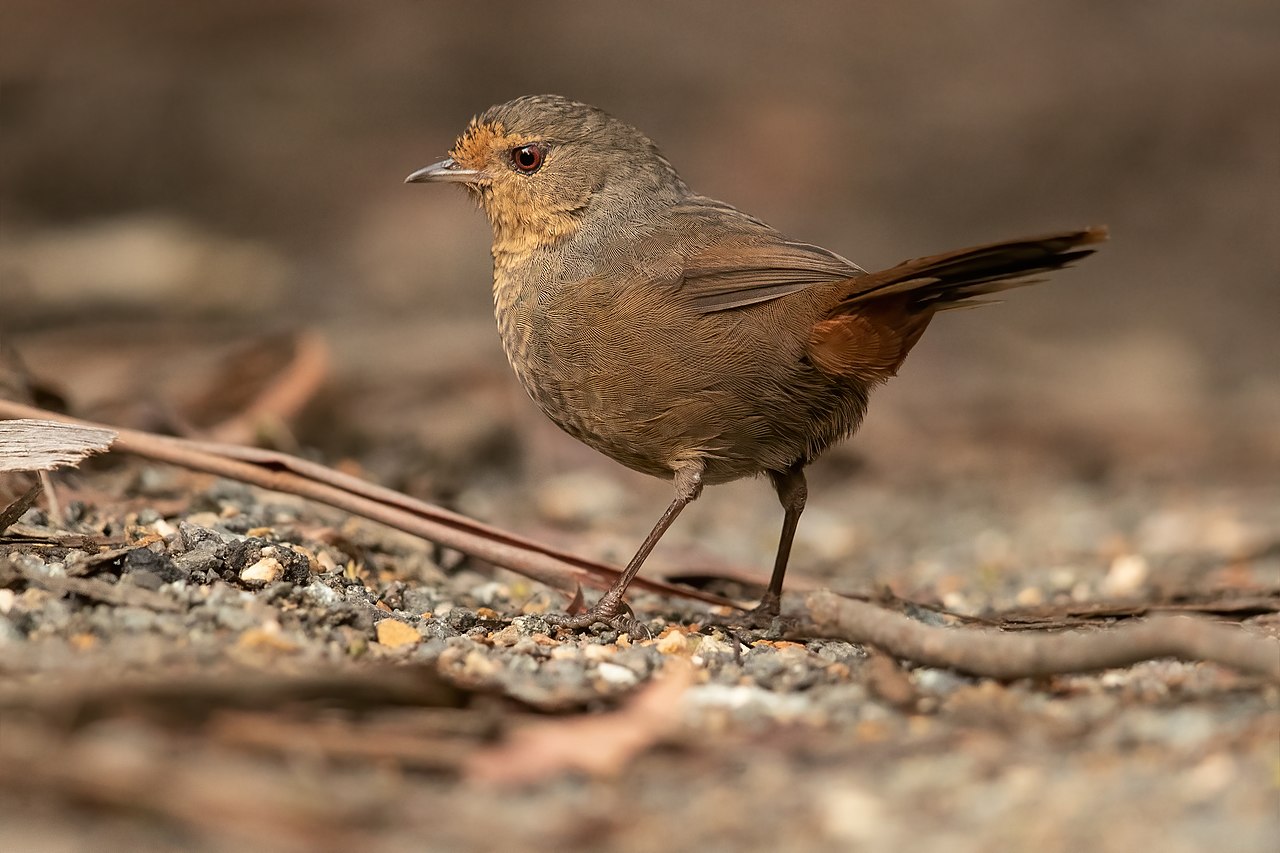
The pilotbird is a secretive, ground-loving songbird of the Acanthizidae that is monotypic in its genus. Its name comes from its habit of following superb lyrebirds, catching insects they flush from leaf litter. It keeps to dense understory in wet forests and is more often heard than seen. Pairs maintain territories year-round and give loud, ringing duets.

Temperament
secretive and territorial
Flight Pattern
short rapid wingbeats; low, direct dashes between cover
Social Behavior
Usually found singly or in pairs that hold territories year-round. Nests are placed low in dense vegetation, often domed or well-concealed, with clutches of 2–3 eggs in spring to summer. Foraging is mostly on foot, flicking leaf litter and probing among ferns and logs.
Migratory Pattern
Resident
Song Description
Song is a loud, clear, ringing whistle given in repeated phrases, often from hidden perches. Pairs may duet antiphonally, and contact calls are sharp chips from the undergrowth.
Plumage
Warm brown upperparts with a long rounded tail; underparts rufous with fine dark scalloping and streaking. Face shows a subtle pale eyebrow and greyer ear-coverts. Feathers are soft and slightly shaggy-looking, aiding camouflage in shadowed understory.
Diet
Primarily eats ground-dwelling invertebrates, including beetles, ants, spiders, caterpillars, and other larvae taken from leaf litter and low shrubs. It will opportunistically snap up small arthropods flushed by larger birds such as lyrebirds. Occasional small seeds or berries may be taken but are not a major component.
Preferred Environment
Forages on the forest floor and in the lowest understory, especially in moist gullies with thick fern cover and deep leaf litter. Frequently works along the edges of logs, root tangles, and dense shrubs where prey accumulates.


