

The pied avocet is a species of wader in the Recurvirostridae family, the only member of the genus Recurvirostra found in Europe.
Region
Europe and Western Asia
Typical Environment
Breeds across coastal and inland saline wetlands in temperate Europe and extends through western and central Asia. Prefers shallow brackish lagoons, tidal flats, saltpans, and saline lakes with sparse vegetation and exposed shorelines. In winter it moves to milder coasts of southern Europe, North and East Africa, the Middle East, and South Asia. Nests on bare islands, saltmarsh edges, and scraped ground near water where chicks can quickly reach feeding areas.
Altitude Range
Sea level to 800 m
Climate Zone
Temperate
Ease of Keeping
Beginner friendly: 1/5
This striking wader is the only Recurvirostra species occurring naturally in Europe, easily recognized by its upcurved bill and bold black-and-white pattern. It feeds by sweeping its slender bill side to side through shallow water to capture tiny invertebrates. In the United Kingdom it became a conservation emblem after successful protection and habitat restoration enabled a dramatic comeback in the mid-20th century.


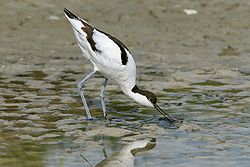
Feeding on small invertebrates with its curved bill.

Egg from the Toulouse Museum collection.

Typical Mediterranean habitat, here at the Frontignan Salt Flats in Hérault.

Illustration in Florence, Italy, by Saverio Manetti in the 1770s.

Pollution (oil spill) from the Erika on French coasts during the winter of 1999–2000.

Metal and Darvic rings used for banding an avocet chick at Salins-d'Hyères (Var).


Temperament
social and active
Flight Pattern
strong flier with shallow, elastic wingbeats; graceful glides over water
Social Behavior
Typically nests in loose colonies on open ground, often on islands or raised banks. Pairs are seasonal monogamists and defend the immediate nest area while joining group mobbing against predators. Chicks are precocial and feed themselves soon after hatching, guided by attentive adults.
Migratory Pattern
Seasonal migrant
Song Description
Calls are clear, fluty yelps and ‘kluit’ notes, often given in series during flight. Display and alarm calls become more rapid and insistent near the colony. Vocal activity is frequent over feeding shallows and nesting sites.
Plumage
Clean white base with sharply contrasting black cap, mantle bars, and flight feathers; smooth, sleek contour feathers.
Diet
Takes small aquatic invertebrates including insect larvae, brine shrimp, small crustaceans, and worms. Feeds by tactilely sweeping its upcurved bill side to side in shallow water, snapping prey detected by touch. Will also pick from the surface or probe soft mud and can skim microinvertebrates from gentle ripples.
Preferred Environment
Shallow brackish lagoons, saltpans, estuarine mudflats, and the margins of saline lakes where water is calm and less than a few centimeters deep. Often selects areas with bare substrates and gentle shorelines for unobstructed sweeping.


