

The pauraque – also called the common pauraque to distinguish it from similar species – is a nightjar species, one of two birds in the genus Nyctidromus. It breeds in the subtropical and tropical regions of the New World, and except for northernmost birds it is largely resident all year round.
Region
Neotropics
Typical Environment
Found from southern Texas through Mexico and Central America into much of South America, reaching northern Argentina and Uruguay. It favors forest edges, second growth, scrubby pastures with scattered trees, riparian thickets, and semi-open woodlands. It tolerates human-modified landscapes and is frequently encountered near roads, clearings, and plantations. By day it roosts on the ground or low perches, relying on camouflage among dry leaves.
Altitude Range
Sea level to 1800 m
Climate Zone
Tropical
Ease of Keeping
Beginner friendly: 1/5
The pauraque is a nocturnal nightjar whose mottled plumage makes it nearly invisible on leaf litter by day. It often hunts along roads and forest edges at dusk, sallying out to snatch flying insects. Males show bold white patches in the tail during display flights. Its eyeshine is conspicuous in headlights, which is often how people first notice it.


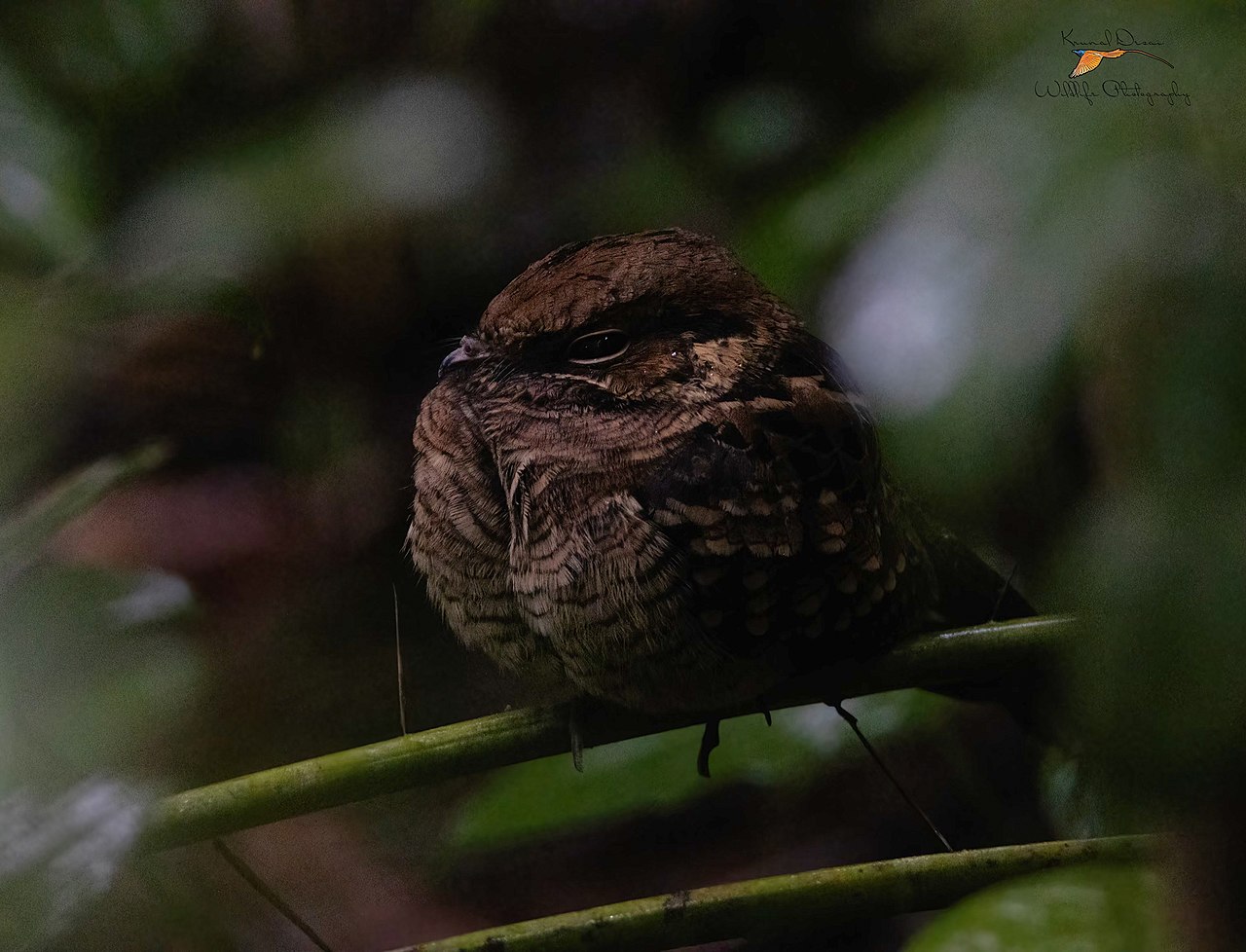
Common pauraque roosting in Manuel Antonio National Park.

Nyctidromus albicollis Louis Agassiz Fuertes, 1926

The two pinkish eggs of the pauraque are laid directly on the ground or leaf litter.
Temperament
solitary and territorial
Flight Pattern
buoyant, mothlike flight with short glides and quick turns
Social Behavior
Typically roosts alone or in pairs on the ground or on low logs. Nests directly on leaf litter without a built structure, usually laying two eggs; both parents share incubation and chick care. Displays include tail-fanning and short aerial sallies by the male.
Migratory Pattern
Partial migrant
Song Description
A clear, whistled call that rises and then falls, given repeatedly at dusk and through the night. Also emits soft churring notes and claps the wings during display.
Plumage
Heavily mottled and barred brown, gray, black, and rufous with intricate patterning that blends with leaf litter.
Diet
Feeds almost entirely on flying insects, including moths, beetles, winged ants, and termites. Captures prey on the wing with a wide gape and bristled mouth. Will forage around artificial lights where insects congregate, and occasionally takes prey from the ground.
Preferred Environment
Hunts along forest edges, roadsides, clearings, and over open understory gaps. Often forages from low perches or the ground, making short sallies into open airspace.


