
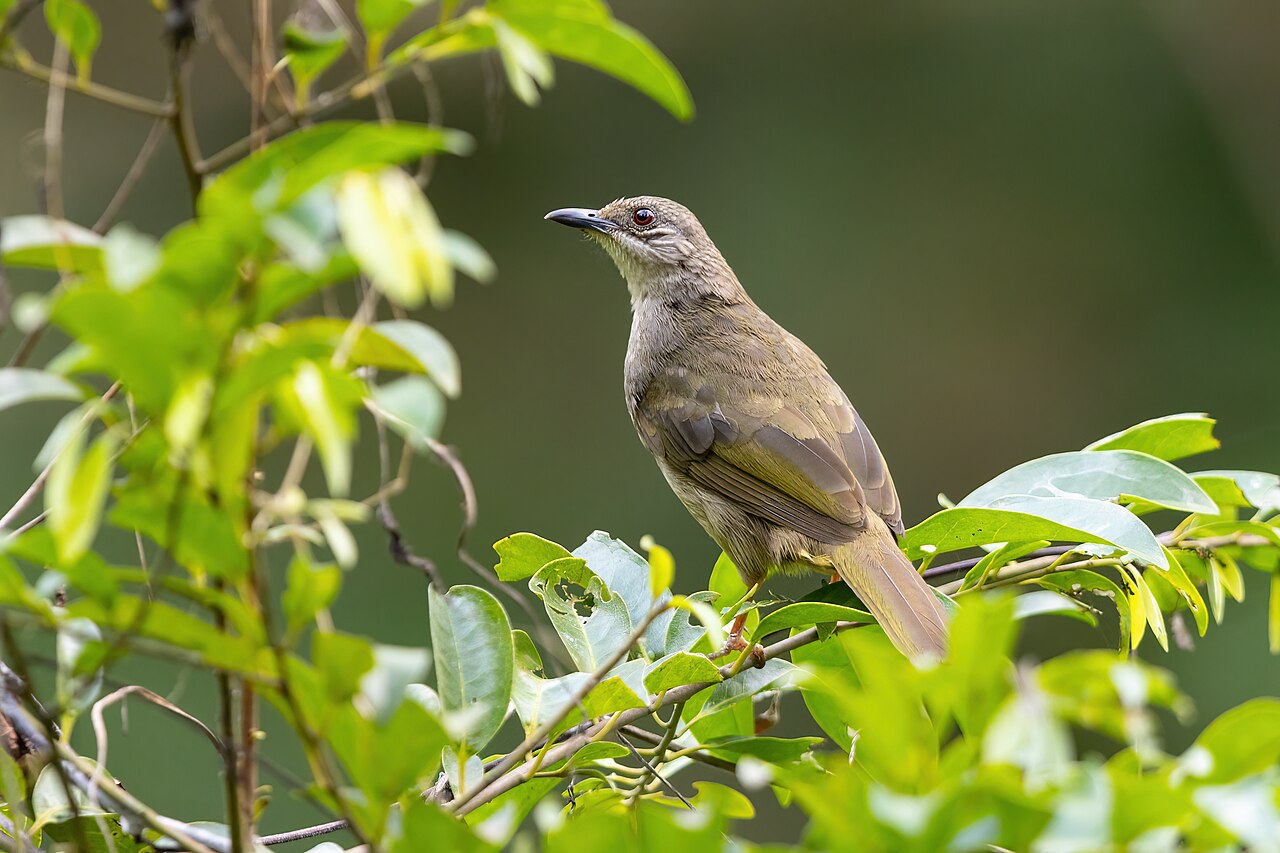
The olive-winged bulbul is a member of the bulbul family of passerine birds. It is found in south-eastern Asia and the Greater Sunda Islands. Its natural habitat is subtropical or tropical moist lowland forests.
Region
Southeast Asia
Typical Environment
Occurs from southern Myanmar and Thailand through the Malay Peninsula and Singapore, and across the Greater Sunda Islands including Sumatra, Borneo, and Java. It favors subtropical and tropical moist lowland forest but readily uses forest edge, secondary growth, mangroves, gardens, and plantations. Often found along rivers, in coastal swamp-forest, and in logged or regenerating areas. In towns it frequents parks and well-vegetated neighborhoods.
Altitude Range
Sea level to 1200 m
Climate Zone
Tropical
Ease of Keeping
Beginner friendly: 1/5
This bulbul is common in lowland forests and adapts well to secondary growth, mangroves, plantations, and urban green spaces. It plays an important role as a seed disperser while also gleaning insects, making it an effective controller of some pests. The olive-toned wings and yellowish vent help distinguish it from similar brown bulbuls. Both sexes look alike and are often seen in pairs or small groups.


Temperament
social and active
Flight Pattern
short rapid wingbeats between perches
Social Behavior
Typically seen in pairs or small parties, sometimes joining mixed-species flocks in forest edge and secondary growth. Builds a neat cup-shaped nest in shrubs or small trees, usually a few meters above ground. Both parents participate in feeding the young.
Migratory Pattern
Resident
Song Description
Song is a series of clear, fluty whistles and bubbling phrases delivered from exposed perches. Calls include sharp chips and mellow contact notes used to keep in touch while foraging.
Plumage
Olive-brown upperparts with distinctly olive-washed wings, paler underparts with a slight olive or buff wash, and yellowish undertail-coverts (vent). Feathers are smooth with a slightly fluffy crest that can be raised. Tail is medium-length and slightly notched.
Diet
Takes a wide variety of soft fruits and berries, including figs and small rainforest fruits. Supplements with insects and other small invertebrates, gleaned from foliage and occasionally caught in short sallies. Also visits fruiting shrubs and cultivated trees in gardens and plantations.
Preferred Environment
Forages from understory to mid-canopy, especially along edges, gaps, and fruiting trees. Common at forest margins, mangroves, riverine corridors, and in human-modified habitats with dense shrubbery.


