
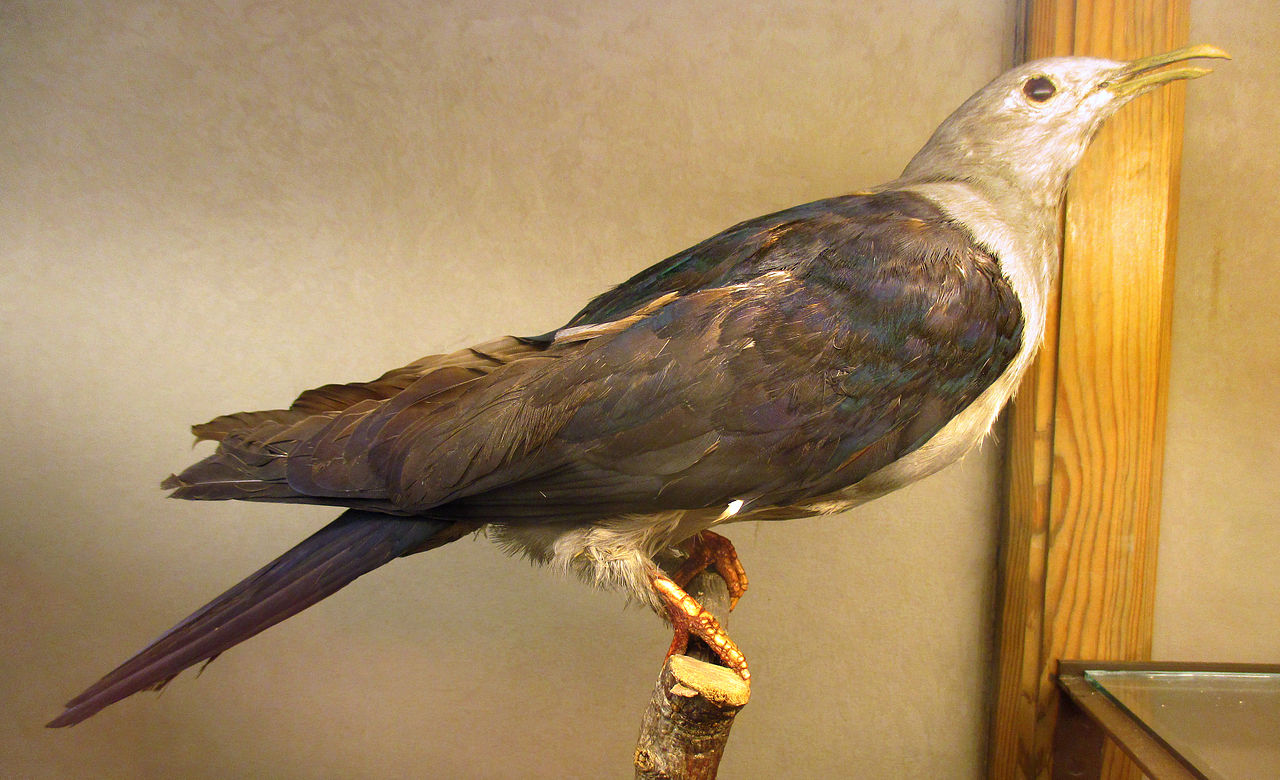
The Nicobar imperial pigeon is a species of bird in the family Columbidae. It is endemic to the Nicobar Islands. Its natural habitats are lowland forests, but it also feeds on fruiting trees in agricultural landscapes.
Region
Eastern Indian Ocean
Typical Environment
This species is restricted to the Nicobar Islands, where it occupies lowland evergreen and coastal forests, beach forest, and edges of mangroves. It frequently uses the upper canopy but will descend to mid-story when fruit is abundant. It also forages in secondary growth and on fruiting trees within settlements and plantations. Small groups may move locally between forest patches following fruiting cycles.
Altitude Range
Sea level to 600 m
Climate Zone
Tropical
Ease of Keeping
Beginner friendly: 1/5
The Nicobar imperial pigeon is a canopy-dwelling fruit specialist found only on India’s Nicobar Islands. It often visits fruiting trees in villages and plantations, helping disperse seeds of native figs and palms. Like many imperial pigeons, it builds a flimsy twig platform high in a tree and typically lays a single egg.

Temperament
shy and wary
Flight Pattern
strong, direct flight with rapid wingbeats
Social Behavior
Usually seen singly or in small parties in the canopy. Nests are flimsy twig platforms placed high in tall trees, with typically one egg attended by both parents. Outside breeding, it may gather at abundant fruit sources and roost communally in dense foliage.
Migratory Pattern
Resident
Song Description
Deep, resonant cooing phrases, often a series of low hoos delivered at dawn and dusk. Calls carry through forest canopy and may be preceded by soft grunts when birds are congregating at fruiting trees.
Plumage
Glossy, metallic green mantle and wings with a smooth, slate-gray head and neck; underparts gray with a slight vinous wash and rich rufous-chestnut undertail coverts.
Diet
Primarily consumes figs and other soft fruits, including drupes from forest trees and palms. Swallows fruits whole and later disperses seeds, playing an important role in forest regeneration. Will supplement diet with cultivated fruits when available.
Preferred Environment
Forages mainly in the upper canopy of primary and mature secondary forest. Also visits fruiting trees along forest edges, in coastal groves, and within plantations and village areas.


