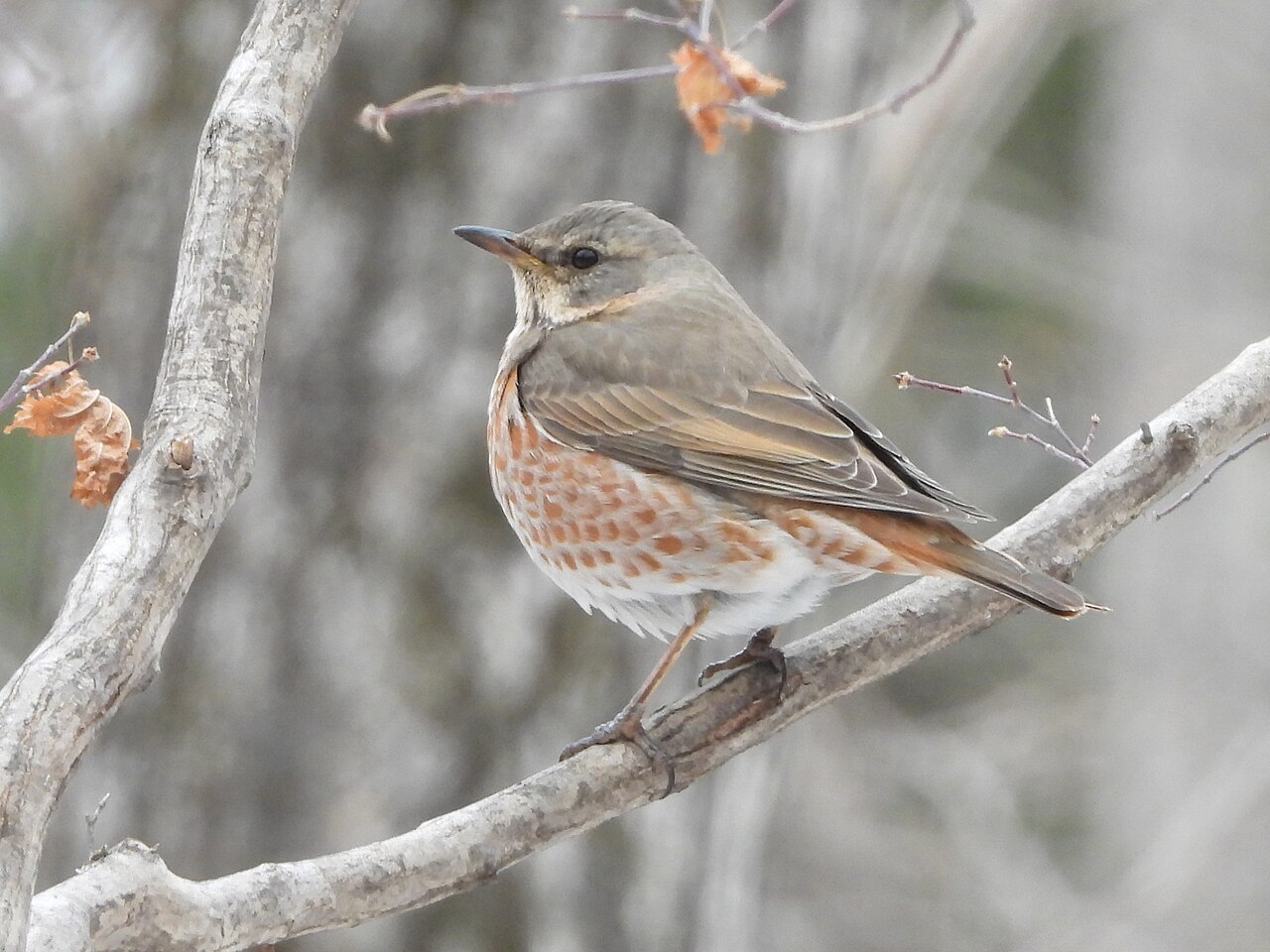
The narrow-tailed starling is a species of starling in the family Sturnidae. It is found in West and Central Africa from Sierra Leone to the Democratic Republic of the Congo.
Region
West and Central Africa
Typical Environment
Found in lowland and submontane tropical moist forests, including primary forest, forest edges, clearings, and secondary growth. It favors the upper canopy and crowns of tall trees, especially where fruit is abundant. The species also visits forest galleries along rivers and can occur in forest–farm mosaics where large fruiting trees remain. It is generally absent from open savannas and highly degraded habitats.
Altitude Range
0–1500 m
Climate Zone
Tropical
Ease of Keeping
Beginner friendly: 1/5
This canopy-dwelling starling often forms noisy flocks around fruiting fig trees and other fruit sources. It frequently nests colonially in tree cavities, including old woodpecker or barbet holes high in emergent forest trees. The long, narrow tail gives it a distinctive silhouette in flight. It ranges across humid West and Central African forests from Sierra Leone to the Democratic Republic of the Congo.

Temperament
social and active
Flight Pattern
fast direct flight with short rapid wingbeats; occasional short glides between tall trees
Social Behavior
Often forms small to medium flocks, especially at fruiting trees. Nests colonially in natural cavities or abandoned holes high in trunks and large limbs. Pairs maintain loose territories around nest sites while remaining gregarious at feeding areas.
Migratory Pattern
Resident
Song Description
A mix of metallic whistles, chatters, and harsh notes delivered from canopy perches. Vocalizations can be quite noisy at colonies and feeding trees, with frequent contact calls to maintain flock cohesion.
Plumage
Male is glossy black to bluish-black with an iridescent sheen; female is duller brownish with paler, lightly mottled or scaled underparts. Both sexes appear sleek with a distinctly long, narrow tail and compact, straight bill.
Diet
Primarily consumes soft fruits and berries, notably figs, which it often swallows whole and later disperses as seeds. It will also take other rainforest fruits and occasionally supplements its diet with insects gleaned from foliage. Feeding is typically high in the canopy, where birds move between fruiting crowns. They may join mixed-species assemblages at heavy fruit crops.
Preferred Environment
Upper canopy and edges of humid evergreen forest, including tall emergent trees near clearings or rivers. Also uses secondary forest and forest–agriculture mosaics where mature fruiting trees persist. Rarely descends to the understory except to access fruiting shrubs along edges.