

The mottled duck or mottled mallard is a medium-sized species of dabbling duck. It is intermediate in appearance between the female mallard and the American black duck. It is closely related to those species, and is sometimes erroneously considered a subspecies of the former.
Region
Southeastern United States and Gulf Coast
Typical Environment
Most common in coastal and near-coastal wetlands of Florida and along the Gulf Coast from Texas to Louisiana, with some occurrence into Alabama and Mississippi. It uses freshwater and brackish marshes, wet prairies, rice fields, ponds, and the edges of estuaries. Nests are typically placed on the ground in dense grasses or marsh vegetation near water. In Florida it favors large interior marsh systems as well as suburban retention ponds when cover is available. It generally remains in low-lying coastal plains year-round.
Altitude Range
Sea level to 200 m
Climate Zone
Subtropical
Ease of Keeping
Beginner friendly: 2/5
The mottled duck is a largely non-migratory dabbling duck of the Gulf Coast and Florida, often resembling a female mallard but lacking white borders on the wing speculum. It faces conservation concerns from habitat loss and widespread hybridization with feral and wild mallards. Two main populations occur: the Florida mottled duck and the Gulf Coast mottled duck.


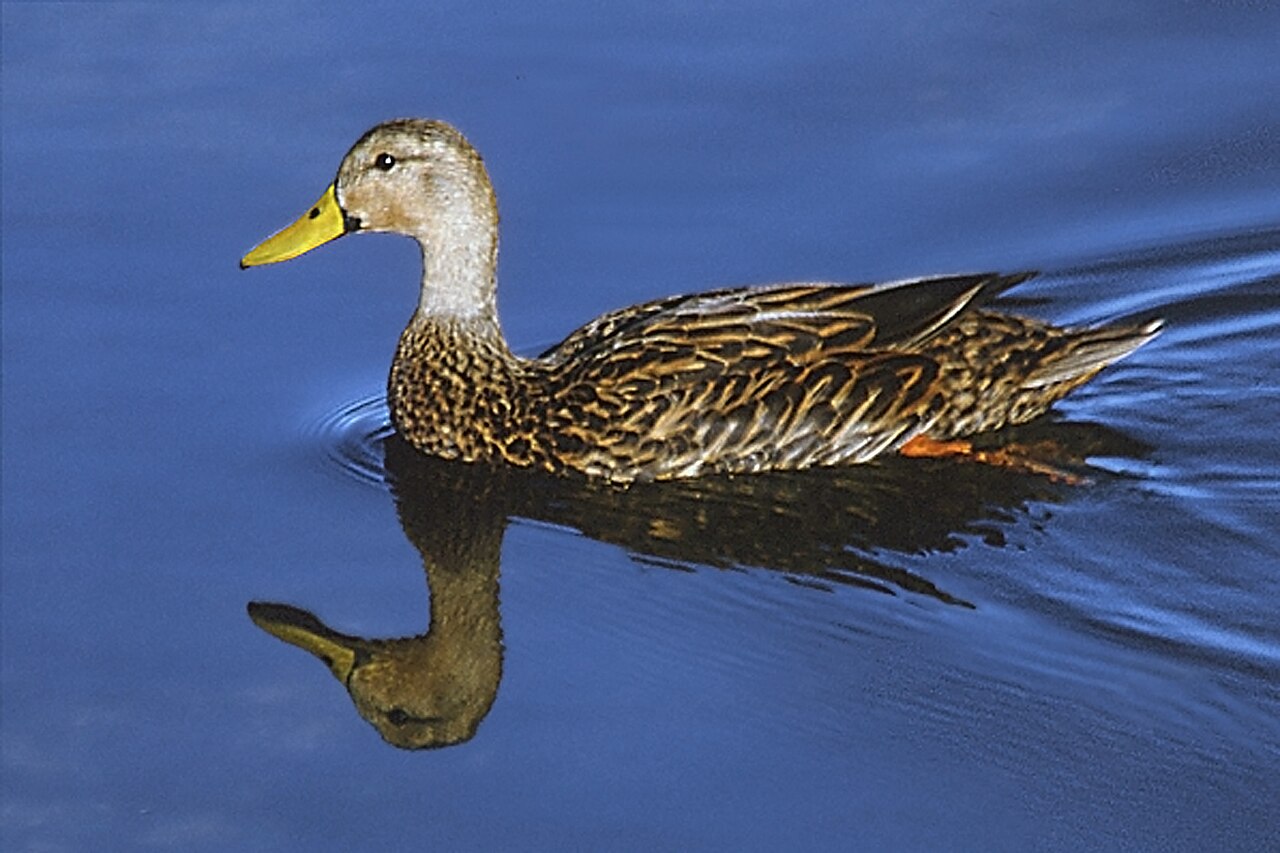
In Florida, U.S.

The Florida mottled duck (A. f. fulvigula)


Temperament
generally wary; territorial in breeding season
Flight Pattern
strong flier with rapid wingbeats; low, direct flights between feeding and roosting sites
Social Behavior
Typically forms monogamous pairs during the breeding season; small loose flocks occur outside of breeding. Nests are ground scrapes lined with down, hidden in dense grasses or marsh vegetation. Broods are led to shallow water soon after hatching, and family groups may associate with other broods in suitable wetlands.
Migratory Pattern
Resident
Song Description
Calls resemble those of mallards: females give a loud series of quacks, while males produce softer, rasping or wheezy notes. Vocalizations carry over open marshes and are used in pair-bond and territorial contexts.
Plumage
Heavily mottled tan to dark brown body with darker feather centers giving a scaled look; paler buffy head and neck with a subtle darker crown and eye line. Underparts are warm buff with darker mottling.
Diet
Feeds by dabbling and upending, taking seeds and shoots of grasses, sedges, and aquatic plants, along with rice in agricultural areas. Also consumes aquatic invertebrates such as insects, snails, small crustaceans, and occasional small fish or amphibians. Diet shifts seasonally, with more animal matter during breeding and more plant material in fall and winter.
Preferred Environment
Shallow freshwater and brackish wetlands, mudflats, and vegetated pond margins. Frequently forages in rice fields and flooded pastures, especially at edges with emergent vegetation.


