

The Manx shearwater is a medium-sized shearwater in the seabird family Procellariidae. The scientific name of this species records a name shift: Manx shearwaters were called Manks puffins in the 17th century. Puffin is an Anglo-Norman word for the cured carcasses of nestling shearwaters. The Atlantic puffin acquired the name much later, possibly because of its similar nesting habits.
Region
North Atlantic
Typical Environment
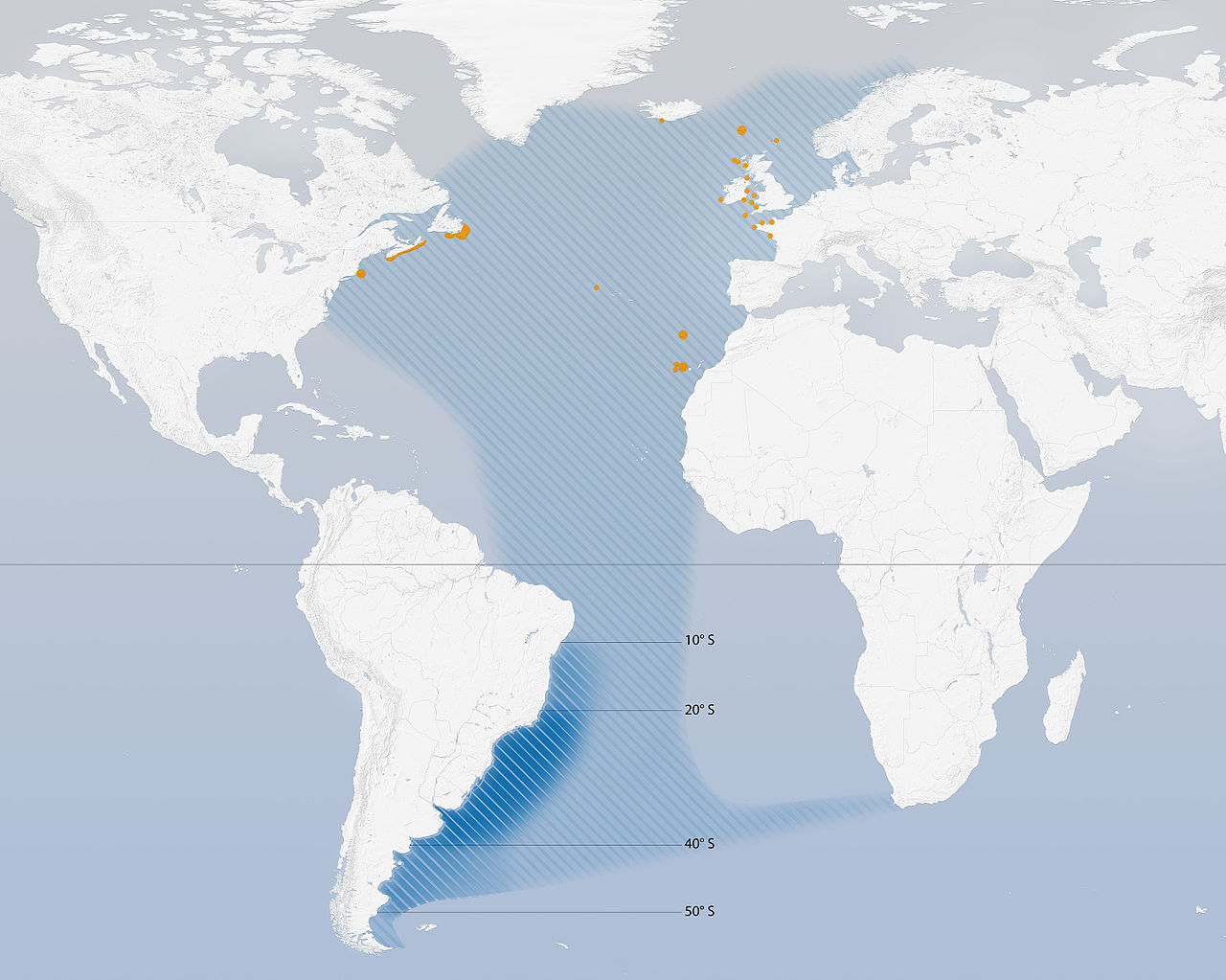
Breeds on rocky, predator-free islands and headlands around the North Atlantic, especially around Britain, Ireland, the Faroe Islands, and Iceland. Outside the breeding season it is highly pelagic, ranging widely across the open ocean. It forages over continental shelves, shelf edges, and productive upwelling zones where prey is concentrated. Birds visit colonies after dark, commuting low over the sea and slopes to reach burrows. During the non-breeding period many winter off eastern South America, particularly off Argentina and Brazil.
Altitude Range
Sea level to 600 m
Climate Zone
Temperate
Ease of Keeping
Beginner friendly: 1/5
Manx shearwaters are long-lived seabirds, with banded individuals known to surpass 50 years of age. They breed in burrows on offshore islands and visit colonies mostly at night to avoid predators. After breeding in the North Atlantic, most migrate to the South Atlantic off South America, completing immense round-trip journeys each year.


Flying in Iceland
![Each retina of the Manx shearwater has one fovea and an elongated strip of high photoreceptor density. The pecten has many blood vessels and appears to keep the retina supplied with nutrients.[18]](https://upload.wikimedia.org/wikipedia/commons/thumb/9/9e/Manxshearwaterretina.svg/960px-Manxshearwaterretina.svg.png)
Each retina of the Manx shearwater has one fovea and an elongated strip of high photoreceptor density. The pecten has many blood vessels and appears to keep the retina supplied with nutrients.[18]

In flight

Egg, Collection Museum Wiesbaden

Rafting, a common behaviour in shearwaters
Temperament
social at sea, secretive near colonies
Flight Pattern
dynamic soaring with stiff-winged glides and rapid bursts of wingbeats
Social Behavior
A colonial burrow nester, often forming dense colonies on vegetated slopes and coastal islands. Pairs are typically long-term monogamous and raise a single chick per year, sharing incubation and chick rearing. Adults attend colonies mostly at night to reduce predation risk from gulls and skuas.
Migratory Pattern
Seasonal migrant
Song Description
At colonies after dark, emits eerie, wailing, and cackling calls, with males and females giving subtly different notes that often form duets. Usually silent while at sea.
Plumage
Crisp blackish-brown upperparts with clean white underparts, giving a sharp dark-above, white-below contrast. Underwings mostly white with a dark border along the leading edge. Long, narrow wings and a slender body suited to dynamic soaring.
Diet
Feeds mainly on small schooling fish such as sandeels, sprats, and juvenile herring, as well as squid and crustaceans. Captures prey by surface seizing and pursuit-diving, often using its wings to propel underwater dives. Frequently exploits areas where predatory fish or cetaceans drive prey to the surface and may follow fishing vessels for discards. Foraging effort tracks oceanographic features like fronts and upwellings where prey is concentrated.
Preferred Environment
Typically forages over continental shelves, shelf breaks, and productive frontal systems in the open ocean. Rarely approaches the coast except near breeding colonies. Uses wind and wave gradients to minimize energy while foraging and commuting.


