

The little penguin is the smallest species of penguin which originates from New Zealand. It is commonly known as the fairy penguin, little blue penguin, or blue penguin, owing to its slate-blue plumage and is also known by its Māori name kororā. It is a marine neritic species that dives for food throughout the day and returns to burrows on the shore at dusk, making it the only nocturnal penguin species on land. Eudyptula minor feathers are dense in melanosomes, which increase water resistance and give them their unique blue colour.
Region
Australasian coasts
Typical Environment
Little penguins breed on offshore islands and protected mainland shores of New Zealand and southern Australia, favoring temperate, neritic waters. Colonies occur in dunes, coastal scrub, rocky headlands, and under boulder fields where they dig or occupy burrows and crevices. They forage mostly over continental shelf waters, often within tens of kilometers of shore, but can range farther when prey is patchy. Nesting sites are typically close to reliable landing beaches and sheltered waters.
Altitude Range
Sea level to 100 m
Climate Zone
Temperate
Ease of Keeping
Beginner friendly: 1/5
The little penguin is the smallest penguin, famed for its slate-blue upperparts and white belly, which is why it’s also called the fairy or little blue penguin (kororā in Māori). It is unique among penguins for being largely nocturnal on land, returning to burrows at dusk after a day of foraging. Dense melanosomes in its feathers enhance water resistance and contribute to its distinctive blue sheen.


A white-flippered penguin in the South Island.

Little blue penguin in Wellington Zoo, NZ

Eudyptula minor family exiting burrow

Little penguin at night at the St Kilda breakwater

Swimming in Otago Harbour

Feeding on New Zealand piper (Hyporhamphus ihi), Auckland

Eudyptula minor foraging at the International Antarctic Centre in Christchurch

Chick in nest burrow

Feeding time at Melbourne Zoo

Traffic sign warning of little penguins crossing on the West Coast of New Zealand

Maremma sheepdogs are used to protect Little penguin habitat in Victoria

Little penguins at Sea World, Gold Coast, Queensland, Australia (photo 2005)
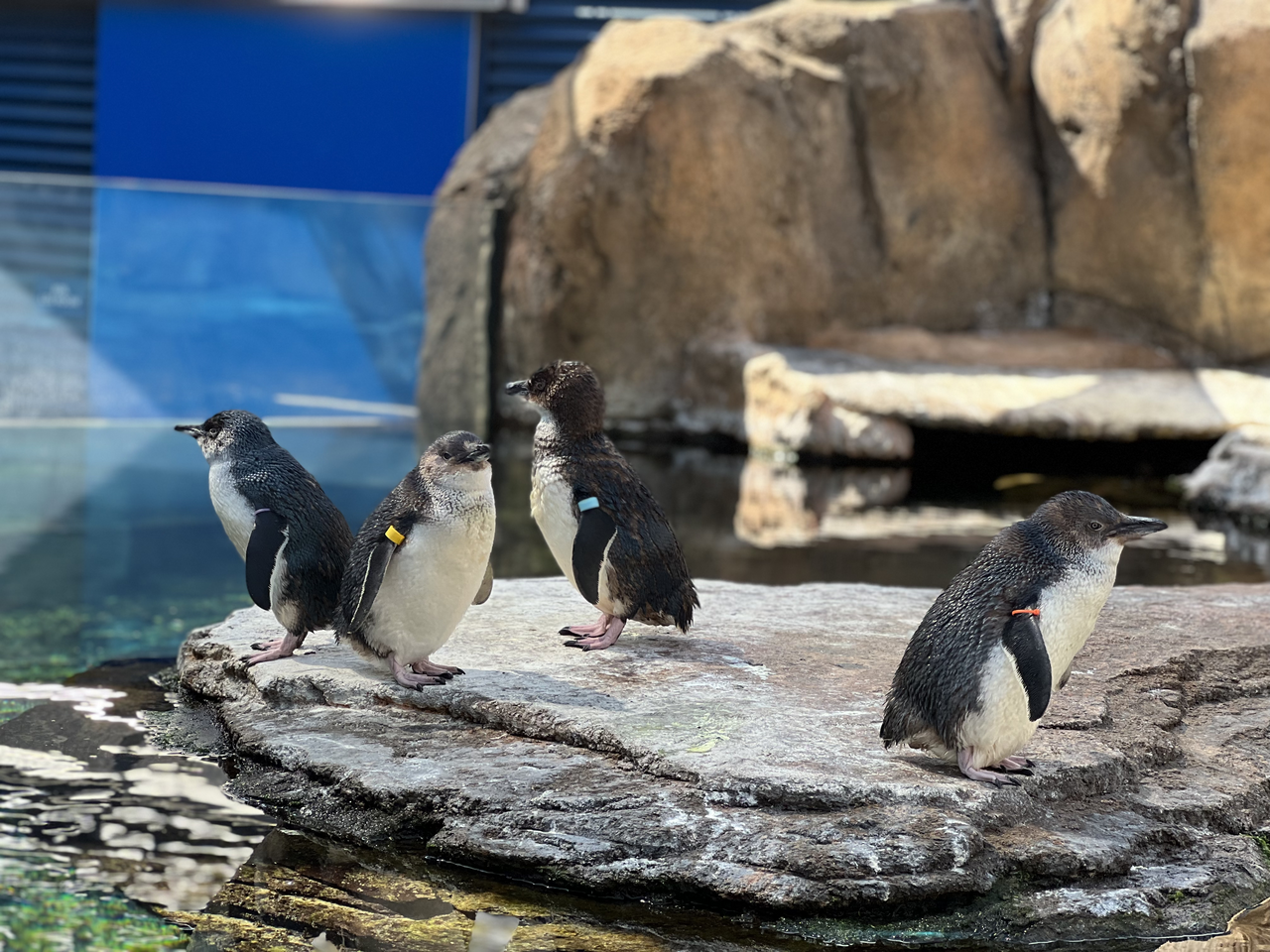
Little penguins at Birch Aquarium, La Jolla
Temperament
social and active
Flight Pattern
Flightless; strong underwater pursuit diver using rapid flipper strokes
Social Behavior
Breeds in colonies, nesting in burrows, natural crevices, or artificial boxes. Pairs often show high site fidelity and may remain together across seasons. Adults come ashore at dusk in groups, reducing predation risk, and feed chicks in the burrow at night.
Migratory Pattern
Resident
Song Description
At colonies they produce a varied repertoire of brays, grunts, and short squeaks, with deeper calls from males. Vocalizations help mates and chicks recognize each other in the noisy nighttime colony.
Plumage
Smooth, sleek plumage with slate-blue to blue-grey upperparts and bright white underparts; short, stiff flipper-like wings.
Diet
Feeds mainly on small schooling fish such as anchovies and sardines, along with cephalopods and krill. They pursue prey underwater, using rapid flipper strokes and agile turns. Foraging trips usually last a day, but can extend when prey is scarce.
Preferred Environment
Usually hunts in inshore and continental shelf waters, often near tidal fronts and upwelling zones where prey concentrates. Forages alone or in loose groups, typically within 5–20 km of the coast when conditions are favorable.


