

The lesser white-fronted goose is a goose closely related to the larger greater white-fronted goose. It breeds in the northernmost Palearctic, but it is a scarce breeder in Europe, with a reintroduction attempt in Fennoscandia.
Region
Northern Palearctic
Typical Environment
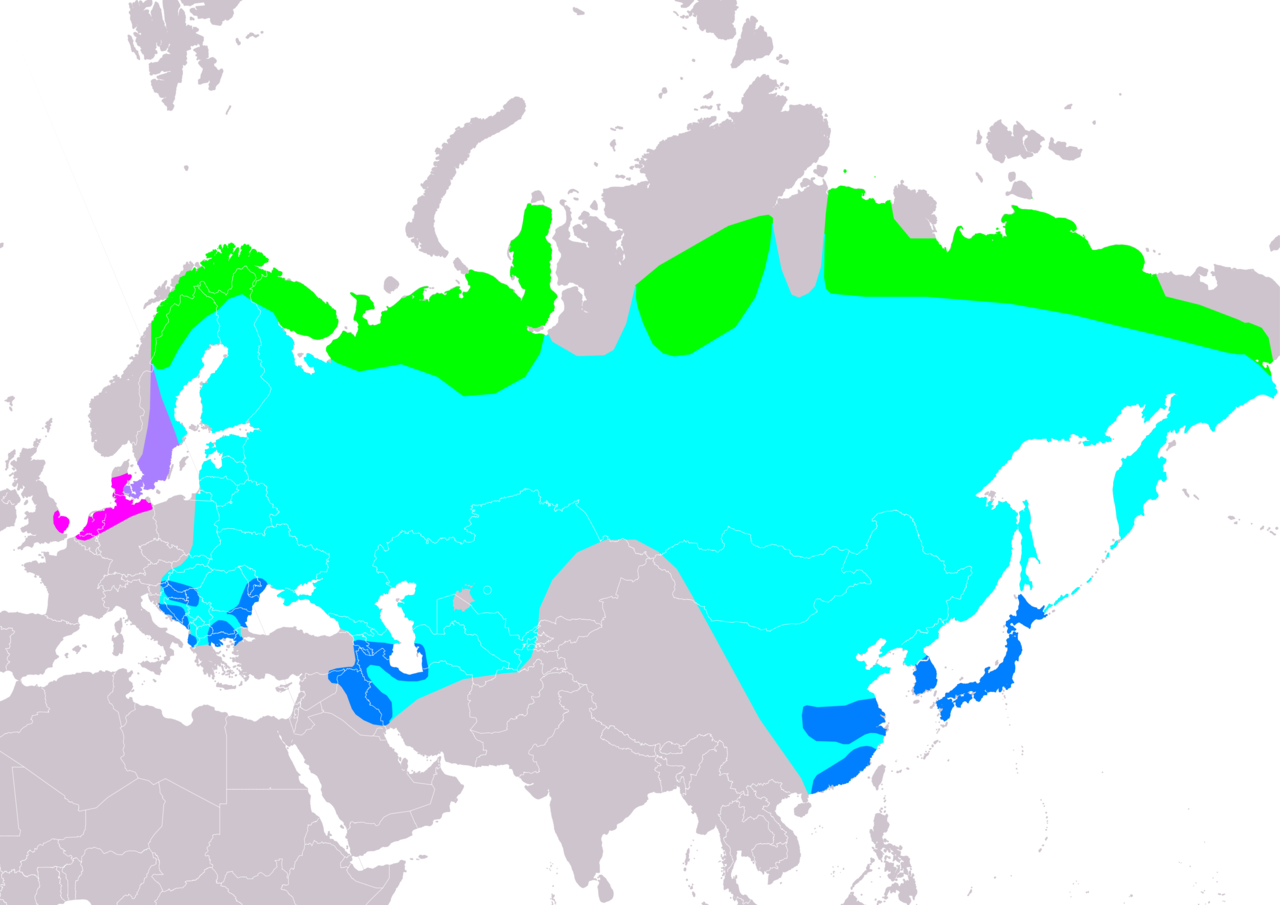
Breeds on low Arctic tundra from northern Fennoscandia across northern Russia to western Siberia and beyond. During migration it uses wetlands, river valleys, and broad steppe corridors. Wintering areas include southeastern Europe and the Black Sea–Caspian region, the Middle East, and parts of eastern China. It frequents lakes, floodplains, coastal lagoons, and agricultural fields, often feeding in mixed goose flocks.
Altitude Range
Sea level to 2000 m
Climate Zone
Other
Ease of Keeping
Beginner friendly: 1/5
Smaller than the greater white-fronted goose, it is easily recognized by its bright yellow eye-ring and a white blaze that extends well up the forehead. It breeds on Arctic tundra across the northern Palearctic and winters further south in Eurasia. Conservation concerns include habitat loss, disturbance, and illegal hunting, with reintroduction and protection efforts ongoing in Fennoscandia.



Temperament
wary and alert
Flight Pattern
strong flier
Social Behavior
Highly gregarious outside the breeding season, forming mixed-species flocks with other geese. Pairs form strong bonds and nest on tundra near water, often on slightly elevated ground for better visibility. Clutch sizes are moderate, and both parents guard and lead goslings to feeding areas after hatching.
Migratory Pattern
Seasonal migrant
Song Description
Vocalizations are high-pitched, yelping calls, noticeably higher and more rapid than those of greater white-fronted geese. Flock calls are a quick, tinkling series used to maintain contact in flight and on feeding grounds.
Plumage
Overall gray-brown with paler underparts and variable dark barring on the belly; clean white forehead blaze above the bill.
Diet
Feeds primarily on grasses, sedges, shoots, and leaves, grazing in short swards on tundra and wetlands. In migration and winter it takes agricultural grains, roots, and spilled cereals in stubble fields. It may also nip buds and tubers in shallow water and marginal marshes.
Preferred Environment
Grazes in open wetlands, wet meadows, river deltas, and coastal flats, shifting to farmland and steppe pastures in winter. Often feeds near freshwater bodies and roosts on lakes or sheltered lagoons for safety.


