
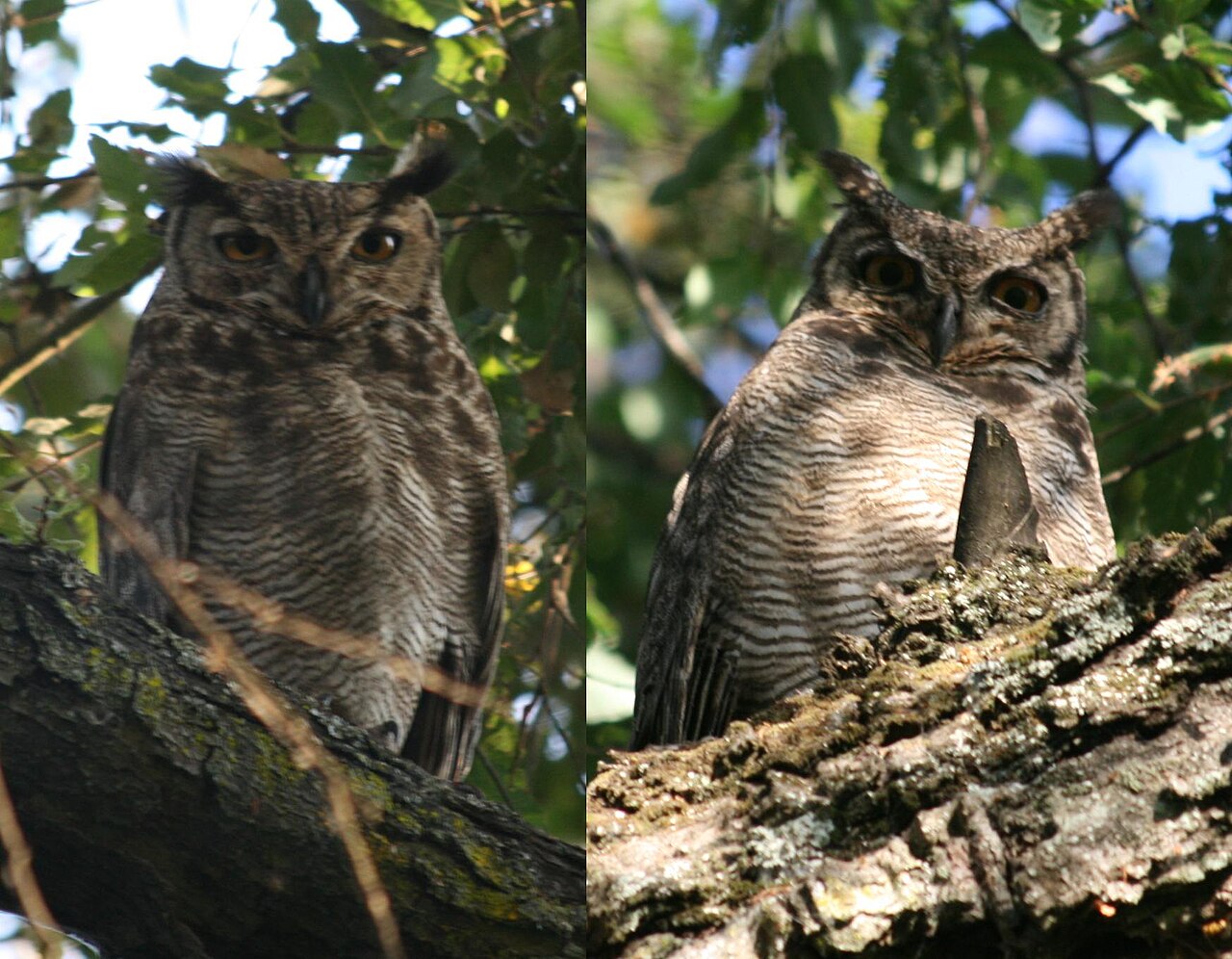
The lesser horned owl or Magellanic horned owl is a large owl of the genus Bubo found in southern South America, extending north to the central Andes. It has traditionally been classified as a subspecies of the great horned owl, but is now treated as a separate species based on differences in voice and size and because of the genetic distance between the two.
Region
Southern South America
Typical Environment
Occurs from southern and central Chile and adjacent western and southern Argentina, south to Tierra del Fuego, and north along the Andes into the central Andes. It uses a broad range of open and semi-open habitats including Patagonian steppe, matorral shrublands, open woodlands, agricultural mosaics, and coastal dunes. It can be found near human settlements, windbreaks, and pasturelands where prey is abundant. In mountainous areas it frequents valleys, foothills, and rocky outcrops. It generally avoids dense, closed-canopy forest.
Altitude Range
Sea level to 3500 m
Climate Zone
Temperate
Ease of Keeping
Beginner friendly: 1/5
Also called the Magellanic horned owl, it was once treated as a subspecies of the great horned owl but is now recognized as a distinct species based on voice, size, and genetics. Its ear “horns” are feather tufts used for display and camouflage, not hearing. A powerful nocturnal predator, it helps control rodent populations across southern South America.

Temperament
solitary and territorial
Flight Pattern
strong, silent flier with deep wingbeats
Social Behavior
Primarily monogamous and territorial, with pairs defending nesting areas vigorously. Nests are often re-used stick nests of other birds, cliff ledges, tree cavities, or occasionally the ground. Lays a small clutch that both parents defend; the female incubates while the male provides food. Young remain dependent for several weeks after fledging.
Migratory Pattern
Resident
Song Description
A series of deep, resonant hoots given in rhythmic phrases, often in pairs or short sequences, carrying far on calm nights. Also emits barks, growls, and hisses when agitated or near the nest.
Plumage
Heavily mottled and barred brown to gray-brown with paler buff tones and a contrasting white throat bib; dense feathering down the legs and toes.
Diet
Feeds mainly on small to medium mammals such as rodents (e.g., tuco-tucos and degus) and rabbits/hares, but also takes birds, reptiles, and large insects. Hunts from exposed perches, scanning and swooping down on prey with powerful talons. Opportunistic near farms and pasturelands where prey is concentrated. Will cache surplus prey when available.
Preferred Environment
Typically hunts along habitat edges, open steppe, shrublands, and agricultural fields with scattered trees or fence posts for perching. Uses rocky outcrops, dunes, and field margins where visibility and ambush opportunities are high.


