
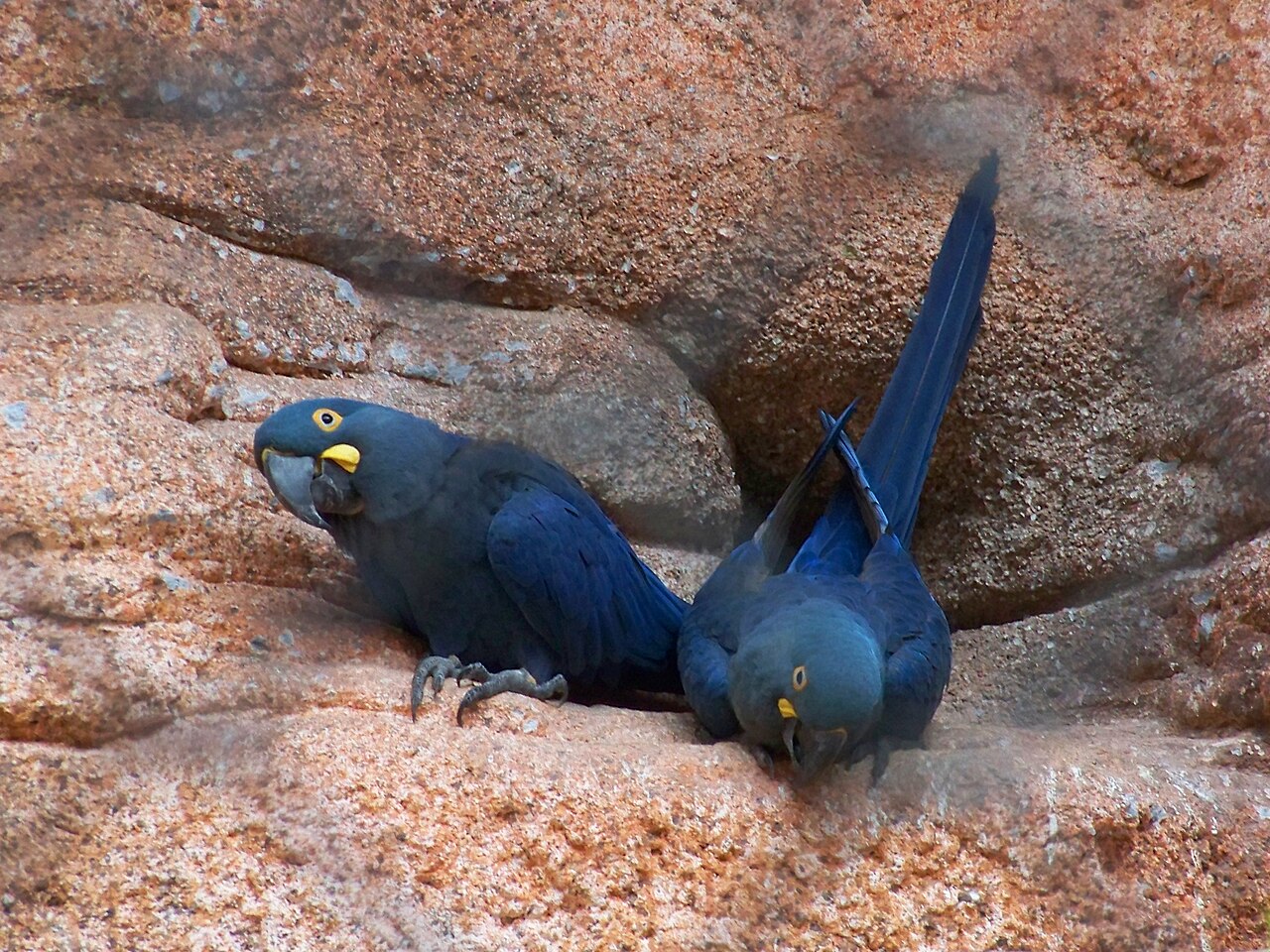
Lear's macaw, also known as the indigo macaw, is a large all-blue Brazilian parrot, a member of a large group of neotropical parrots known as macaws. It was first described by Charles Lucien Bonaparte in 1856. Lear's macaw is 70–75 cm long and weighs around 950 g. It is coloured almost completely blue, with a yellow patch of skin at the base of the heavy, black bill.
Region
Northeast Brazil (Caatinga)
Typical Environment
Occurs in the semi-arid caatinga biome, especially in Bahia’s Raso da Catarina region. It roosts and nests on sheer sandstone cliffs and canyon walls with ledges and cavities. Foraging takes place in surrounding thorn-scrub dominated landscapes with scattered palms, particularly licuri (Syagrus coronata). Birds commute daily between roosting cliffs and palm-rich feeding grounds, sometimes over long distances. Seasonal availability of fruit and water influences local movements and site use.
Altitude Range
200–900 m
Climate Zone
Arid
Ease of Keeping
Beginner friendly: 1/5
Also called the indigo macaw, Lear's macaw is restricted to the caatinga of northeastern Brazil and relies heavily on the licuri palm for food. The species was little known until its breeding sites on sandstone cliffs were confirmed in the 1970s, spurring intensive conservation. Illegal trapping and habitat loss were major threats, but nest protection and community programs have helped the population rebound. Its powerful bill easily cracks hard palm nuts that few other birds can handle.


![Illustration by Edward Lear (1812–88) first published in his book Illustrations of the Family of Psittacidae, or Parrots in 1832[8]](https://upload.wikimedia.org/wikipedia/commons/thumb/5/52/Anodorhynchus_leari_by_Edward_Lear.jpg/1280px-Anodorhynchus_leari_by_Edward_Lear.jpg)
Illustration by Edward Lear (1812–88) first published in his book Illustrations of the Family of Psittacidae, or Parrots in 1832[8]
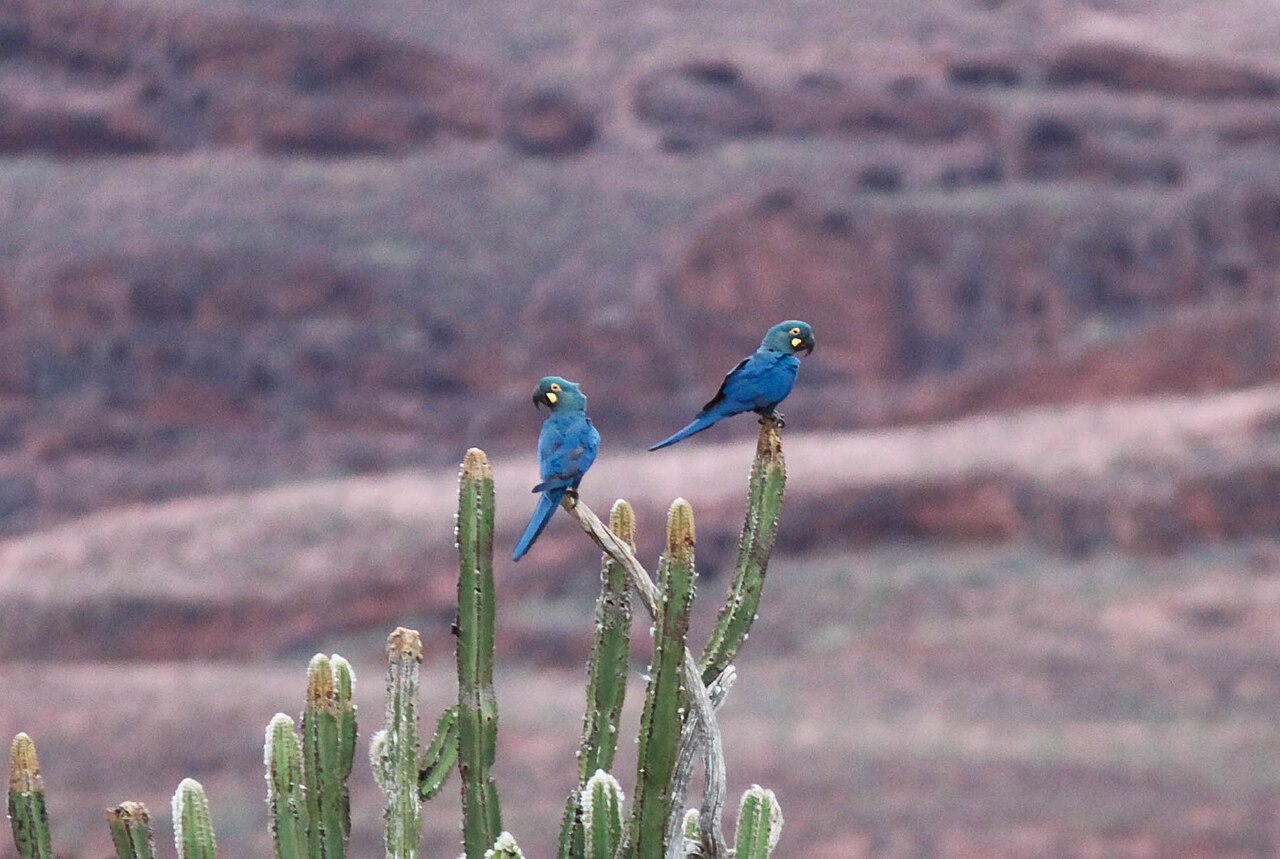
Lear's macaw, NE Brazil.

Sandstone cliffs in Bahia, Brazil

Nests in sandstone cliffs in Bahia, Brazil

Wild macaws in the Raso da Catarina area
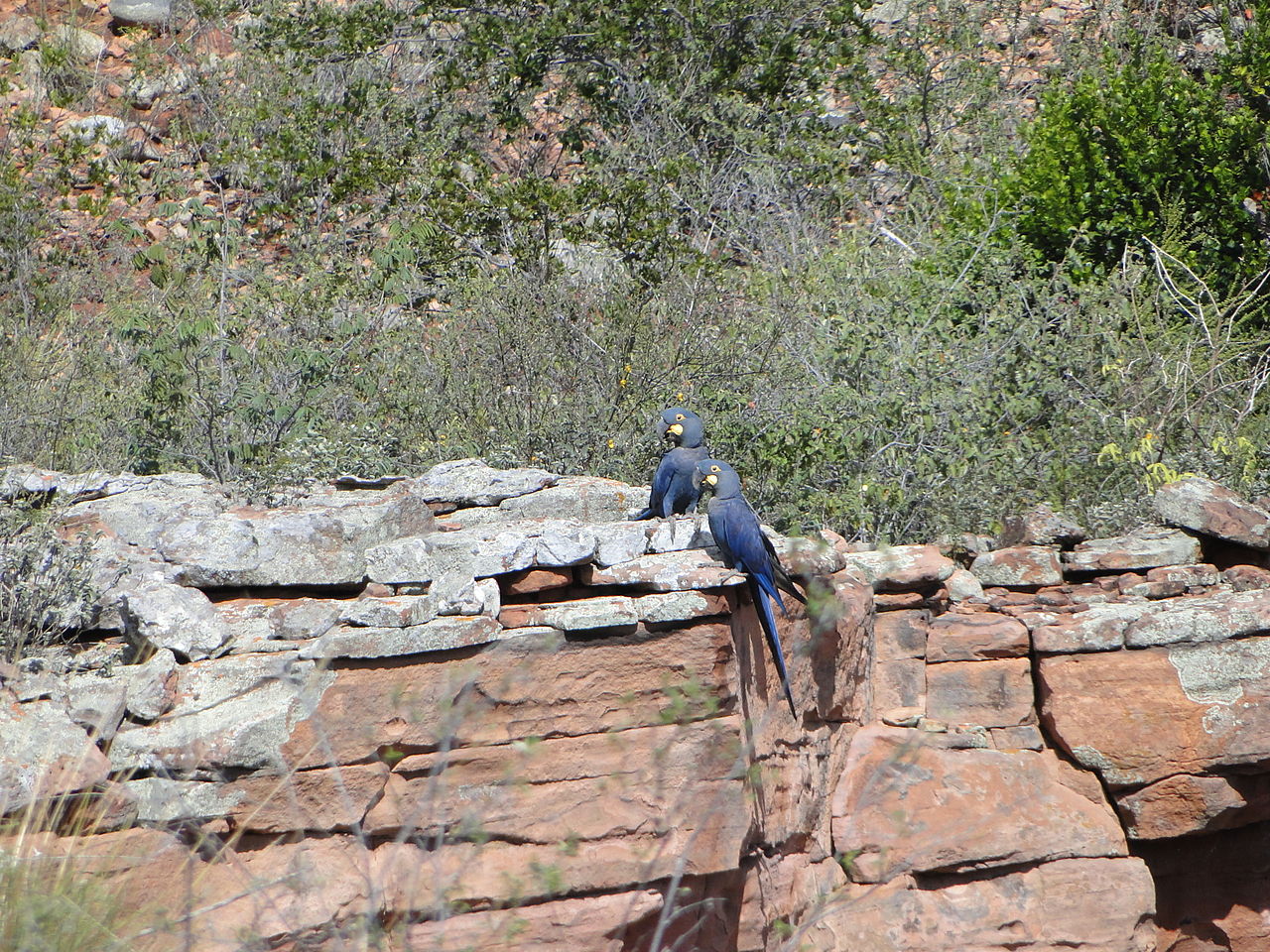
Lear's macaw at Canudos Biological Station in Bahia state, Brazil
Temperament
social and alert
Flight Pattern
powerful, direct flight with rapid wingbeats; occasional soaring over canyons
Social Behavior
Forms tight pair bonds and nests colonially on cliff faces, often reusing favored cavities. Communal roosting is typical, with large groups gathering at dusk on protected ledges. Pairs are monogamous and cooperate in nest defense and chick rearing.
Migratory Pattern
Resident
Song Description
Loud, resonant macaw calls, including harsh kraa and rraaak notes that carry over long distances. In flight, calls are repeated in series; at roosts and nests, softer grunts and croaks are exchanged between mates.
Plumage
Uniform deep cobalt-to-indigo blue with slightly paler underparts and long tapered tail; feathers appear satin-like in good light.
Diet
Specializes on the nuts and fruits of the licuri palm (Syagrus coronata), which it cracks with its robust bill. Also takes other palm fruits, seeds, and occasionally cultivated maize when natural foods are scarce. Foraging typically occurs in flocks or family groups, with birds traveling between feeding trees and water sources.
Preferred Environment
Feeds in palm-dotted caatinga scrub, edges of dry woodlands, and traditional agro-pastoral landscapes where licuri palms persist. Often selects mature palms with heavy fruit crops and open perches for vigilance.


