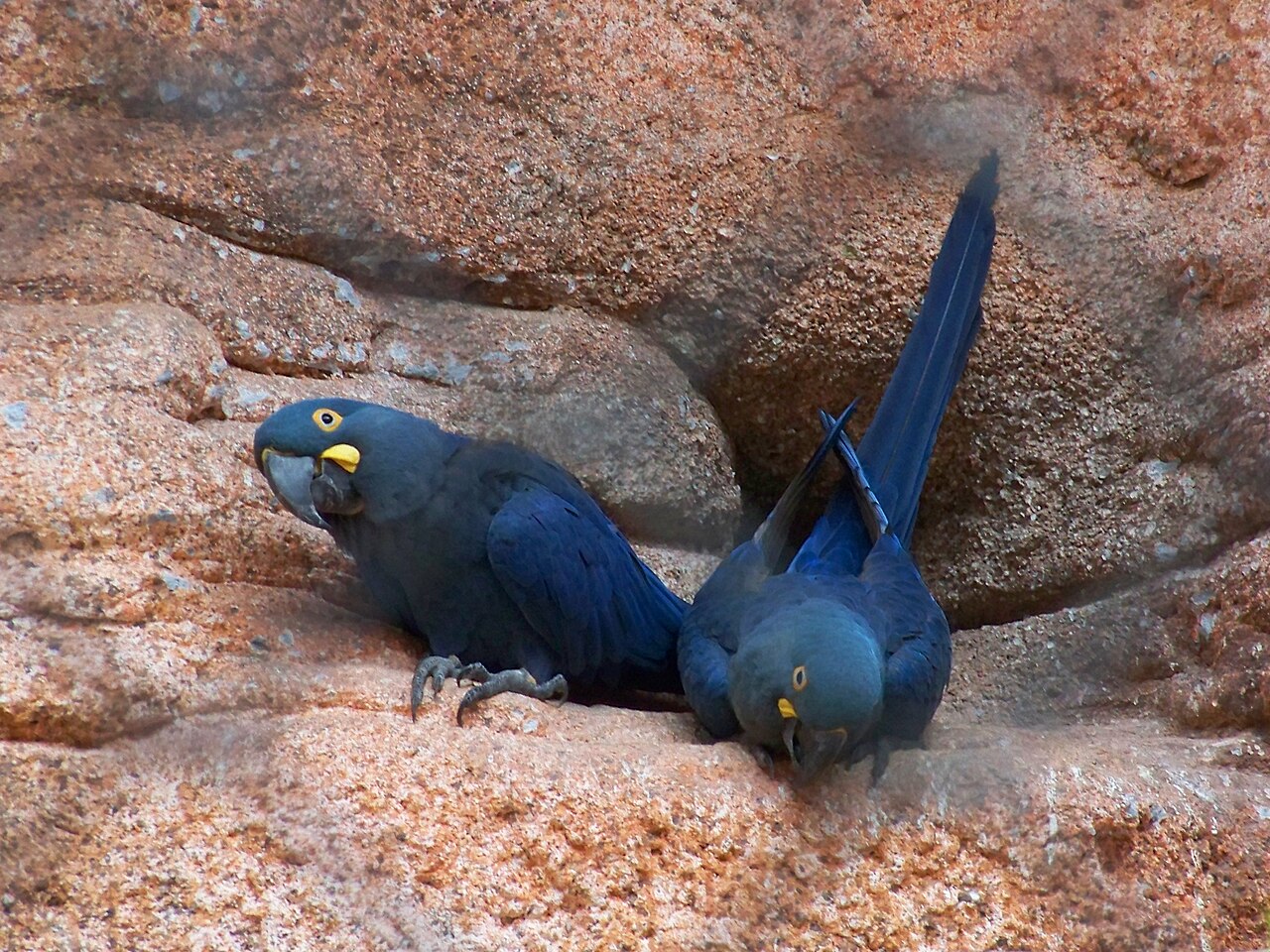
The leaden honeyeater is a species of bird in the family Meliphagidae. It is found in the New Guinea Highlands. Its natural habitat is subtropical or tropical moist montane forests.
Region
New Guinea Highlands
Typical Environment
Occupies subtropical and tropical moist montane forests, especially mossy, epiphyte-rich slopes and ridges. It favors forest edges, gaps, and secondary growth where flowering shrubs are abundant. The species also visits subalpine scrub near the treeline when blooms are available. It is generally absent from lowland rainforest and heavily disturbed lowland habitats.
Altitude Range
1200–3500 m
Climate Zone
Highland
Ease of Keeping
Beginner friendly: 1/5
A montane honeyeater of New Guinea, the leaden honeyeater is an active pollinator of high-elevation shrubs and trees. It frequently joins mixed-species flocks, moving quickly through mossy forest edges in search of nectar and insects. Its name refers to the leaden-gray tones of its plumage, which provide excellent camouflage in shaded canopy.
Temperament
social and active
Flight Pattern
short rapid wingbeats
Social Behavior
Often forages in small groups and joins mixed-species feeding flocks with other montane passerines. Pairs defend small feeding areas when flowers are in peak bloom. Nesting involves a small cup nest placed in dense foliage or epiphyte clumps, with both parents attending the young.
Migratory Pattern
Resident
Song Description
Gives thin, tinkling calls interspersed with buzzy chips. The song is a light, hurried series of high notes that carry through the canopy but are not especially loud.
Plumage
Mostly leaden-gray to gray-brown with slightly paler underparts and subtle olive tones on the wings. Feathers appear smooth and close-fitting, giving a sleek impression. A faint pale supercilium and pale malar area contrast with darker ear coverts.
Diet
Feeds primarily on nectar from flowering shrubs, trees, and epiphytes. Supplements its diet with insects and other small arthropods gleaned from foliage and bark, and occasionally hawked in short sallies. Will also take small amounts of soft fruit and honeydew when available.
Preferred Environment
Forages along forest edges, canopy gaps, and mossy mid-story where flowers are concentrated. Frequently works epiphyte-laden branches and flowering vines in humid montane forest.