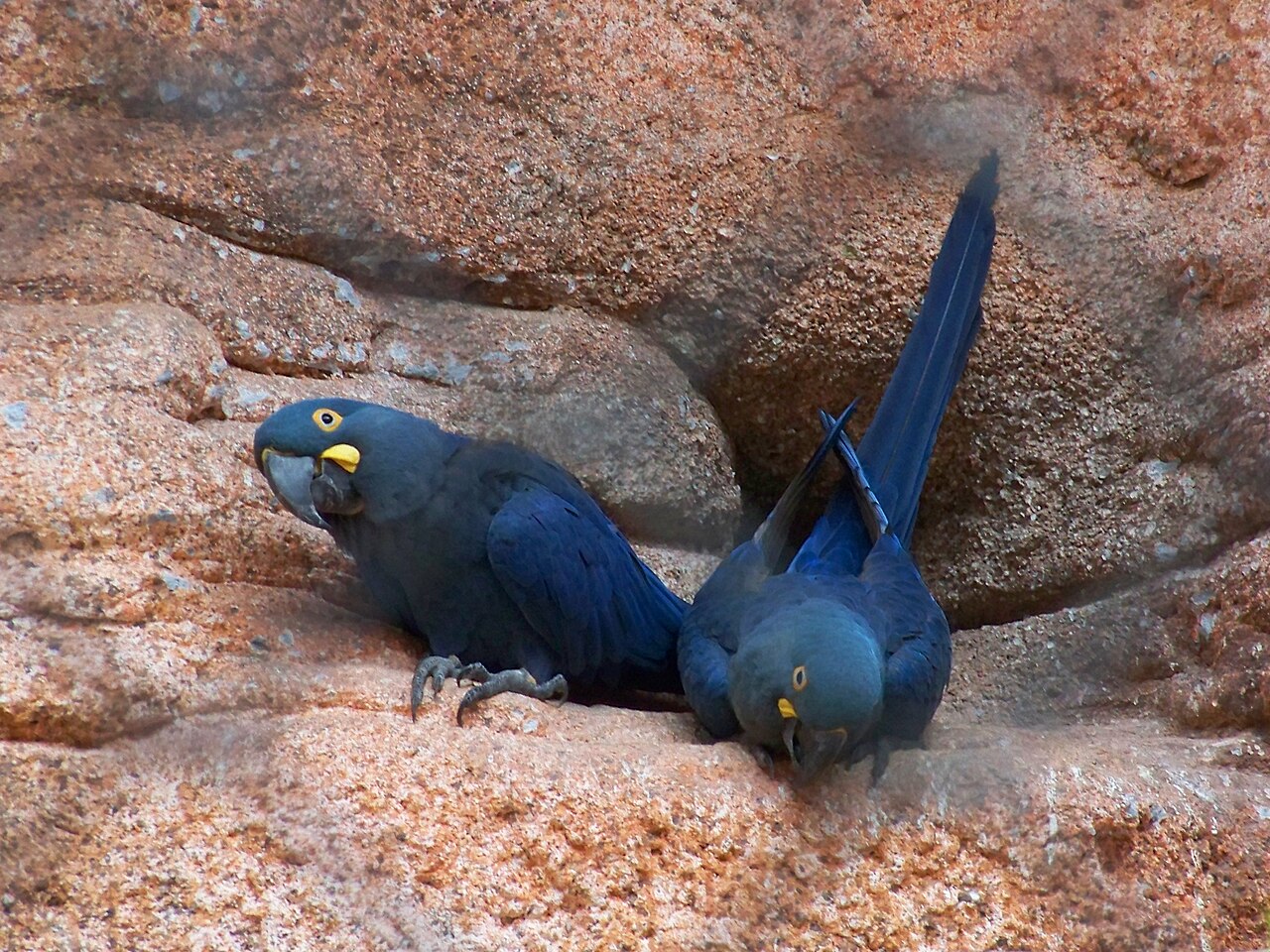
The leaden antwren is a species of bird in subfamily Thamnophilinae of family Thamnophilidae, the "typical antbirds". It is found in Bolivia, Brazil, Colombia, and Peru.
Region
Amazon Basin
Typical Environment
Occurs in the lowland forests of Bolivia, Brazil, Colombia, and Peru, especially along major rivers. It favors river-edge thickets, seasonally flooded várzea, young secondary growth, and gallery forest. Frequently uses dense vine tangles, Cecropia stands, and shrubbery on river islands and oxbow lakes. It is most common in the understory from near ground level to a few meters up, occasionally along terra firme edges.
Altitude Range
0–600 m
Climate Zone
Tropical
Ease of Keeping
Beginner friendly: 1/5
The leaden antwren is a tiny Amazonian antbird whose sexes look very different: males are plain slate-gray while females are warm brownish with buffy tones. It often joins mixed-species flocks in the understory and edges of lowland forests. Although it belongs to the antbird family, it is not an obligate army-ant follower and mostly gleans small arthropods from foliage.


Temperament
active and skulking
Flight Pattern
short rapid wingbeats
Social Behavior
Usually seen in pairs or small family groups moving quickly through dense understory. Regularly joins mixed-species foraging flocks along forest edges and riverine thickets. Nests are small cups placed low in dense vegetation; both parents are involved in incubation and care.
Migratory Pattern
Resident
Song Description
Song is a thin, high-pitched series of whistles or trills that may accelerate slightly, delivered from low perches in dense cover. Calls include sharp chips and soft, sibilant notes used to keep contact with a mate.
Plumage
Male is uniform leaden-slate gray with two pale wingbars and darker wings; female is warm brown above with buffy to pale underparts and contrasting pale wingbars.
Diet
Primarily takes small arthropods such as insects, spiders, and their larvae. Forages by gleaning from leaves, twigs, and vine tangles, occasionally making short sallies to snatch prey. It may opportunistically attend army ant swarms but is not dependent on them.
Preferred Environment
Most often feeds in dense river-edge shrubbery, young secondary growth, and flooded forest understory. Stays low, typically within 1–5 m of the ground, using cover to move rapidly between perches.