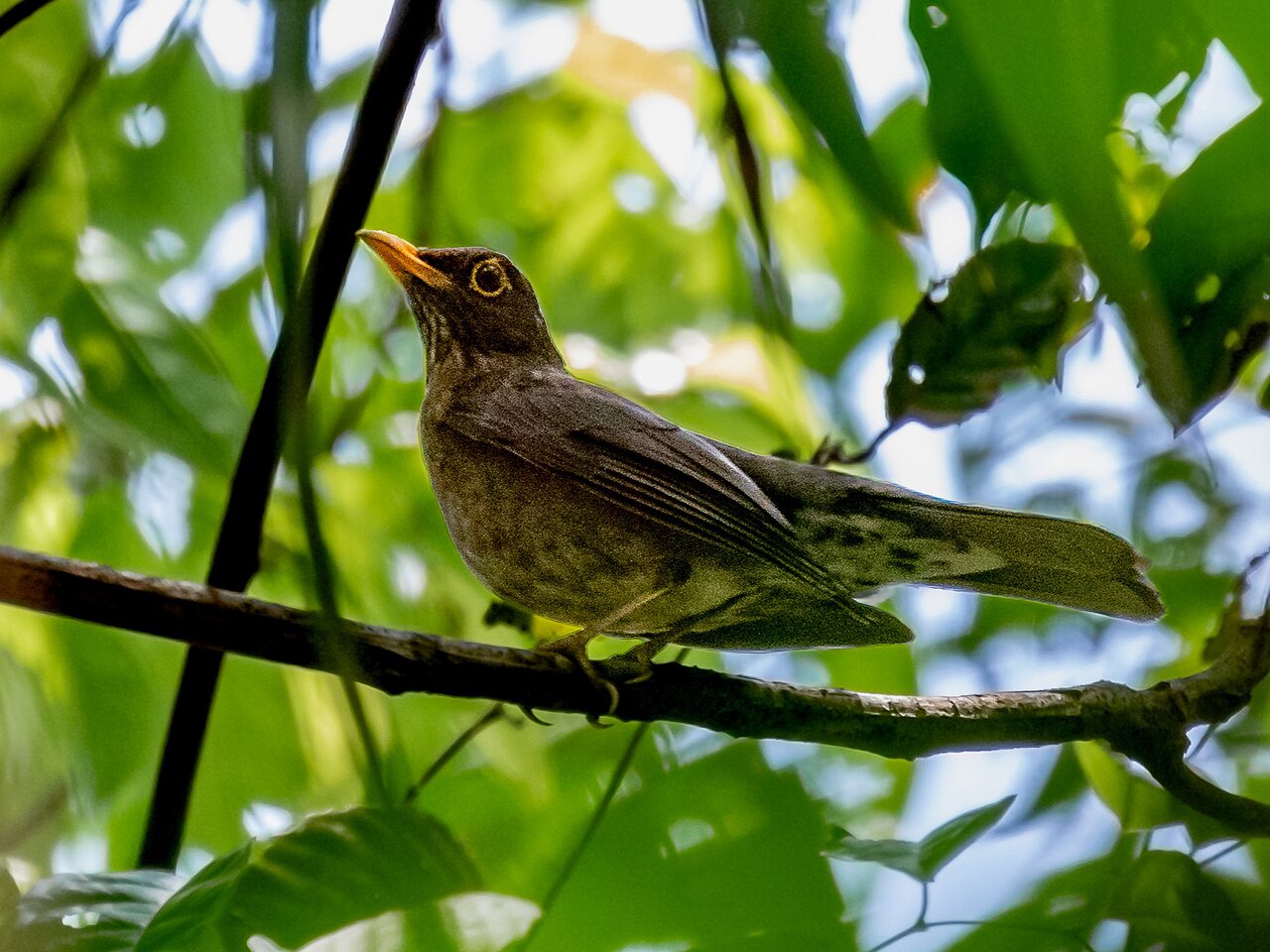
Lawrence's goldfinch is a small songbird of erratic distribution that breeds in California and Baja California and winters in the southwestern United States and northern Mexico.
Region
Southwestern North America
Typical Environment
Breeds locally in California’s Coast Ranges, Central Valley margins, and Sierra Nevada foothills, and in northern Baja California. In winter it disperses into the deserts and foothills of the southwestern United States and northern Mexico, following seed availability. Prefers open oak woodlands, chaparral edges, riparian corridors, and weedy fields near reliable water. Flocks gather at ponds, streams, and stock tanks, especially during dry periods. Nesting usually occurs in trees such as oaks and sycamores close to water.
Altitude Range
0–1800 m
Climate Zone
Temperate
Ease of Keeping
Beginner friendly: 1/5
Lawrence's goldfinch is a small, grayish goldfinch with bright yellow wing and tail flashes and a male’s distinctive black face. It breeds patchily in California and Baja California and winters irregularly across the southwestern United States and northern Mexico, often tracking good seed crops. Flocks concentrate near water and can appear in large numbers at stock ponds and riparian areas. Their movements are notably erratic from year to year.


Temperament
social and nomadic
Flight Pattern
short rapid wingbeats with bounding, undulating flight
Social Behavior
Often forms loose flocks outside the breeding season, especially around water and abundant seed sources. Pairs are monogamous, and small semi-colonial nesting groups may occur where habitat is suitable. Nests are cup-shaped and placed in trees or tall shrubs, frequently near riparian zones.
Migratory Pattern
Seasonal migrant
Song Description
Song is a soft, tinkling series of bell-like notes and metallic trills, delivered from perches or in display flights. Calls include thin, ringing ‘tink’ notes and rapid chittering given in flight. Overall vocalizations are light, musical, and delicate.
Plumage
Overall soft gray with bright yellow patches in the wings and at the base of the tail; males show a black face and chin with a yellow breast and rump. Females are duller gray with subdued yellow and lack the full black mask. Wingbars are pale with contrasting yellow highlights; plumage appears clean and smooth.
Diet
Primarily consumes small seeds from native forbs and shrubs, including fiddleneck, chamise, thistles, and other composite plants. Will also take seeds from grasses and weedy annuals and readily visits feeders for nyjer and sunflower chips. In the breeding season it may include a small amount of plant matter with soft seeds for nestlings.
Preferred Environment
Feeds in weedy fields, along chaparral and oak savanna margins, and in riparian edges where seed-bearing plants are abundant. Often forages low in shrubs or on the ground, and congregates at water sources in dry landscapes.