
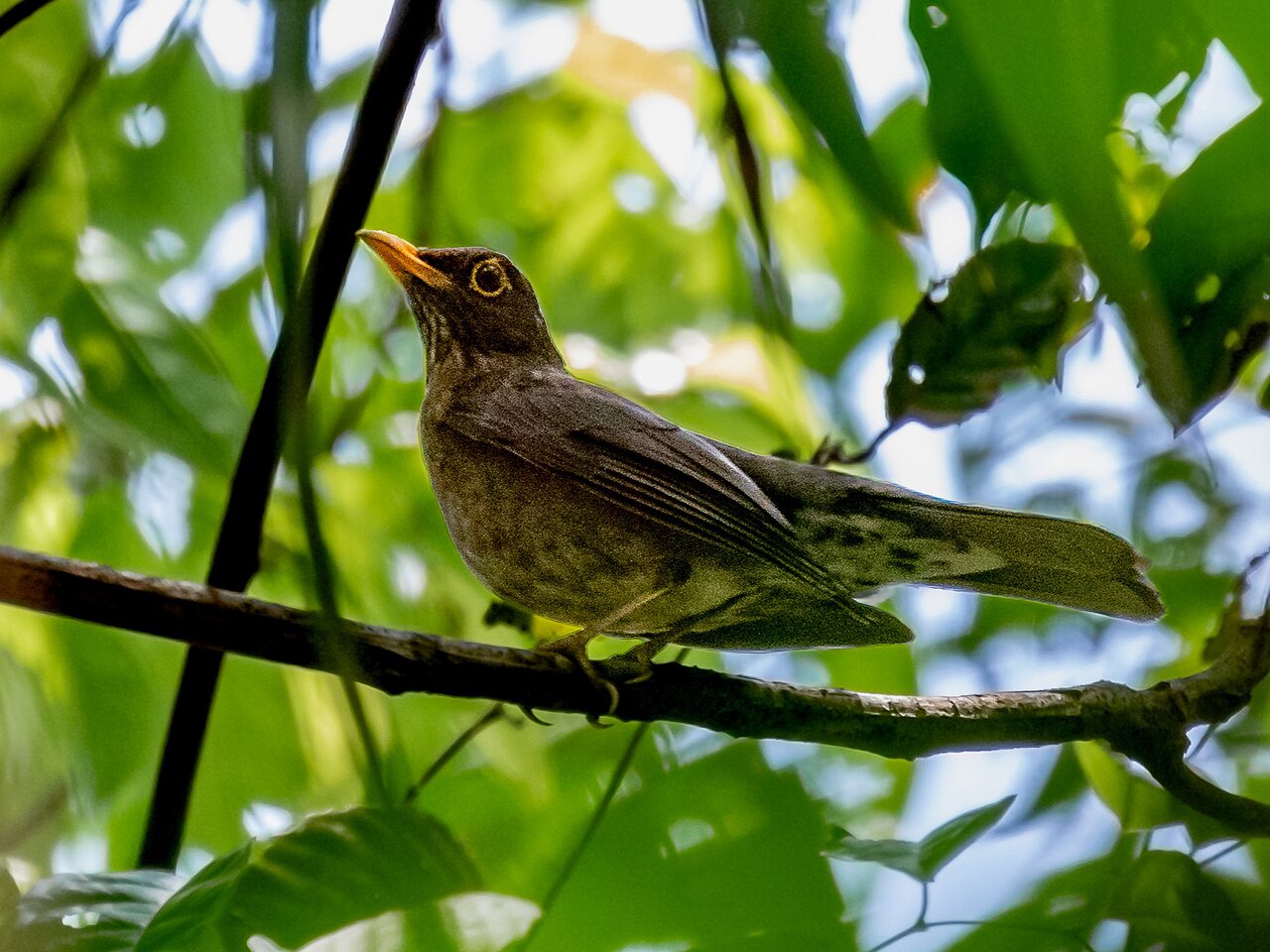
Lawrence's thrush is a species of bird in the family Turdidae. It is found in Bolivia, Brazil, Colombia, Ecuador, Peru, and Venezuela. Described in 1878 by George N. Lawrence as Turdus brunneus, a name that was already in use the species was therefore renamed as Turdus lawrencii by Elliott Coues in 1880. Its natural habitats are subtropical or tropical moist lowland forests and subtropical or tropical swamps.
Region
Amazon Basin and northern South America
Typical Environment
Occurs in lowland tropical forests and swamp forests across Bolivia, Brazil, Colombia, Ecuador, Peru, and Venezuela. It favors seasonally flooded varzea and igapó woodlands, river margins, and forest edges with dense undergrowth. The species also uses secondary growth and gallery forests, especially near watercourses. It typically avoids open habitats and remains close to shaded, humid interiors.
Altitude Range
0–800 m
Climate Zone
Tropical
Ease of Keeping
Beginner friendly: 1/5
Lawrence's thrush is an Amazonian thrush famed for its remarkable mimicry, often weaving the calls of many other forest birds into long, fluid song bouts. It inhabits lowland rainforests and swampy woodlands across the northern Amazon Basin. The species was originally described as Turdus brunneus, but that name was preoccupied, leading to its renaming as Turdus lawrencii in 1880. It is typically shy and keeps to dense, humid habitats near water.


Temperament
shy and retiring
Flight Pattern
short rapid wingbeats between perches
Social Behavior
Usually solitary or in pairs, keeping low to mid-levels in dense forest. Builds a cup-shaped nest in shrubs or low trees; both parents participate in feeding the young. Territorial singing males may choose exposed song perches at dawn near forest edges or along waterways.
Migratory Pattern
Resident
Song Description
A rich, fluty series of whistles and phrases with extensive mimicry of other bird species, often delivered in long, elaborate sequences. Its performance can vary dramatically between individuals and regions, reflecting the local avifauna. Calls include clear contact notes and soft chucks from within cover.
Plumage
Uniform warm-brown upperparts with paler buffy underparts and a lightly streaked or mottled throat. The belly is whitish to pale buff, with subtle contrast to the breast. Feathers are sleek and unpatterned above, giving a plain-backed appearance typical of many Turdus thrushes.
Diet
Takes a mixed diet of insects, spiders, and other small invertebrates, along with small fruits and berries. Forages by gleaning from foliage and probing leaf litter on the forest floor. Occasionally sallies to low branches or snatches prey from trunks and exposed substrates. Fruit from understory shrubs and edge trees is an important seasonal component.
Preferred Environment
Feeds in shaded understory, along forest trails, and at edges of swampy or seasonally flooded forests. Often forages near stream margins and in dense thickets where leaf litter accumulates.


