
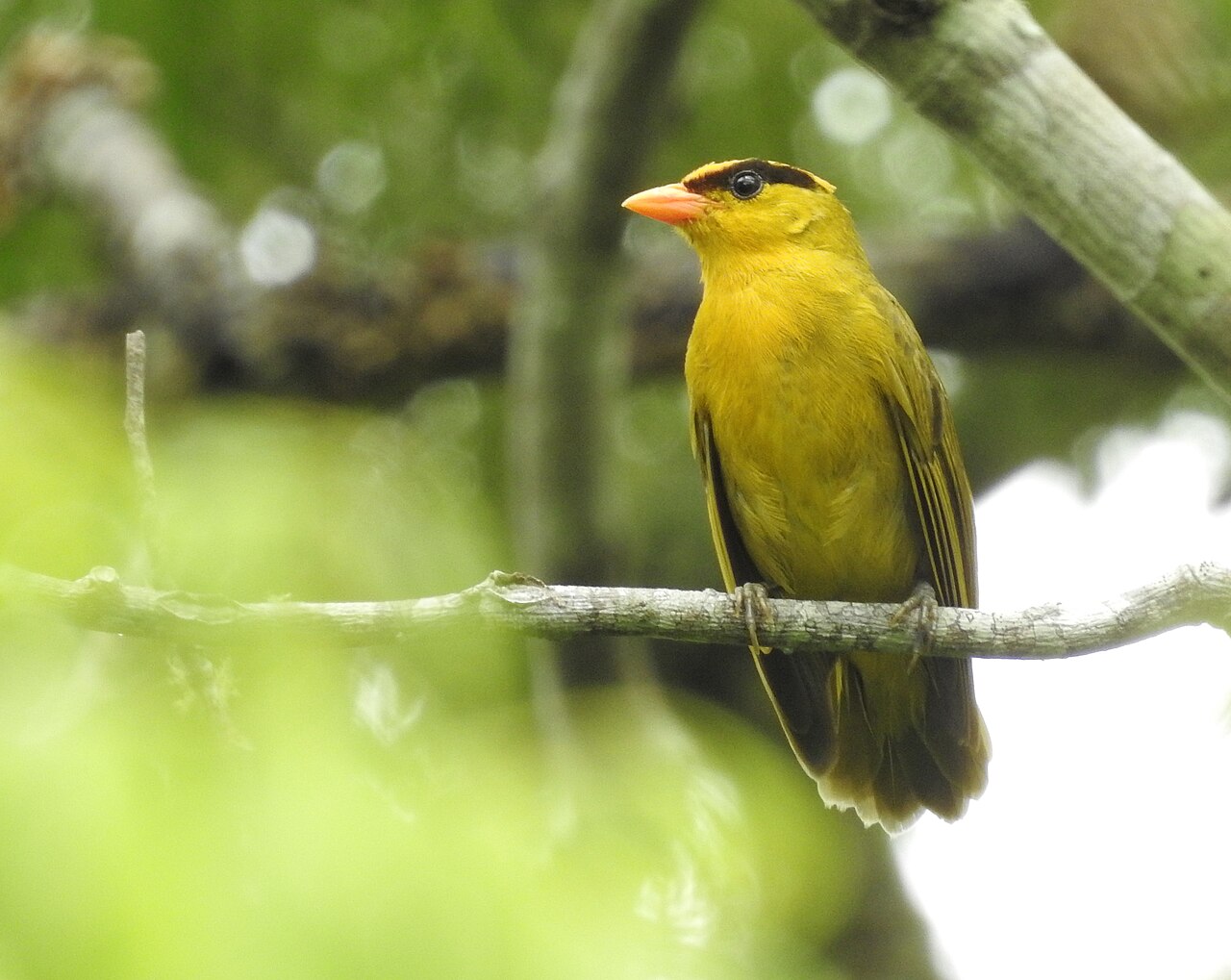
The Inti tanager, also known as the San Pedro tanager, is a species of bird in the family Thraupidae. It is the only member of the genus Heliothraupis. It is restricted to the lower Yungas of western Bolivia and southern Peru. Despite its striking coloration, call, and evolutionary distinctiveness, it was only described in 2021, and the bird's discovery and documentation to Western science only occurred during the prior two decades. On January 31, 2022, the South American Classification Committee of the American Ornithological Society (SACC) announced its formal addition to their South American species list.
Region
Andean Yungas (southern Peru and western Bolivia)
Typical Environment
This species inhabits lower montane humid forest, especially forest edges, gaps, and secondary growth along the eastern Andean foothills. It frequents canopy and subcanopy strata as well as tall edge vegetation where sunlight penetrates. It is often found along forested slopes, landslides, and riverine corridors with mixed shrubs and fruiting trees. Records are localized but span the lower Yungas on both sides of the Peru–Bolivia border.
Altitude Range
700–1600 m
Climate Zone
Highland
Ease of Keeping
Beginner friendly: 1/5
The Inti tanager (also called the San Pedro tanager) is the sole member of its genus, Heliothraupis, described to science in 2021 after years of sporadic observations. Its name references Inti, the Incan sun god, reflecting the bird’s vivid, sunlike coloration. It is restricted to the lower Yungas on the east slope of the Andes in southern Peru and western Bolivia, where it forages at forest edges and in second growth.


Temperament
social and active
Flight Pattern
short rapid wingbeats
Social Behavior
Often joins mixed-species flocks in the canopy and at forest edges. Typically seen in pairs or small groups moving quickly through fruiting trees and along sunlit gaps. Breeding biology is poorly known, but behavior suggests territorial pairs during the breeding season.
Migratory Pattern
Resident
Song Description
Gives thin, high-pitched notes and short buzzy trills, often delivered from exposed perches along forest edges. Calls are sharp and contact-oriented, useful for staying connected in mixed flocks.
Plumage
Striking, smooth plumage with bright yellow to yellow-orange body contrasting with darker wings and tail; females are duller with more olive-yellow tones.
Diet
Feeds on small arthropods gleaned from foliage and twigs, and supplements with small fruits and berries. It forages methodically through canopy clusters and edge shrubs, occasionally sallying short distances to snatch prey. Seasonal availability of fruit likely influences diet composition.
Preferred Environment
Most often at forest edges, gaps, and secondary growth with fruiting trees and sunlit perches. Also uses subcanopy layers of humid montane forest and disturbed areas near roads or landslides.


