
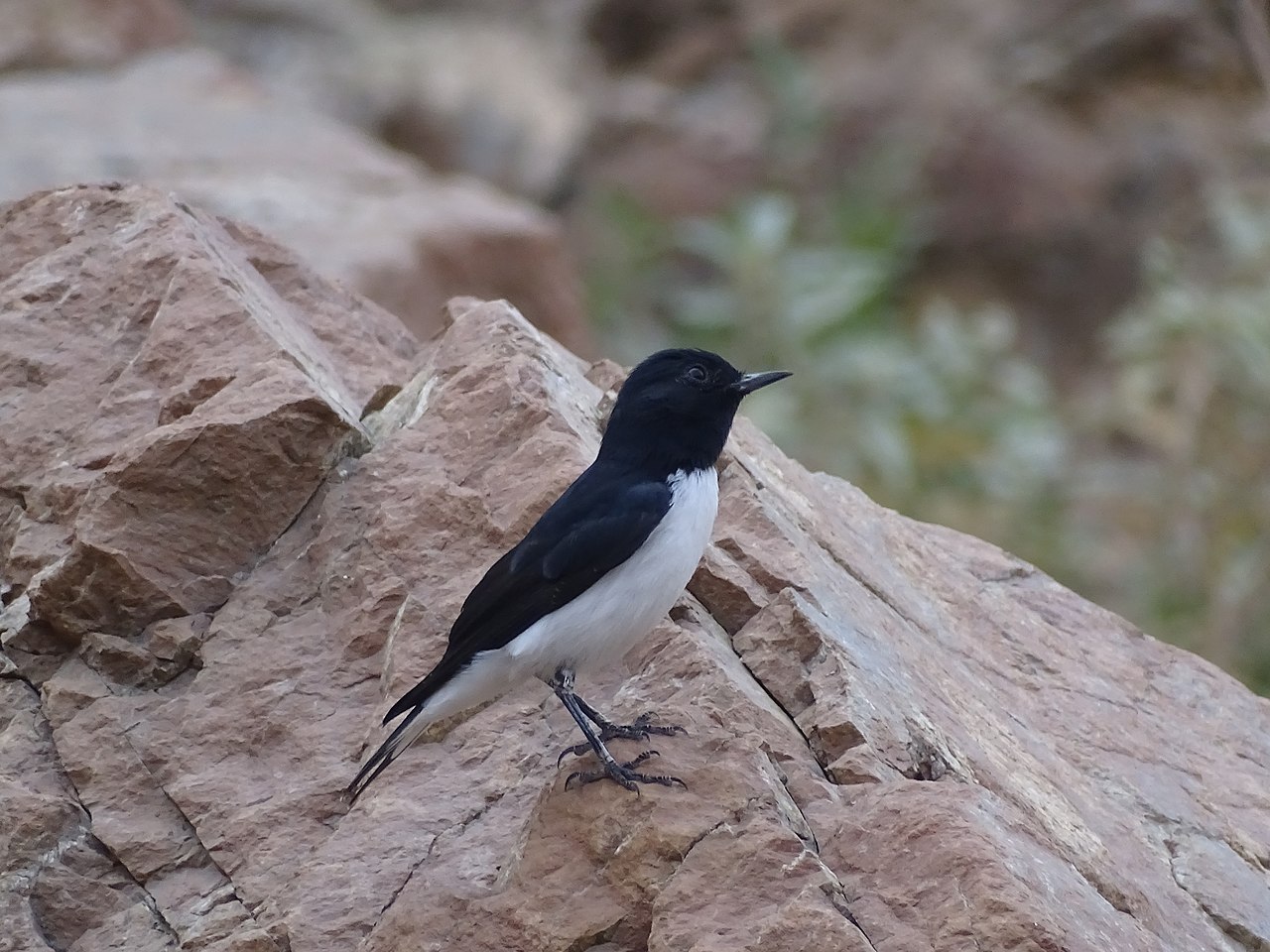
Hume's wheatear is a species of bird in the Old World flycatcher family Muscicapidae. This black-and-white bird is found in southern Afghanistan, Iran, extreme northeast Iraq, Oman, Pakistan, Qatar and the United Arab Emirates.
Region
Middle East and South-Central Asia
Typical Environment
Occurs from southern Afghanistan and eastern Iran through extreme northeast Iraq to Pakistan and the Arabian Peninsula, including Oman, Qatar, and the United Arab Emirates. Prefers rocky deserts, stony plains, wadis, escarpments, and foothills with sparse vegetation. Frequently found near cliffs, dry riverbeds, and human structures such as old buildings and stone walls. Typically inhabits open terrain with scattered perches for foraging and singing.
Altitude Range
Sea level to 2500 m
Climate Zone
Arid
Ease of Keeping
Beginner friendly: 2/5
Named after the British naturalist Allan Octavian Hume, Hume's wheatear is a striking black-and-white songbird of arid rocky landscapes. It often perches conspicuously on boulders, walls, or utility poles, flicking its tail to reveal a bold white rump with a black terminal band. Nests are tucked into rock crevices, walls, or buildings, lined with plant fibers and hair.

Temperament
solitary and territorial
Flight Pattern
short rapid wingbeats with low, undulating flights; frequent short sallies from perches
Social Behavior
Usually seen singly or in pairs, especially in the breeding season when pairs defend rocky territories. Nests are placed in crevices, holes in walls, or among rocks, with 3–5 eggs typically laid. Both adults attend the young and forage from prominent perches.
Migratory Pattern
Resident
Song Description
Song is a series of clear, whistled phrases mixed with short chatters and trills delivered from exposed perches. Calls include a sharp 'chak' or 'tack' and softer whistles used in contact and alarm.
Plumage
Males are mostly black with a contrasting white rump, lower back, and base of the tail; tail shows a broad black terminal band. Females are dark brown to sooty-brown with paler underparts and a similar white rump and tail pattern. Both sexes have sleek, tight plumage suited to arid habitats.
Diet
Primarily hunts insects and other small arthropods such as beetles, ants, and grasshoppers. It forages by dropping to the ground from a perch or making short aerial sallies to snatch prey. Occasionally takes small spiders and other invertebrates and may peck at fallen berries opportunistically.
Preferred Environment
Feeds in open, rocky ground, along wadis, scree slopes, and sparsely vegetated desert flats. Often forages near boulders, cliffs, and stone structures that provide elevated vantage points.


