

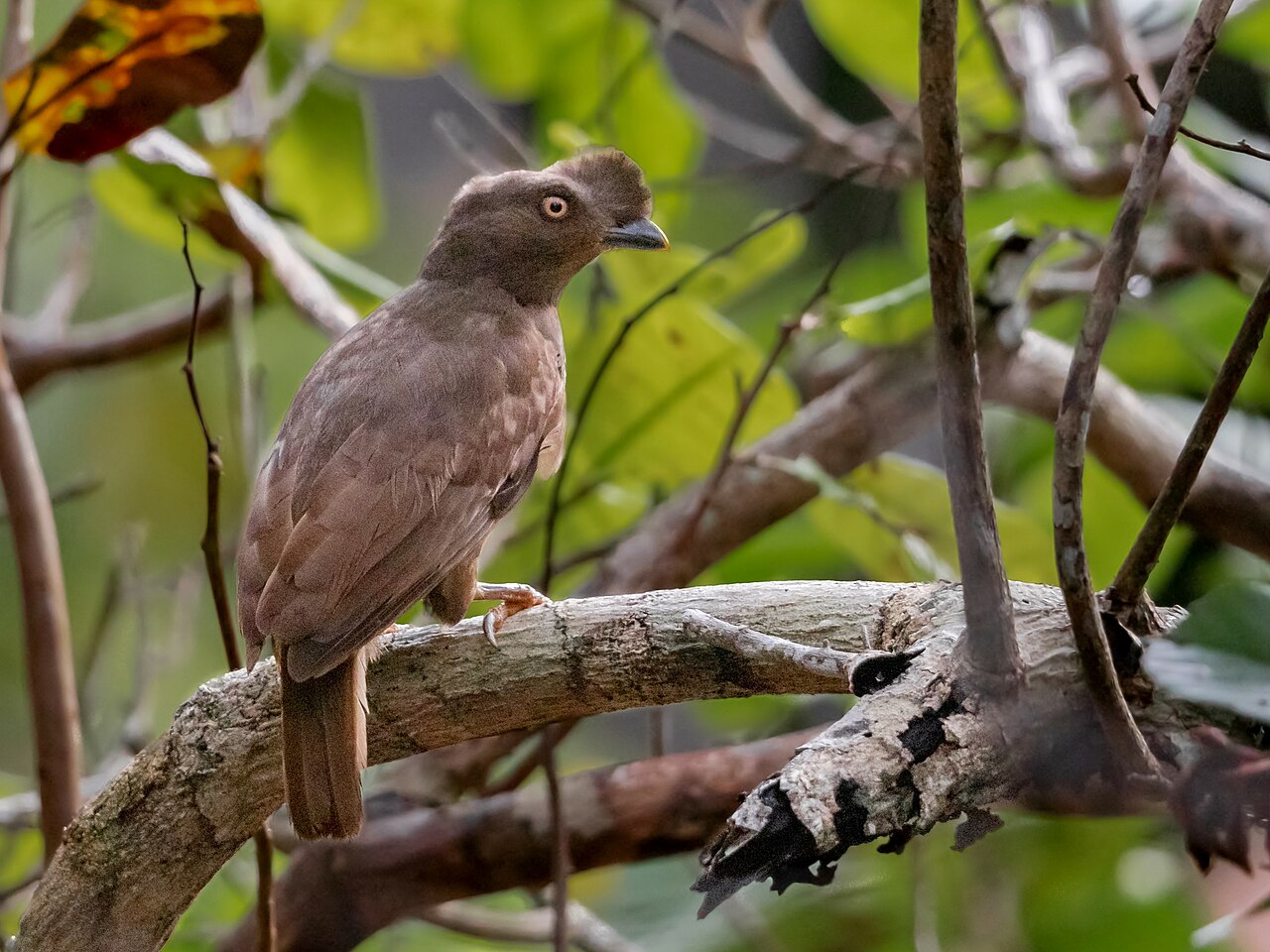
The Guianan cock-of-the-rock is a species of cotinga, a passerine bird from South America. It is about 30 cm (12 in) in length and weighs about 200 to 220 g. It is found in tropical rainforests, near its preferred habitat of rocky outcrops. The female's plumage is brownish/dark smokey grey in colour, and generally less noticeable than the males because of their nesting work in rocky areas. The male's feathers are a bright orange. Both have a heavy body, broad-based bill and wear a remarkable half-moon crest on the head. It is one of two species of the genus Rupicola, the other being the Andean cock-of-the-rock. The Guianan cock-of-the-rock lives across the forested region of northeastern South America. Its diet consists mostly of fruit, but they sometimes feast on small snakes and lizards.
Region
Guianas and northeastern Amazon Basin
Typical Environment
Occurs across the forested Guiana Shield, including Guyana, Suriname, French Guiana, parts of eastern Venezuela, and northern Brazil. Prefers dense, humid lowland rainforest near rocky outcrops, cliffs, and boulder-strewn ravines. Often found along forested river valleys and in gallery forest, sometimes using secondary forest if rocky nesting sites are present. Nests are typically placed on vertical rock faces or cave entrances, often near waterfalls or gorges. Avoids open habitats and heavily disturbed areas.
Altitude Range
0–1500 m
Climate Zone
Tropical
Ease of Keeping
Beginner friendly: 1/5
Males gather at traditional leks where they perform elaborate displays, flicking their wings and giving squeaks and croaks to attract females. Females choose mates, then nest alone on rocky ledges or cave walls, plastering mud and plant fibers to form a cup. The species is an important seed disperser in Guianan rainforests due to its primarily fruit-based diet. Its spectacular, half-moon crest is one of the most iconic features among South American birds.


Male Guianan Cock-of-the-rock perched, showing a frontal view of the eccentric crests

Male in his lush, tropical habitat

Closer view of the male's crest and ornamental feathers

Illustration by Jacques Barraband showing male plumage
Temperament
secretive in forest, males social at leks
Flight Pattern
short rapid wingbeats with swift, direct dashes between perches
Social Behavior
Males gather in leks at long-used arenas, where they display, call, and posture to compete for visiting females. The species is polygynous; only a few dominant males typically secure most matings. Females build and maintain mud-and-plant nests on rock walls and perform all incubation and chick-rearing without male assistance.
Migratory Pattern
Resident
Song Description
Vocalizations are a mix of harsh squeaks, whistles, and frog-like croaks, often given during display. Non-vocal sounds, including wing flicks and bill snaps, can accompany courtship. Calls carry through ravines and are most frequent at active leks.
Plumage
Male intensely orange with a large, disk-like half-moon crest that can cover the bill; wings mostly blackish with a prominent silvery-gray panel; tail dark. Female is dusky brown to smoky gray with a smaller crest and more subdued patterning. Both sexes have a heavy, broad-based bill and compact, robust body.
Diet
Primarily feeds on a wide variety of fleshy fruits, swallowing them whole and later regurgitating seeds, which aids forest regeneration. Also takes occasional insects and small vertebrates such as lizards or small snakes, especially when fruit is scarce. Often follows seasonal fruiting patterns and visits known fruiting trees repeatedly.
Preferred Environment
Forages in the understory to midstory of humid forest, especially along rocky ravines and near fruiting trees. Will feed at forest edges or light gaps when fruit is abundant. Typically uses perches to sally to nearby fruit or to glean directly from branches.


