

The grey-crowned babbler is a species of bird in the family Pomatostomidae. They are found in Australia and New Guinea . Its habitats include tropical and subtropical dry broadlife forests, tropical moist lowland forests, shrublands, and savannas.
Region
Australia and southern New Guinea
Typical Environment
Occurs across northern and eastern Australia and in the Trans-Fly region of southern New Guinea. It favors open eucalypt woodlands, acacia shrublands, savannas, and edges of tropical and subtropical forests. Often uses semi-cleared farmland with scattered trees and abundant fallen timber. Avoids dense closed-canopy rainforest and treeless grasslands, preferring structurally diverse understorey and midstory. Frequently near watercourses and in areas with plentiful coarse woody debris for nesting and foraging.
Altitude Range
Sea level to 1200 m
Climate Zone
Other
Ease of Keeping
Beginner friendly: 1/5
Grey-crowned babblers are highly social, living in cooperative family groups that build large, dome-shaped stick nests used for breeding and communal roosting. Groups perform loud, antiphonal choruses that sound like coordinated duets. They forage mainly on the ground, flipping leaf litter and probing bark for prey. In parts of southeastern Australia they have declined due to habitat fragmentation and loss of fallen timber.


Small flock of grey-crowned babblers (P. t. temporalis), New South Wales
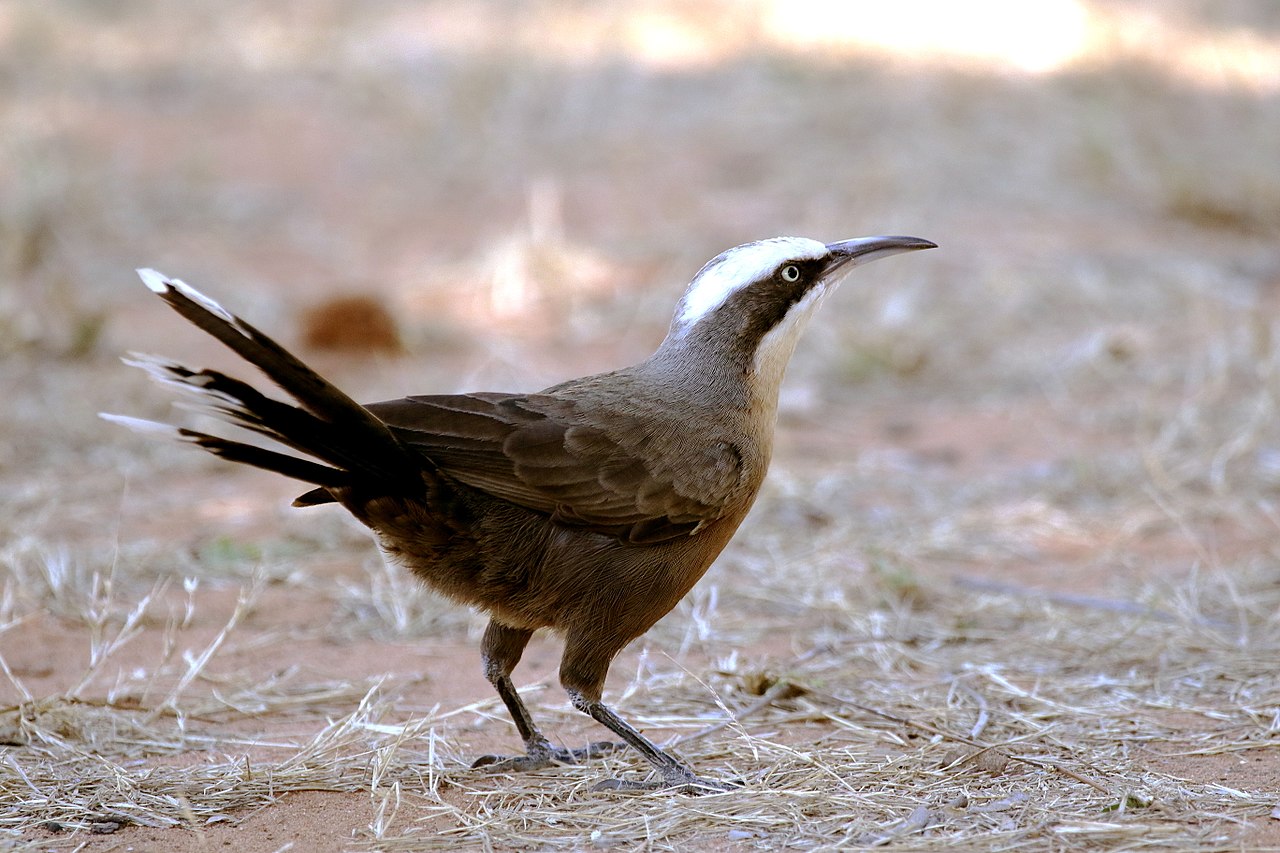
Grey-crowned babbler at Katherine, Northern Territory
Temperament
social and active
Flight Pattern
short rapid wingbeats with low, dipping flights between shrubs and trees
Social Behavior
Lives in cohesive family groups with cooperative breeding; offspring and other helpers assist in nest building and feeding young. Nests are large, domed structures of sticks placed in trees or tall shrubs, and groups often maintain multiple nests. They roost communally and perform coordinated choruses that reinforce group bonds.
Migratory Pattern
Resident
Song Description
Vocal and noisy, producing loud, antiphonal ‘ya-hoo’ or ‘yahoo-yahoo’ choruses given by multiple group members. Calls include chattering scolds, whistles, and harsh contact notes used to keep the group together while foraging.
Plumage
Chocolate-brown upperparts with paler underparts and a white throat, contrasted by a neat grey crown and bold white eyebrow. Shows rich rufous wing panels in flight and a long tail with white tips. Feathers are sleek but often appear slightly shaggy around the throat and flanks.
Diet
Primarily eats insects and other invertebrates such as beetles, caterpillars, spiders, and ants. Also takes small vertebrates on occasion and supplements the diet with fruit, seeds, and nectar. Forages by probing bark crevices, turning leaf litter, and inspecting dead wood. Group foraging helps flush prey and allows sentinel behavior while others feed.
Preferred Environment
Feeds mostly on the ground and lower trunks within open woodland, shrubland, and savanna. Often concentrates around fallen timber, logs, and coarse debris where prey is abundant. Will use edges of farmland and roadsides where scattered trees persist.


