
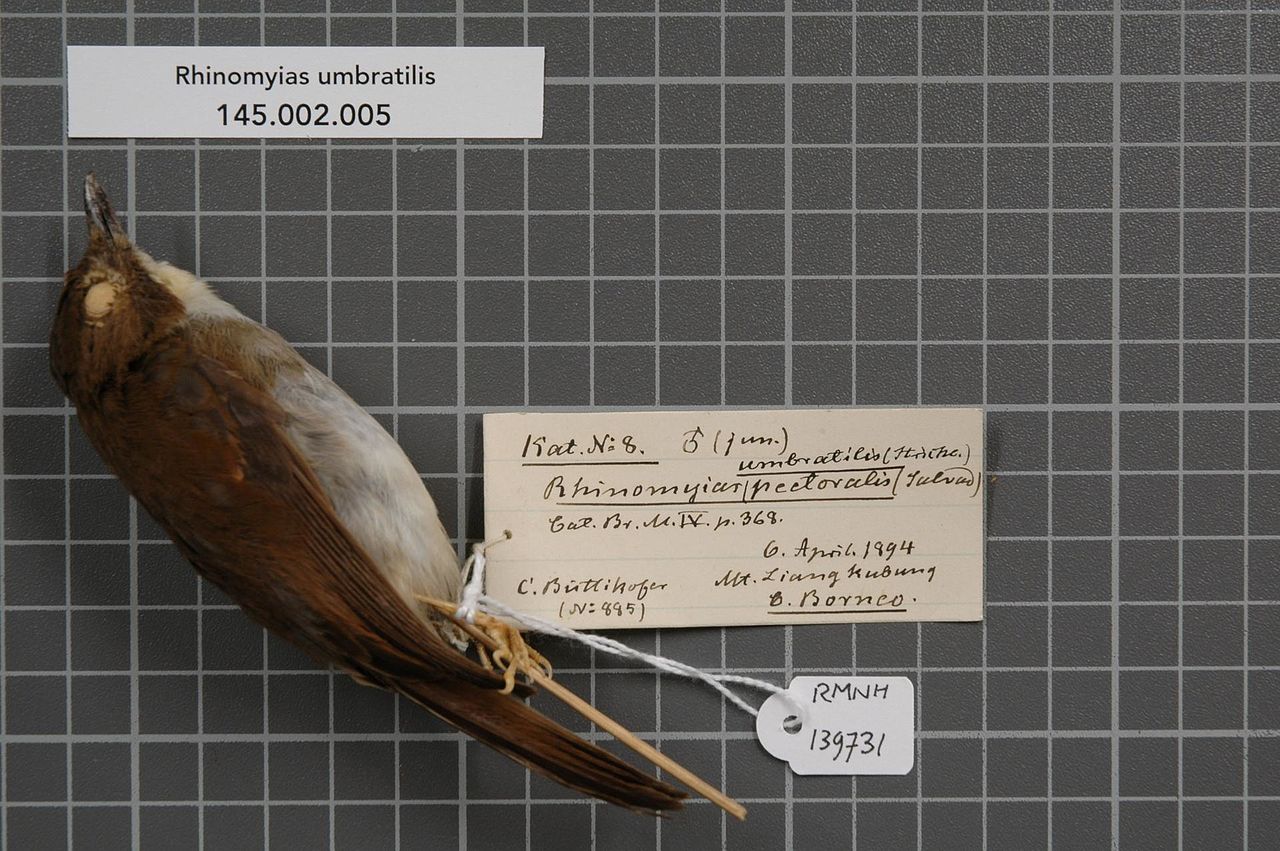
The grey-chested jungle flycatcher is a species of bird in the Old World flycatcher family Muscicapidae. It is found in Brunei, Indonesia, Malaysia, and Thailand. Its natural habitats are subtropical or tropical moist lowland forests and subtropical or tropical swamps. It is threatened by habitat loss.
Region
Sundaland (Malay Peninsula, Borneo, and southern Thailand)
Typical Environment
Occurs in Brunei, Indonesia (including Kalimantan and Sumatra), Malaysia (Peninsular and Bornean states), and southern Thailand. It favors primary and well-structured secondary lowland evergreen forest and peat or freshwater swamp forest. Typically keeps to shaded, dense understorey near streams, puddles, and damp thickets. Avoids open areas and is scarce or absent in heavily degraded forest. Local presence can be patchy where suitable understorey is intact.
Altitude Range
Sea level to 800 m
Climate Zone
Tropical
Ease of Keeping
Beginner friendly: 1/5
This elusive understorey flycatcher was formerly placed in the genus Rhinomyias but molecular studies moved it to Cyornis. It is highly sensitive to the loss of intact lowland rainforest and peat-swamp forest, disappearing quickly from heavily logged or fragmented sites. Males show a distinctive grey-washed chest that contrasts with a paler belly, while females are plainer and browner. It often betrays its presence with soft, thin whistles from low perches.

Temperament
shy and skulking
Flight Pattern
short rapid wingbeats with low, darting sallies
Social Behavior
Usually solitary or in pairs, keeping low in dense cover. Nests are thought to be cup-shaped and placed close to the ground in shrubs, root tangles, or low forks. Territorial during breeding and quietly shifts through undergrowth rather than joining mixed flocks. Breeding timing varies locally within the Sundaic region.
Migratory Pattern
Resident
Song Description
A soft, high-pitched series of thin whistles and seep notes, delivered from a shaded perch. Calls include a faint tik or tsip, often given when foraging. Vocalizations are unobtrusive and easily overlooked in insect-rich forest soundscapes.
Plumage
Dull brown upperparts with a cool grey-washed chest grading to a whitish belly; throat often paler. Females and immatures are warmer brown and more uniformly colored with a subtler grey wash. Feathers are smooth and neat, giving a clean, slightly contrasty front. Tail and wings are brown with minimal patterning.
Diet
Primarily small insects and other arthropods such as beetles, flies, ants, and spiders. Hunts by sallying from low, shaded perches to snatch prey from the air or foliage. Also gleans from leaves, twigs, and the forest floor. May occasionally take small soft-bodied invertebrates flushed by movement near streams or puddles.
Preferred Environment
Feeds within dense understorey, often 0.5–3 m above ground, along shaded trails, stream margins, and in swampy thickets. Prefers microhabitats with damp leaf litter and low perches for short sallies.


