

The great white pelican, also known as the eastern white pelican, rosy pelican or simply white pelican is a bird in the pelican family. It breeds from southeastern Europe through Asia and Africa, in swamps and shallow lakes.
Region
Africa, southeastern Europe and South Asia
Typical Environment
Prefers large, shallow freshwater or brackish wetlands such as lakes, floodplains, river deltas, lagoons, and estuaries. It breeds on low, predator-free islands, sandbars, and reedbeds with nearby abundant fish stocks. Avoids fast-flowing rivers and densely vegetated marshes where takeoff and cooperative foraging are difficult. Outside the breeding season it uses expansive lakes and coastal wetlands for roosting and feeding.
Altitude Range
Sea level to 2000 m
Climate Zone
Subtropical
Ease of Keeping
Beginner friendly: 1/5
The great white pelican is a huge, highly gregarious waterbird that often fishes cooperatively, herding schools of fish into shallows. Its elastic gular pouch works like a scoop net, and it drains water before swallowing prey. Colonies can number in the thousands, and birds migrate along major flyways between Eurasian breeding grounds and African wintering areas.


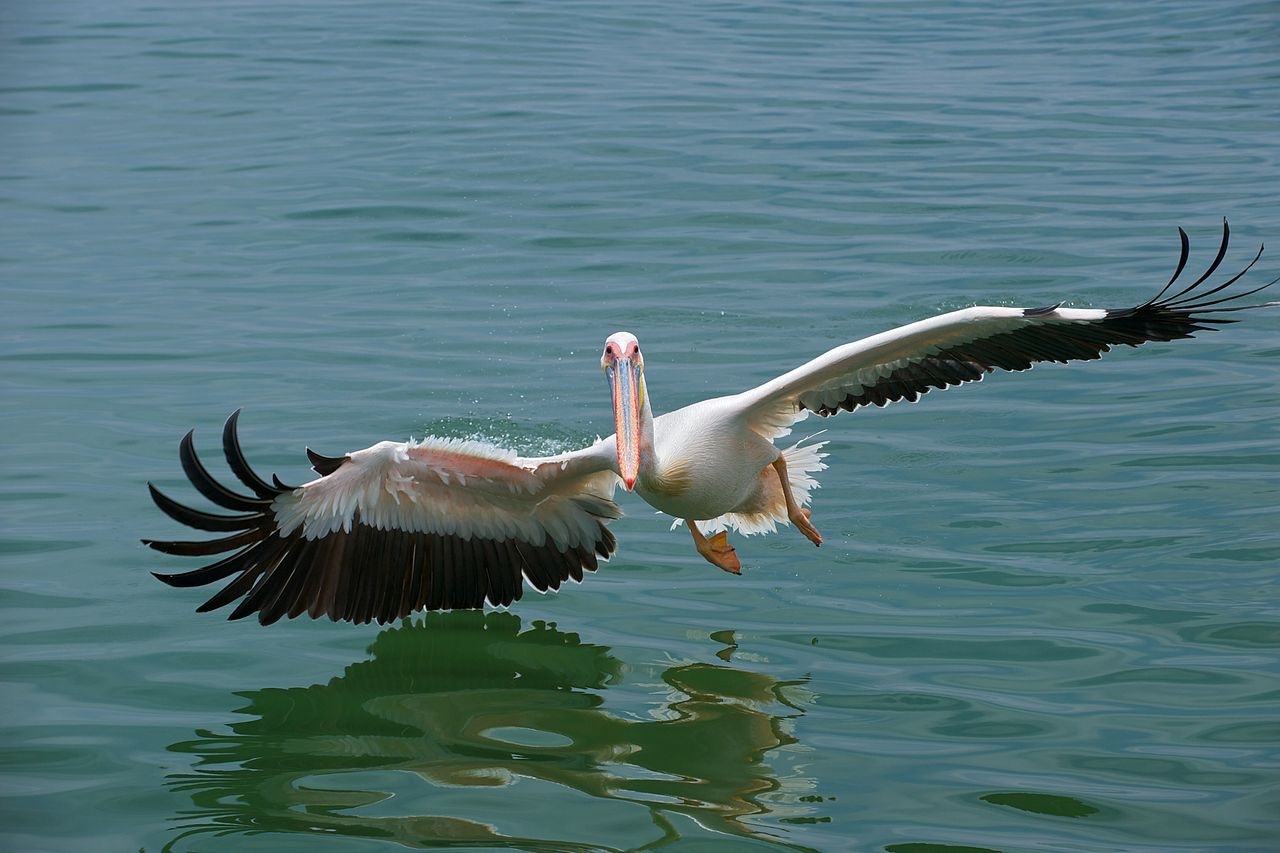
Great white pelican skimming the sea surface, in Namibia

Two great white pelicans (left) and an American white pelican (Pelecanus erythrorhynchos) in St James's Park, London

in St James' Park, London

in Ethiopia

A pair in breeding condition in Walvis Bay, Namibia

In Bangladesh

Two white pelicans flying in formation (Botswana).

Pelican taking off from the water in the Danube Delta, Romania

Rosy pelicans in full breeding plumage preening on shore

Egg, Collection Museum Wiesbaden
Temperament
social and gregarious
Flight Pattern
soaring glider with steady, powerful wingbeats
Social Behavior
Breeds colonially, often in large, dense groups on islands or reedbeds. Pairs are seasonally monogamous; both sexes build a shallow ground nest and share incubation and chick-rearing. Frequently engages in cooperative fishing lines that corral fish into shallow water.
Migratory Pattern
Partial migrant
Song Description
Generally quiet in flight, but at colonies emits deep grunts, croaks, and low honks. Bill-clattering and hissing occur during displays and territorial interactions.
Plumage
Mostly white plumage with a faint rosy wash; contrasting black primaries and secondaries visible in flight. Short, pale crest on the nape and extensive bare facial skin around the eye and base of bill.
Diet
Feeds mainly on fish such as cichlids, cyprinids, and mullet, typically 100–500 g in size. It scoops prey with its pouch and drains water before swallowing. Opportunistically takes amphibians and small crustaceans, and may pirate fish from other waterbirds when chances arise.
Preferred Environment
Forages in shallow open water, along lake margins, floodplains, and calm inshore lagoons. Often feeds cooperatively in groups, forming semicircles to drive fish into confined areas.


