

Forster's tern is a tern in the family Laridae. The genus name Sterna is derived from Old English "stearn", "tern", and forsteri commemorates the naturalist Johann Reinhold Forster.
Region
North America
Typical Environment
Breeds across interior North America, especially in prairie and coastal marshes of Canada and the northern United States, and locally in the western and Gulf states. Prefers extensive freshwater or brackish marshes with emergent vegetation such as cattails and bulrush. In winter it moves to coastal habitats along the Pacific, Gulf, and Atlantic coasts, frequenting estuaries, bays, and lagoons. Regularly roosts on sandbars and sheltered shorelines and forages over both open water and vegetated marsh channels.
Altitude Range
Sea level to 1500 m
Climate Zone
Temperate
Ease of Keeping
Beginner friendly: 1/5
Forster's tern breeds mainly in inland freshwater marshes, a bit unusual among terns that often prefer coastal sites. It is adept at hovering over shallow water before plunge-diving for prey and often catches insects on the wing. In nonbreeding plumage it shows a distinctive dark ear patch instead of a full black cap, helping separate it from similar terns. The species commemorates the naturalist Johann Reinhold Forster.
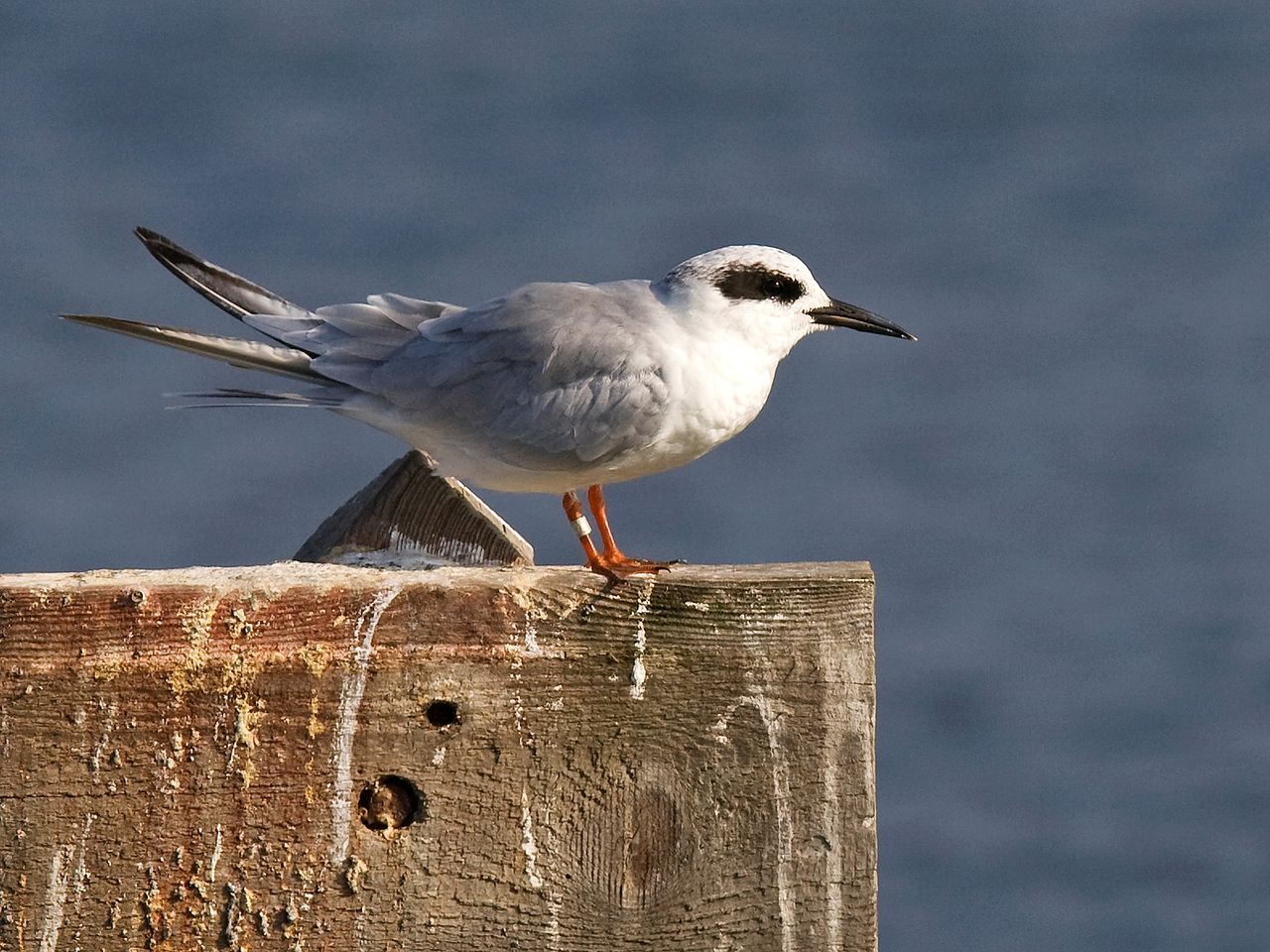


Juvenile calling in Queens, New York


Temperament
social and active
Flight Pattern
graceful, buoyant flight with frequent hovering and rapid, shallow wingbeats
Social Behavior
Nests colonially on floating mats of vegetation, muskrat houses, or low islets within marshes. Pairs are typically monogamous for the season and engage in courtship feeding and aerial displays. Both sexes share incubation and chick-rearing duties, and colonies can be noisy with frequent alarm calls.
Migratory Pattern
Seasonal migrant
Song Description
Vocal repertoire includes sharp kik and kree calls, buzzy scolds, and high-pitched squeaks given in flight and at colonies. Calls become especially insistent near nests and during alarm situations.
Plumage
Breeding adults are white below with pale gray mantle and wings, a glossy black cap, and long, deeply forked tail streamers. Nonbreeding birds lose the full cap and show a clean white head with a bold dark ear patch and nape smudging. Primaries are pale with translucent panels in flight.
Diet
Takes small fish, minnows, and fry captured by brief hovering followed by shallow plunge-dives. Also hawks aquatic and aerial insects such as dragonflies and beetles, especially over marsh vegetation. Occasionally consumes small crustaceans and other invertebrates when available.
Preferred Environment
Forages over freshwater and brackish marshes, estuaries, tidal flats, and sheltered coastal bays. Often hunts along channels and pool edges where prey is concentrated and visibility is good.


