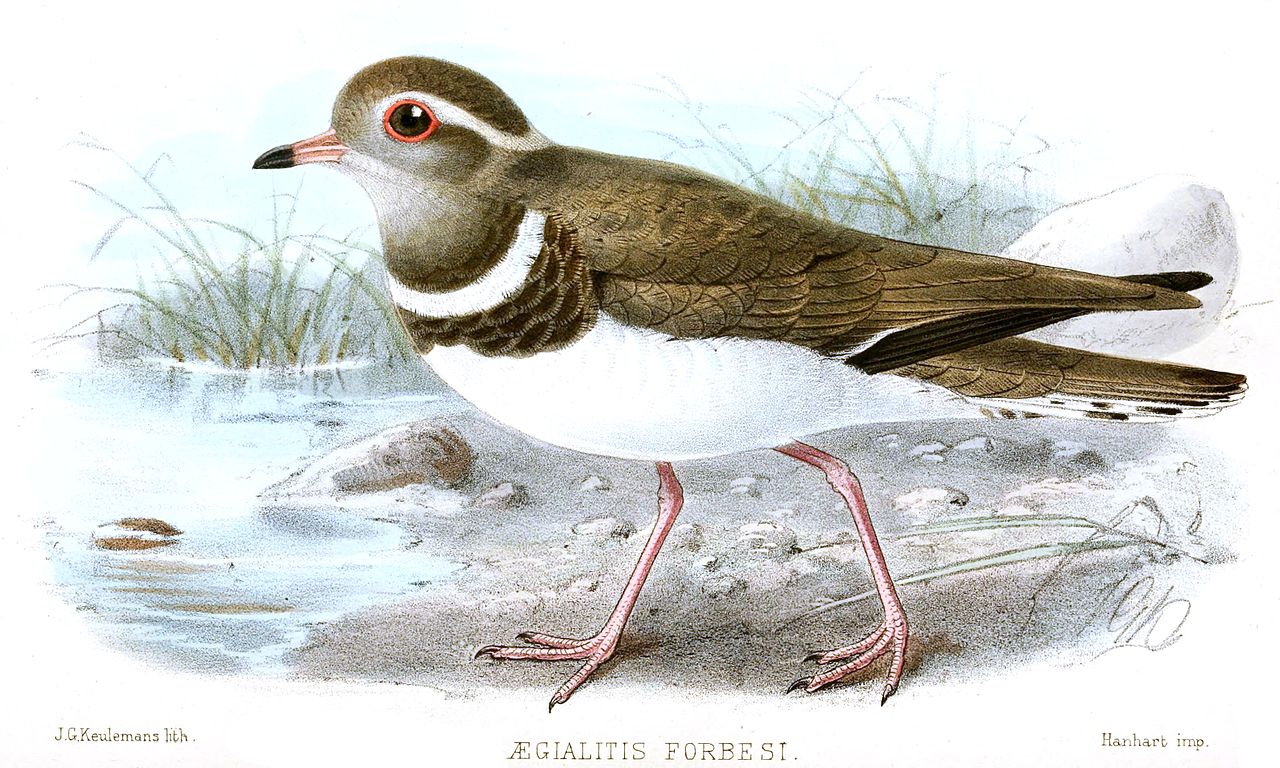
Forbes's mannikin or the New Ireland munia, is a species of estrildid finch breeding in Papua New Guinea. It has an estimated global extent of occurrence of 20,000 to 50,000 km2. It is found in subtropical or tropical lowland dry grassland habitat. The status of the species is evaluated as Least Concern.
Region
Bismarck Archipelago
Typical Environment
This species is confined to New Ireland, where it occupies open and semi-open lowland habitats. It frequents dry grasslands, weedy clearings, secondary growth, forest edges, and agricultural mosaics. It often occurs near villages and along roadsides where seeding grasses are abundant. During the non-breeding season it may range widely in search of ripening seed heads.
Altitude Range
Sea level to 800 m
Climate Zone
Tropical
Ease of Keeping
Beginner friendly: 3/5
Forbes's mannikin, also known as the New Ireland munia, is a small estrildid finch restricted to New Ireland in Papua New Guinea. It forms tight flocks outside the breeding season and readily uses human-altered habitats such as gardens and fallow fields. Like other munias, it is primarily a seed-eater with a stout, conical bill adapted for cracking tough grass seeds.

Temperament
social and active
Flight Pattern
short rapid wingbeats
Social Behavior
Outside the breeding season it gathers in small to medium-sized flocks that move together between feeding sites. Pairs are monogamous during breeding and build neat, domed grass nests concealed in shrubs or dense vegetation. Nests are typically situated low above the ground, and both parents share incubation and chick-rearing duties.
Migratory Pattern
Resident
Song Description
The vocalizations are soft, thin chips and twitters given frequently while foraging and in flight. Males deliver a simple, high-pitched song consisting of short trills and buzzy notes during courtship.
Plumage
unknown
Diet
Its diet consists mainly of small grass and sedge seeds, which it husks efficiently with its stout bill. It also takes other small seeds from weeds and cultivated plants, especially during the dry season. Occasionally, it may supplement its diet with tiny invertebrates, particularly when feeding nestlings. Flocks track patches of seeding grasses as they ripen across the landscape.
Preferred Environment
It feeds in open grassy areas, fallow fields, village edges, and along paths and roadsides where seeding grasses are plentiful. Birds often forage low to the ground, clinging to seed heads or gleaning from the ground. They may also use the margins of wetlands if grasses are abundant.