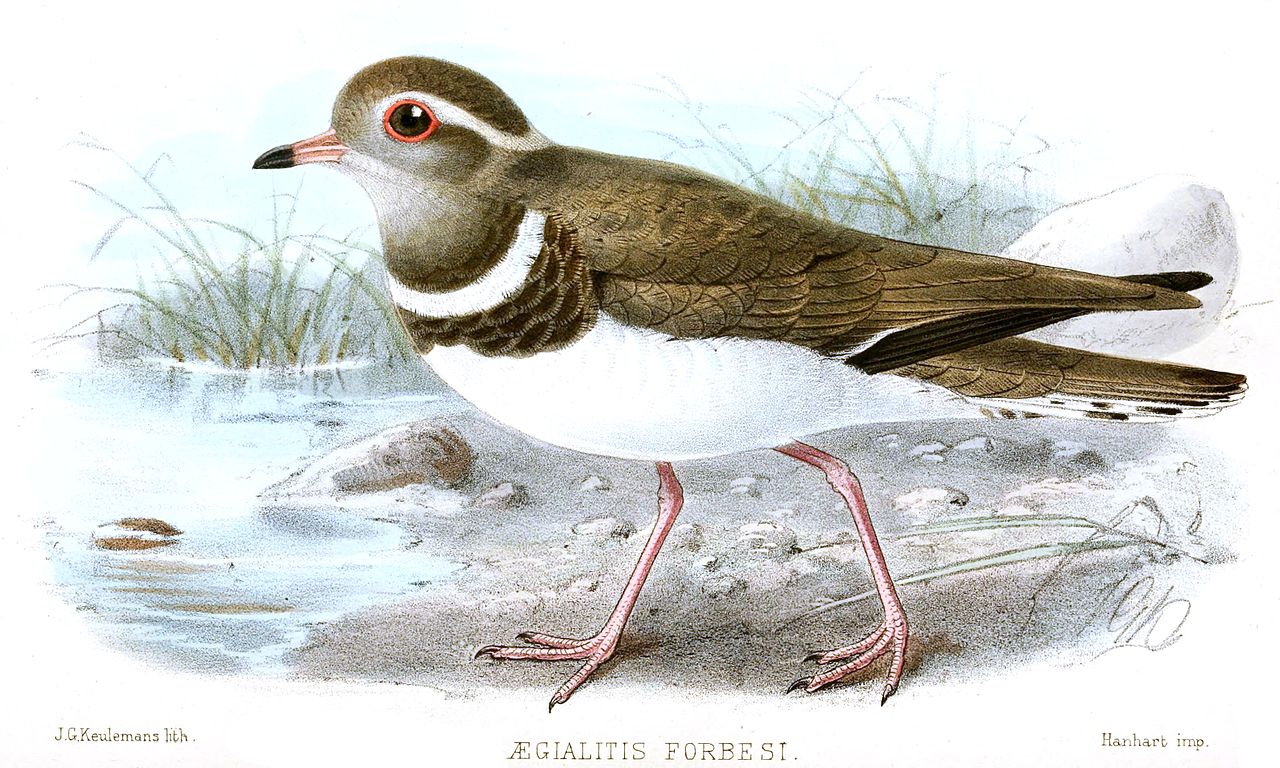
Forbes's forest rail or Forbes's forest crake, is a species of bird in the family Sarothruridae. It is found in New Guinea. Its natural habitats are subtropical or tropical moist lowland forest and subtropical or tropical moist montane forest.
Region
New Guinea
Typical Environment
Occurs across both Papua New Guinea and Indonesian Papua in primary and secondary subtropical to tropical forests. It favors dense understory, mossy gullies, and bamboo or thicket edges within lowland and montane forest. The species keeps close to the ground, moving quietly through leaf litter and along stream margins. It tolerates some habitat disturbance where cover remains intact.
Altitude Range
0–2500 m
Climate Zone
Tropical
Ease of Keeping
Beginner friendly: 1/5
Forbes's forest rail is a secretive, ground-dwelling rail of New Guinea’s forests, more often heard than seen. It slips through dense understory and leaf litter, flushing only for short distances when disturbed. Its mellow, whistled calls are most frequent at dawn and dusk, which is when it’s most detectable.

Temperament
secretive and shy
Flight Pattern
short rapid wingbeats; reluctant flier
Social Behavior
Typically solitary or in pairs, maintaining small territories within dense understory. Nests are placed close to the ground, well concealed among roots or thick vegetation. Both parents likely share incubation and chick care, as is common in rails.
Migratory Pattern
Resident
Song Description
Gives soft, whistled notes and low hoots that carry through forest understory, often delivered at dawn and dusk. Calls may be repeated in short series and can include antiphonal exchanges between mates.
Plumage
Compact rail with rich rufous-brown to brown upperparts and darker, fine barring on the flanks and wings; underparts show warm brown tones with subtle mottling. The face can appear slightly greyer than the body, and the bird lacks bold wing bars. Feathers are soft and dense, aiding stealth in thick understory.
Diet
Primarily consumes invertebrates such as beetles, ants, termites, spiders, and worms, gleaned from leaf litter and rotting wood. It probes soft soil and turns leaves to locate hidden prey. Occasionally takes small snails and may opportunistically peck at seeds or fallen fruit.
Preferred Environment
Forages on the forest floor in dense understory, along stream edges, and in damp gullies. Frequently uses areas with deep leaf litter, tangled roots, and bamboo thickets for both cover and prey availability.