
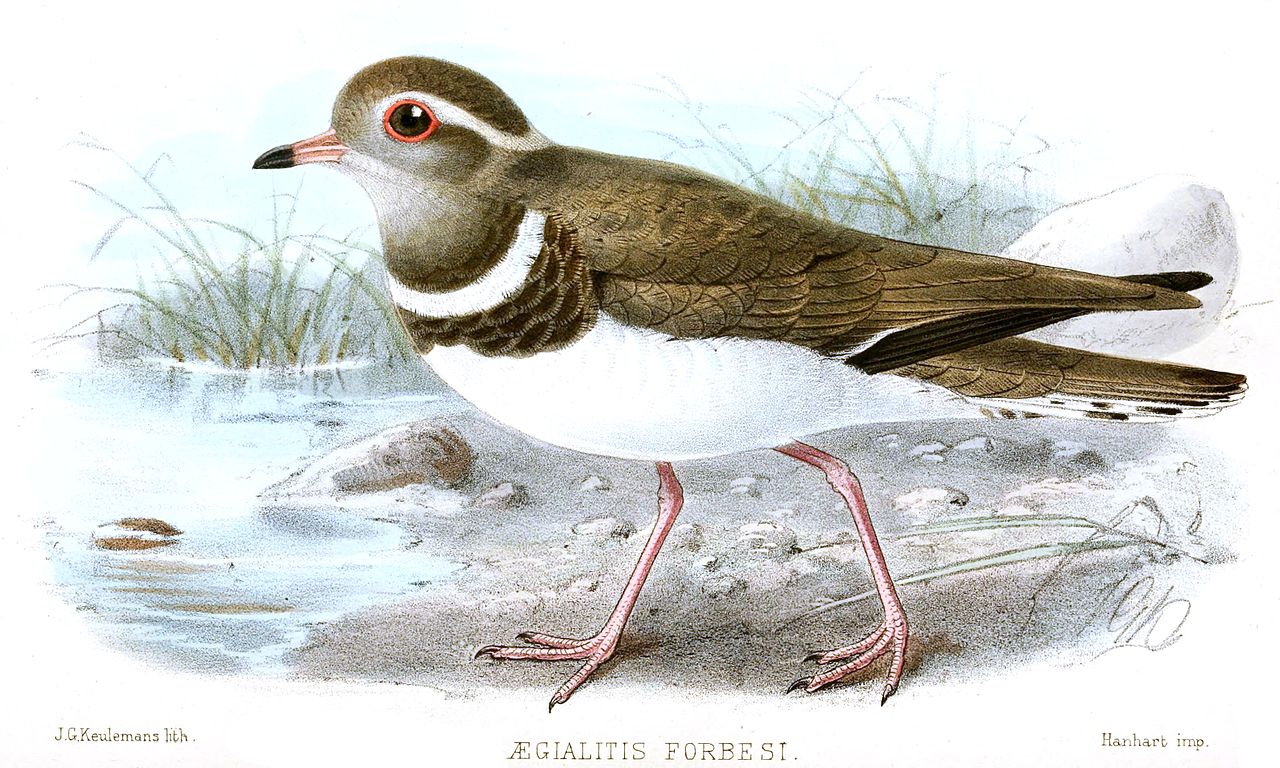
Forbes's plover or Forbes's banded plover is a small wader. This plover is resident in much of west Africa, mainly on inland rivers, pools and lakes. Its nest is a scrape lined with small pebbles in rocky uplands. After breeding in the wet season, this bird moves to open grasslands, including airfields and golf courses, in the dry season. It is sometimes seen at pools or reservoirs.
Region
West Africa
Typical Environment
Found from rocky uplands and plateaus to shorelines of inland rivers, pools, and lakes across parts of West Africa. During the wet season it favors stony, sparsely vegetated uplands for breeding. In the dry season it moves to open grasslands, short turf, airfields, and golf courses, and is occasionally seen at reservoirs and seasonal pools. It generally avoids dense vegetation, preferring open ground with good visibility and scattered stones.
Altitude Range
Sea level to 1800 m
Climate Zone
Tropical
Ease of Keeping
Beginner friendly: 1/5
Forbes's plover is a small West African wader that breeds on rocky uplands where it nests in a simple scrape lined with pebbles. After breeding during the wet season, it often shifts to open short-grass habitats such as airfields and golf courses in the dry season. It forages with the classic plover run-and-pause technique and is easily overlooked thanks to its cryptic brown upperparts.

Temperament
solitary and territorial in breeding season, more loosely social afterward
Flight Pattern
strong flier with quick, direct wingbeats and swift low passes over open ground
Social Behavior
Breeds in the wet season, typically in sparsely vegetated rocky uplands. The nest is a shallow scrape lined with small pebbles; both adults tend eggs and lead precocial chicks soon after hatching. Outside the breeding season, small loose groups may form on short turf and near water.
Migratory Pattern
Resident
Song Description
Calls are clear, whistled piping notes, often given in short series during display flights or when alarmed. Soft contact calls keep pairs and small groups in touch while foraging.
Plumage
Warm brown upperparts with clean white underparts and a narrow dark breast band. The face shows a white forehead and supercilium contrasting with a darker cap and mask; the nape can appear buffy. Feathers are smooth and sleek, aiding a neat, compact appearance.
Diet
Primarily small invertebrates, including insects such as beetles, ants, termites, and their larvae, as well as small worms and crustaceans taken near water. It employs a run-and-pause foraging style, picking prey from the surface or just below it. Diet shifts slightly with habitat, taking more terrestrial insects on short grass during the dry season.
Preferred Environment
Feeds along the edges of pools, reservoirs, and slow-flowing rivers, as well as on short-grazed grasslands and stony ground. It favors open areas with minimal cover for clear views of predators and prey.


