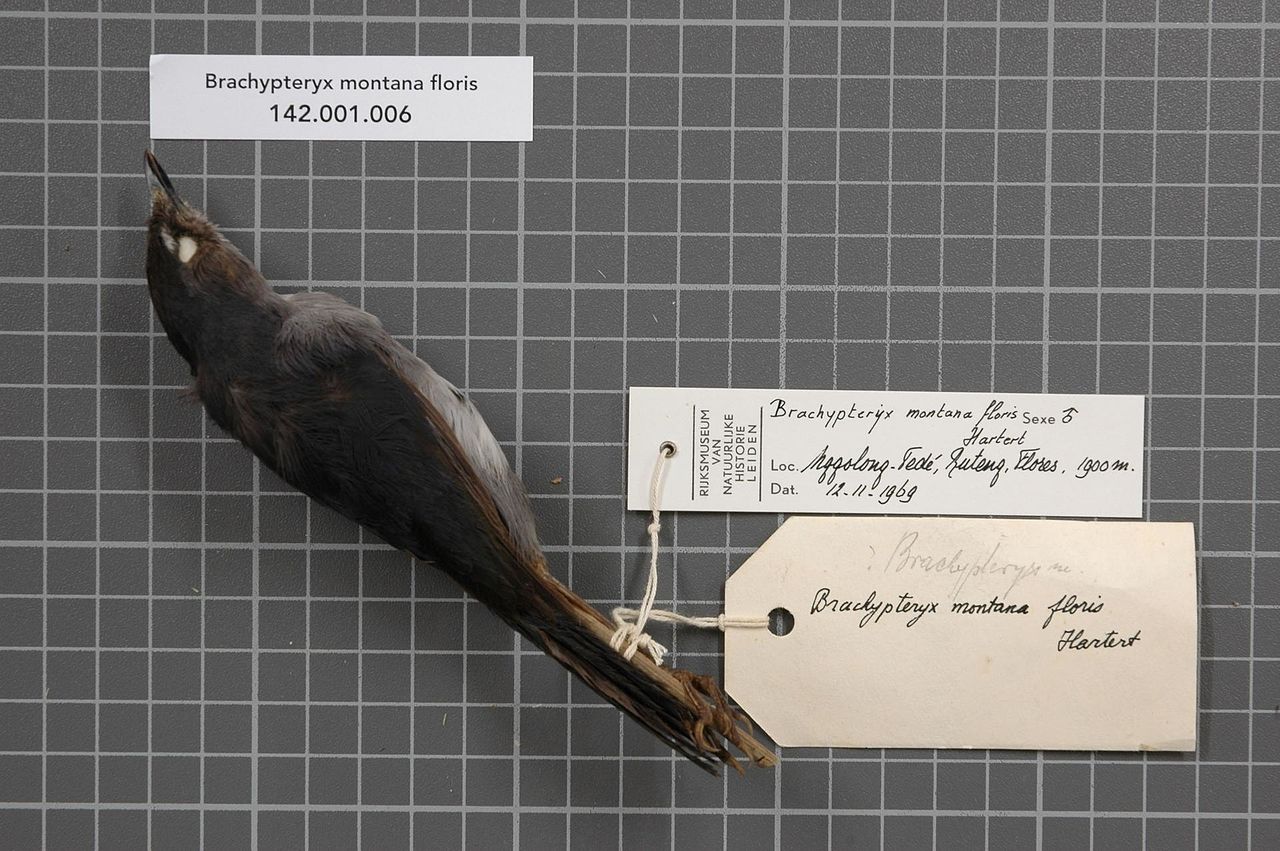
The Flores Sea cuckoo-dove is a species of bird in the family Columbidae. It is found on Sulawesi, Tanakeke and Selayar Islands, and some of the eastern Lesser Sundas. It was previously lumped together with the Tanimbar cuckoo-dove and the Timor cuckoo-dove as the dusky or bar-necked cuckoo-dove. The Flores Sea cuckoo-dove has two subspecies:M. m. macassariensis Wallace, 1865 - southwest Sulawesi, Selayar and Tanakeke Islands. M. m. longa Meise, 1930 - Tanahjampea and Kalaotoa Is.
Region
Sulawesi and eastern Lesser Sundas, Indonesia
Typical Environment
Occurs on Sulawesi, Selayar, Tanakeke, Tanahjampea, and Kalaotoa, with populations on surrounding islets within the Flores Sea. It favors lowland and hill forests, forest edges, and well-vegetated secondary growth, and also visits plantations and village fruit trees. The species is typically found in the mid to upper canopy but will descend to forage where fruiting shrubs are abundant. It tolerates some habitat disturbance provided fruit resources remain available.
Altitude Range
Sea level to 1500 m
Climate Zone
Tropical
Ease of Keeping
Beginner friendly: 2/5
Also known as the Sulawesi or Flores Sea cuckoo-dove, this species is part of a recently split complex formerly called the bar-necked or dusky cuckoo-dove. It inhabits islands around the Flores Sea, where it frequents forest edges and secondary growth and feeds mainly on small fruits. Its long, graduated tail and low, booming coos are distinctive. As a frugivore, it likely plays an important role in seed dispersal.
Temperament
shy and retiring
Flight Pattern
strong direct flight with rapid wingbeats
Social Behavior
Usually solitary or in pairs, occasionally loosely associating at fruiting trees. Perches quietly within the canopy and will sit for long periods between feeding bouts. Nests are simple twig platforms placed in dense foliage; the typical clutch is a single egg.
Migratory Pattern
Resident
Song Description
A low, resonant series of booming coos delivered at measured intervals, often carrying far in still forest. Also gives soft grunts and cooing contact notes when moving between perches.
Plumage
Warm rufous-brown overall with a slightly pinkish wash on the breast and finely barred or scaled hindneck. Upperparts are brown with a subtle gloss; the long tail is graduated with a pale gray terminal band. Underparts are plain to lightly mottled, and the texture is smooth with close-set contour feathers.
Diet
Feeds mainly on small fruits and berries, including figs and fruits of laurels and other forest trees. Will take seeds and occasionally soft plant matter. Swallows fruits whole and later regurgitates pits, aiding seed dispersal. Forages methodically from perch to perch within fruiting crowns.
Preferred Environment
Fruiting trees along forest edges, secondary growth, and gardens or plantations. Often uses mid to upper canopy but may descend to lower shrubs when fruiting is heavy.