

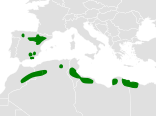
Dupont's lark is a species of lark in the family Alaudidae of the monotypic genus Chersophilus. It is found in northern Africa and Spain.
Region
Western Mediterranean
Typical Environment
Occurs patchily across arid shrub-steppe and semi-desert habitats in Spain and North Africa, including Morocco, Algeria, and Tunisia. Prefers flat to gently undulating terrain with very low, scattered shrubs such as Artemisia and saltbush and extensive bare ground. Avoids tall grasses and dense vegetation, selecting sites with sparse cover for foraging and nesting. Nests on the ground, tucked under small shrubs or grass tufts, where cryptic plumage provides camouflage.
Altitude Range
0–1600 m
Climate Zone
Arid
Ease of Keeping
Beginner friendly: 1/5
Dupont's lark is a secretive steppe specialist and the sole species in the genus Chersophilus. It favors sparse shrub-steppe and semi-desert where it often runs rather than flies, making it hard to detect. Its thin, melancholic song is frequently delivered at dawn, dusk, and even at night, carrying surprisingly far over open terrain. Habitat loss and fragmentation have caused noticeable declines, particularly in Spain.


Chersophilus duponti duponti - MHNT
Temperament
solitary and territorial
Flight Pattern
low, fluttering flights with short rapid wingbeats; reluctant to fly, often runs
Social Behavior
Typically encountered singly or in pairs, especially during the breeding season when males defend territories. Nests are placed on the ground under low shrubs; clutches are small and well-camouflaged. The species remains inconspicuous outside brief song-flights or display moments.
Migratory Pattern
Resident
Song Description
A thin, mournful series of tinkling notes and short phrases, often delivered from the ground or low song-flights. Frequently sung at dawn and dusk, and sometimes at night, the song carries far and can seem ventriloquial over open steppe.
Plumage
Sandy-brown upperparts finely streaked with darker brown; paler, buffy underparts with streaking on the breast fading toward the belly. Feathers are soft and cryptically patterned to blend with stony steppe. Long tail with paler outer feathers and subtly rufous tones.
Diet
Feeds chiefly on small invertebrates such as beetles, ants, grasshoppers, and spiders, especially in the breeding season. In autumn and winter it also consumes seeds of grasses and herbaceous plants. Foraging is done by walking and picking prey from the ground and low vegetation.
Preferred Environment
Open, sparsely vegetated steppe with bare patches and low shrubs where prey is easy to spot. Often forages along microhabitat edges between bare soil and shrub clumps.


