

The dodo is an extinct flightless bird that was endemic to the island of Mauritius, which is east of Madagascar in the Indian Ocean. The dodo's closest relative was the also-extinct and flightless Rodrigues solitaire. The two formed the subtribe Raphina, a clade of extinct flightless birds that are a part of the group that includes pigeons and doves. The closest living relative of the dodo is the Nicobar pigeon. A white dodo was once thought to have existed on the nearby island of Réunion, but it is now believed that this assumption was merely confusion based on the also-extinct Réunion ibis and paintings of white dodos.
Region
Mascarene Islands
Typical Environment
Endemic to the island of Mauritius, the dodo inhabited lowland dry to evergreen forests and coastal woodlands. It foraged mainly on the forest floor, taking fallen fruits, seeds, bulbs, and likely invertebrates. Historical and subfossil evidence suggest use of palm-rich thickets and ebony-dominated forests, with access to freshwater. It likely nested on the ground in secluded forest patches. After human arrival, surviving birds probably persisted in remoter valleys and thickets before disappearing.
Altitude Range
Sea level to 800 m
Climate Zone
Tropical
Ease of Keeping
Beginner friendly: 1/5
The dodo was a large, flightless pigeon relative that evolved on predator-free Mauritius and became extinct by the late 17th century after human arrival, hunting, habitat loss, and introduced animals. Its closest living relative is the Nicobar pigeon, and it shared a clade with the Rodrigues solitaire. Much of what we know comes from subfossil remains at Mare aux Songes and a handful of historical accounts and paintings. The species has become an enduring symbol of human-driven extinction.


The Nicobar pigeon is the closest living relative of the dodo

1848 lithograph of the Oxford specimen's foot, which has been used to sample DNA for genetic analyses

1601 engraving showing Dutch activities on the shore of Mauritius and the first published depiction of a dodo on the left (2, called "Walchvoghel")

Labelled sketch from 1634 by Sir Thomas Herbert, showing a broad-billed parrot, a red rail, and a dodo

Size compared to a human

1848 lithographs of the Oxford dodo's skull in multiple views

Skeleton of the dodo (left) and its closest relative, the Rodrigues solitaire, not to scale


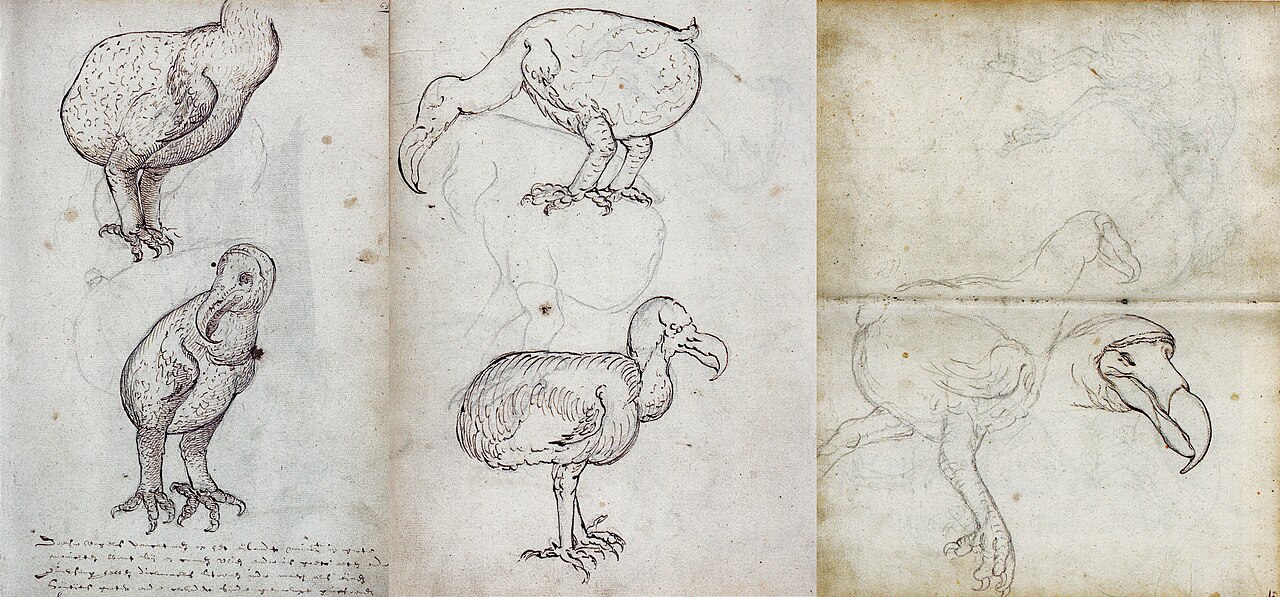
Compilation of the Gelderland ship's journal sketches from 1601 of live and recently killed dodos, attributed to Joris Laerle
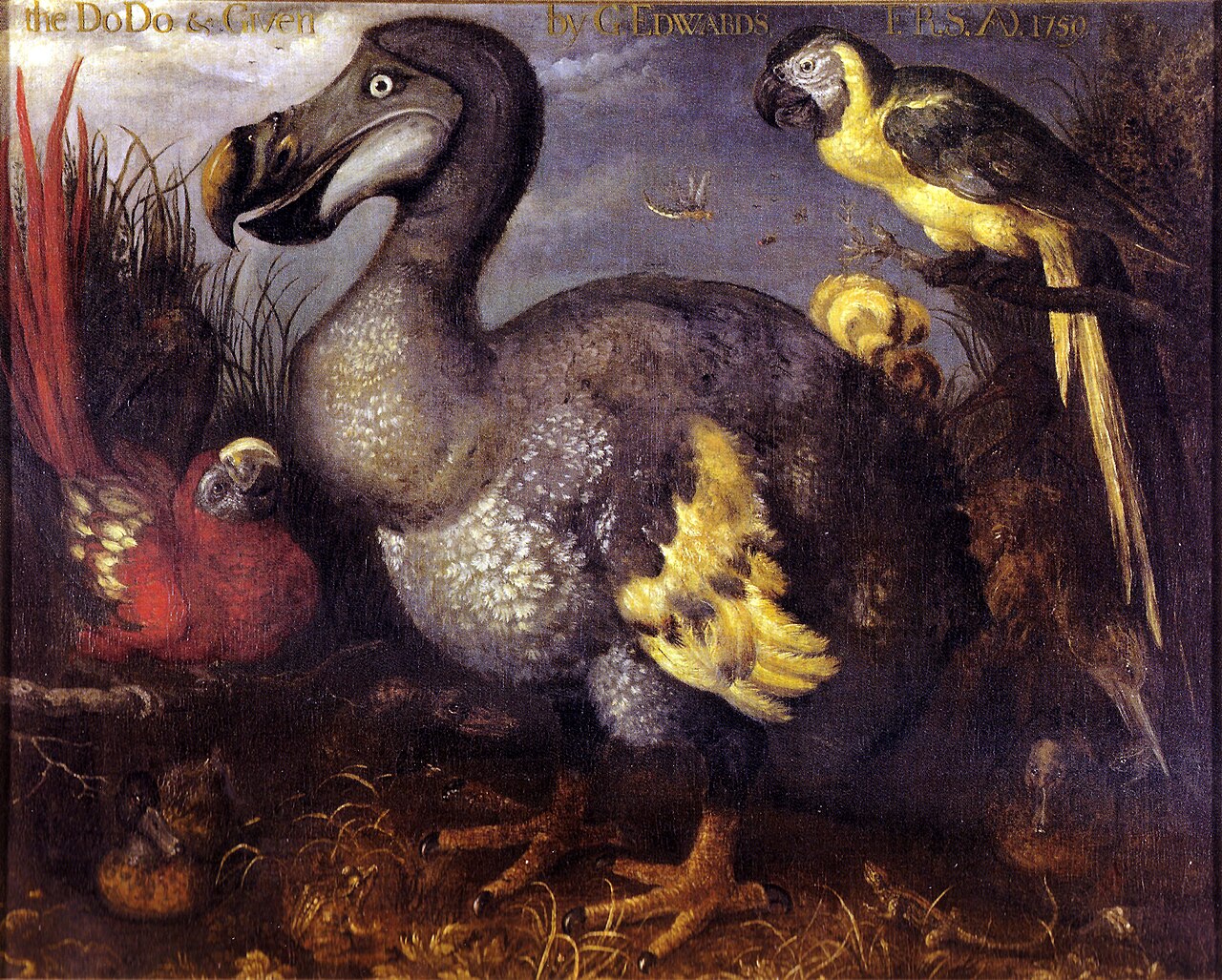
The famous Edwards's Dodo, painted by Roelant Savery in 1626

Modern life restoration of a slim dodo, by Julian P. Hume

1601 map of a bay on Mauritius; the small D on the far right side marks where dodos were found

Savery sketch of three dodos from c. 1626, Crocker Art Gallery

Dodo and its gizzard stone by Carolus Clusius from 1605, copied from an illustration in the journal of Jacob van Neck

Replica of an alleged dodo egg in a reconstructed nest, East London Museum


1648 engraving showing the killing of dodos (centre left, erroneously depicted as penguin-like) and other animals now extinct from Mauritius


Complete Skeleton found by Louis Etienne Thirioux in 1904, Natural History Museum, Port Louis


Temperament
generally calm and inquisitive
Flight Pattern
flightless; moves by walking and running
Social Behavior
Likely formed small feeding groups and was not strongly territorial. Nests were probably simple ground scrapes with a single large egg, with both parents possibly guarding the nest. Breeding timing is uncertain but may have tracked seasonal fruiting.
Migratory Pattern
Resident
Song Description
Vocalizations are poorly documented; contemporary accounts suggest low croaks, grunts, or hisses. Calls were likely simple contact and alarm sounds rather than complex songs.
Plumage
Shaggy, grey-brown plumage with looser, curly feathers on the body and a tufted, curly white tail. Wings were small and stunted with soft feathers. The head and neck were relatively bare with tougher skin.
Diet
The dodo likely fed on fallen fruits from native trees (including palms and ebony associates), seeds, bulbs, and other plant matter. It probably consumed invertebrates and may have scavenged opportunistically, making it an omnivore. Gizzard stones found with remains suggest it ground tough food items. Seasonal resource pulses from fruiting trees likely shaped its feeding patterns.
Preferred Environment
Foraged on the forest floor in lowland woods and coastal thickets, especially where fruiting trees were abundant. It may have visited stream margins and coastal edges after storms to exploit washed-up food.


