

The common kestrel, also known as the European kestrel, Eurasian kestrel or Old World kestrel, is a species of predatory bird belonging to the kestrel group of the falcon family Falconidae. In the United Kingdom, where no other kestrel species commonly occurs, it is generally just called the "kestrel".
Region
Europe, North Africa, and Asia
Typical Environment
The common kestrel occupies a vast Old World range from the British Isles across Europe and Asia to parts of China, and south into North Africa and the Middle East. It favors open habitats such as grasslands, heaths, farmland, steppe, and scrub, and readily uses urban edges and villages. Cliffs, quarries, and tall buildings provide nest ledges where natural sites are scarce. It often coexists with humans, taking advantage of linear features like hedgerows and roadsides for hunting.
Altitude Range
Sea level to 4500 m
Climate Zone
Temperate
Ease of Keeping
Beginner friendly: 2/5
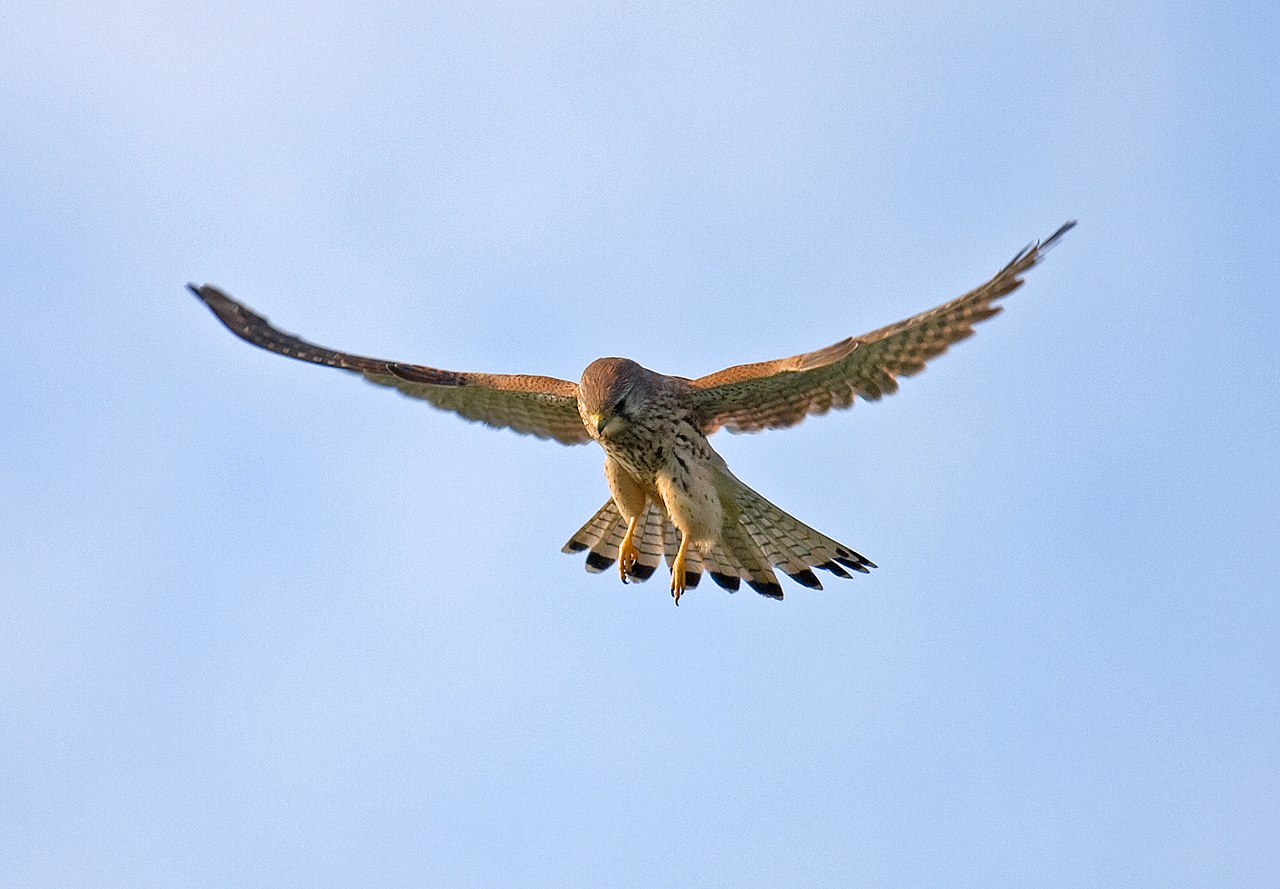
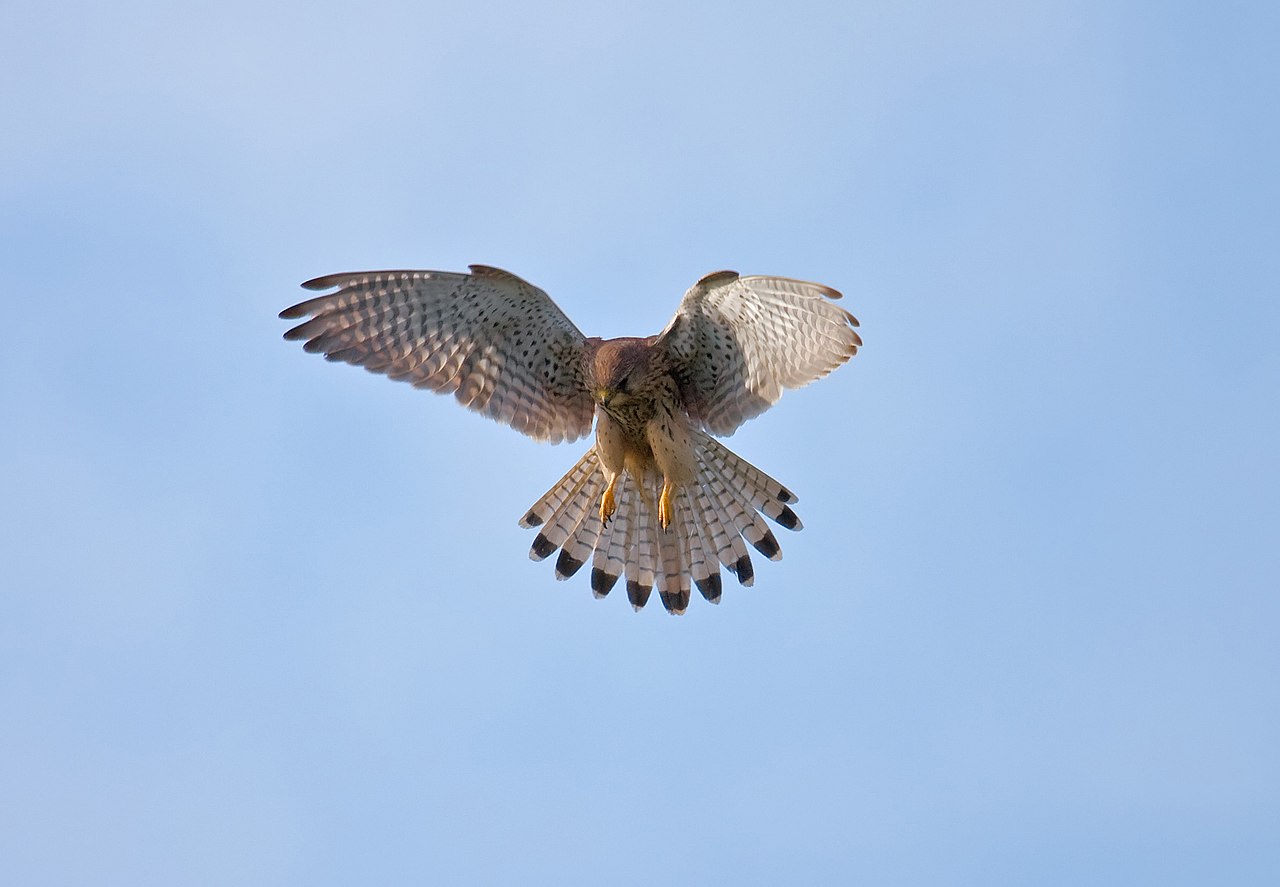
Common kestrels are famous for their ability to hover facing the wind while searching for prey, a behavior known as “wind-hovering.” They primarily hunt small mammals in open country and often perch on roadside posts or urban buildings. Their vision extends into ultraviolet wavelengths, helping them detect rodent urine trails. They readily adapt to human-altered landscapes, including farmland and cities.


F. t. canariensis from Gran Canaria

F. t. rupicolaeformis from Hurghada, Egypt


Egg

Young kestrels, not yet able to fly, waiting for food


Wooden common kestrel sculpture
Temperament
solitary and territorial
Flight Pattern
hovering specialist with rapid wingbeats and short glides
Social Behavior
Typically breeds as solitary pairs, though loose aggregations occur where food is abundant. Often reuses old corvid nests or ledges on cliffs and buildings, laying 3–6 eggs. Pair bonds are usually monogamous for the season, with both adults involved in care. Roosting can be communal outside the breeding season in good habitat.
Migratory Pattern
Partial migrant
Song Description
Vocalizations include a sharp, repeated “kee-kee-kee” or “klee-klee-klee,” especially during alarm and breeding displays. Calls are high-pitched and rapid, carrying far over open country. Generally quieter away from nesting territories.
Plumage
Rufous-brown upperparts with dark spotting and paler, streaked underparts; males show cleaner, finer streaking and females more barring. Males have a grey head and tail with a black terminal band; females are browner with a barred tail. Both sexes show a relatively slender, pointed-wing falcon profile.
Diet
Small mammals such as voles, mice, and shrews form the bulk of the diet, supplemented by small birds, lizards, and large insects. It hunts by hovering into the wind and dropping in a short stoop onto prey located by keen vision. Insects and small reptiles become more important where rodents are scarce. Carrion is taken rarely.
Preferred Environment
Open fields, meadows, heaths, moorland edges, and agricultural landscapes are favored hunting grounds. It also exploits roadside verges, hedgerows, and urban parks, using posts, wires, and buildings as vantage points.


