

The chestnut-backed chickadee is a small passerine bird in the tit family, Paridae, native to western North America.
Region
Pacific Coast of North America
Typical Environment
Found from coastal southern Alaska through British Columbia, Washington, and Oregon into northern and central coastal California. It favors moist coniferous and mixed forests, especially spruce–hemlock, Douglas-fir, and redwood stands. Also occurs in wooded suburbs and parks if mature evergreens are nearby. In the Sierra Nevada and coastal ranges it occupies montane conifer belts and forest edges.
Altitude Range
Sea level to 2500 m
Climate Zone
Temperate
Ease of Keeping
Beginner friendly: 2/5
This chickadee is a year-round resident of the Pacific coast forests and is noted for its rich chestnut back and flanks. It often lines its nest with animal hair or fur and readily uses nest boxes. Like other chickadees, it caches food and adjusts the number of 'dee' notes in its call depending on predator threat. It is a frequent visitor to backyard feeders, especially where conifers are present.


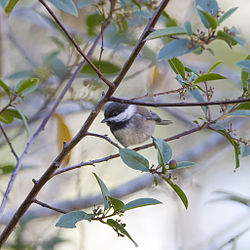
Chestnut-backed chickadee.


Temperament
social and active
Flight Pattern
short rapid wingbeats
Social Behavior
Forms small flocks, often joining mixed-species parties outside the breeding season. Pairs are typically monogamous and nest in natural cavities or old woodpecker holes, sometimes using nest boxes. They cache seeds and insects and may roost communally in cold weather.
Migratory Pattern
Resident
Song Description
Calls include the familiar high, buzzy chick-a-dee-dee with variable numbers of 'dee' notes that increase with alarm. Songs are thin, high-pitched whistles and sibilant notes, softer than those of the black-capped chickadee.
Plumage
Rich chestnut back and flanks with grayish wings and tail, black cap and throat, and clean white cheek patches.
Diet
Eats insects, spiders, and other small invertebrates, especially during the breeding season. Also takes conifer seeds, berries, and other plant material, and readily visits feeders for sunflower seeds and suet. Frequently caches food in bark crevices and foliage for later use.
Preferred Environment
Forages in conifer canopies, forest edges, and understory shrubs, gleaning from needles and twigs. In suburban areas it feeds in yards with mature evergreens and at bird feeders. Often joins mixed flocks to exploit a wider range of foraging sites.


