

The cedar waxwing is a member of the family Bombycillidae or waxwing family of passerine birds. It is a medium-sized bird that is mainly brown, gray, and yellow. Some of the wing feathers have red tips, the resemblance of which to sealing wax gives these birds their common name. It is a native of North and Central America, breeding in open wooded areas in southern Canada and wintering in the southern half of the United States, Central America, and the far northwest of South America. Its diet includes cedar cones, fruit, holly berries, and insects. The cedar waxwing is listed as least concern on the IUCN Red List.
Region
North and Central America
Typical Environment
Breeds primarily in open woodlands, riparian corridors, and forest edges across southern Canada and the northern United States. In winter it ranges widely through the southern United States, Mexico, and Central America, reaching the far northwest of South America. It favors habitats with abundant fruiting shrubs and trees such as juniper/cedar, dogwood, serviceberry, and mountain ash. Often found in suburban parks, orchards, and shelterbelts where fruit is plentiful. Flocks roam nomadically outside the breeding season, tracking berry crops across the landscape.
Altitude Range
Sea level to 2500 m
Climate Zone
Temperate
Ease of Keeping
Beginner friendly: 1/5
Cedar waxwings are named for the waxy, red tips on some wing feathers and often show a bright yellow (occasionally orange) band at the tail tip. They are highly frugivorous and can become intoxicated by fermented berries. Courtship commonly includes passing berries back and forth between mates. Their sleek crest and black mask make them easy to recognize even in large flocks.


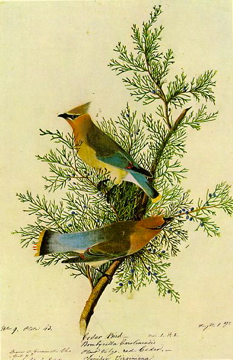
Audubon's illustration

Cedar Waxwing in Monongahela National Forest, West Virginia

In the branches of a weeping holly tree

Egg, Collection Museum Wiesbaden

Feeding on tree sap

Sharing a berry

Eating berries
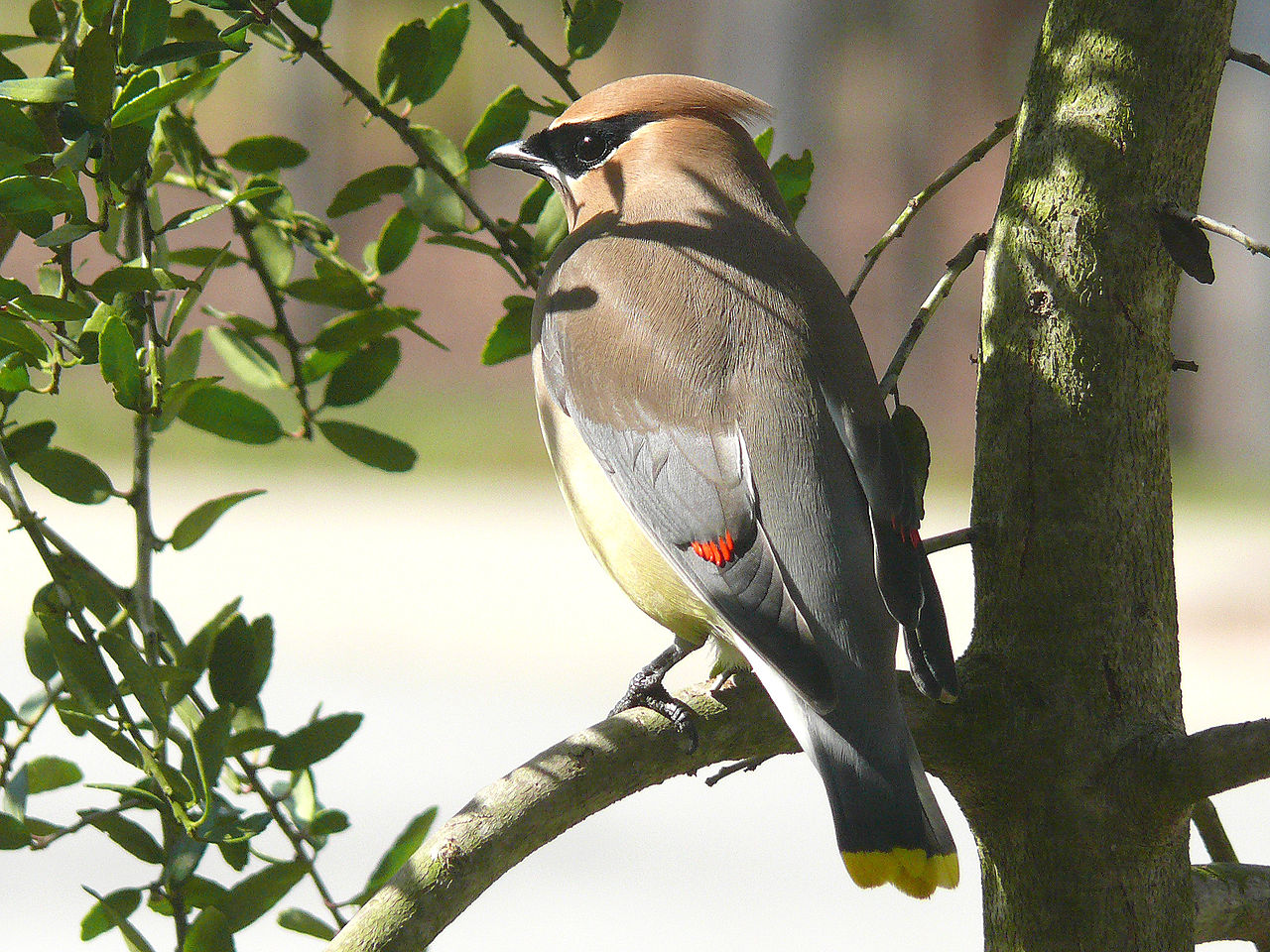
"Red wax" on wing tips visible
Temperament
social and active
Flight Pattern
short rapid wingbeats with strong, direct flight
Social Behavior
Highly gregarious year-round, forming cohesive flocks that feed and move together. Pairs are monogamous in the breeding season; courtship includes passing berries between partners. Nests are typically placed in trees or tall shrubs, often near water, with both parents feeding the young.
Migratory Pattern
Seasonal migrant
Song Description
Vocalizations are high, thin, sibilant whistles, often rendered as seee or sreee, frequently given in chorus by flocks. Songs are simple and short, lacking the elaborate phrases of many songbirds.
Plumage
Silky, sleek plumage with a pointed crest; warm brown head and chest blending to gray on the back and pale yellow on the belly. Black mask with fine white edging, and a bright yellow terminal band on the tail; some individuals show an orange tail tip. Secondary feathers may bear red, wax-like tips.
Diet
Primarily eats fruit, including juniper/cedar berries, dogwood, serviceberry, mountain ash, hawthorn, and crabapple. In summer it supplements with insects, especially flying insects caught on the wing. Will occasionally feed on flower petals and sip sap or nectar opportunistically. Fermented fruits can sometimes intoxicate individuals.
Preferred Environment
Feeds in fruit-laden shrubs and trees along forest edges, riparian belts, orchards, and urban parks. Often forages in flocks and may sally out from perches to catch aerial insects over water or open areas.


