

The Cape canary is a small passerine bird in the finch family. It is a resident breeder in southern Africa and has been introduced to Mauritius and Réunion.
Region
Southern Africa and Mascarene Islands
Typical Environment
Native across much of southern Africa, especially in South Africa, Lesotho, Eswatini, Namibia, and parts of Botswana and Zimbabwe. It frequents fynbos, open woodland, montane grasslands, farmlands, and suburban gardens. The species has been introduced to Mauritius and Réunion, where it occupies open habitats and edge environments. It often forages in ecotones with scattered shrubs and low trees and uses hedgerows and garden plantings for cover.
Altitude Range
Sea level to 3000 m
Climate Zone
Temperate
Ease of Keeping
Beginner friendly: 3/5
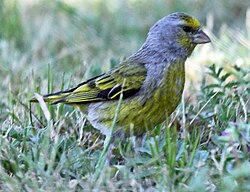
The Cape canary is a lively finch whose bright, tinkling song is often heard from exposed perches in gardens and fynbos. Its scientific name refers to the greyish hindneck (canicollis). It adapts well to human-modified landscapes and often forms small flocks outside the breeding season.


Temperament
social and active
Flight Pattern
undulating with short rapid wingbeats
Social Behavior
Often seen in small flocks outside the breeding season, sometimes joining mixed-species finch groups. Pairs form during the breeding season; the female builds a neat cup nest in a shrub or small tree. Clutches commonly contain 2–4 eggs, and both parents attend the fledglings.
Migratory Pattern
Resident
Song Description
A bright, twittering series of trills and warbles delivered from a perch or during short song flights. Calls include thin tseep notes and soft chitters used to keep contact within flocks.
Plumage
Olive-tinged upperparts with darker streaking, bright yellow face and underparts with faint flank streaks, and a contrasting grey hindneck. Wings are dusky with yellow edging; tail is dark with yellow sides. Females are duller and more streaked overall.
Diet
Primarily consumes small seeds of grasses and herbs, along with buds and flower parts. It supplements this with small invertebrates, especially during the breeding season to feed nestlings. It will also take soft fruits and opportunistically visit seed heads in fields and road verges.
Preferred Environment
Forages on the ground and low vegetation in open habitats, field margins, and garden lawns. Frequently uses shrubbery and hedges for cover while moving between feeding patches.


