
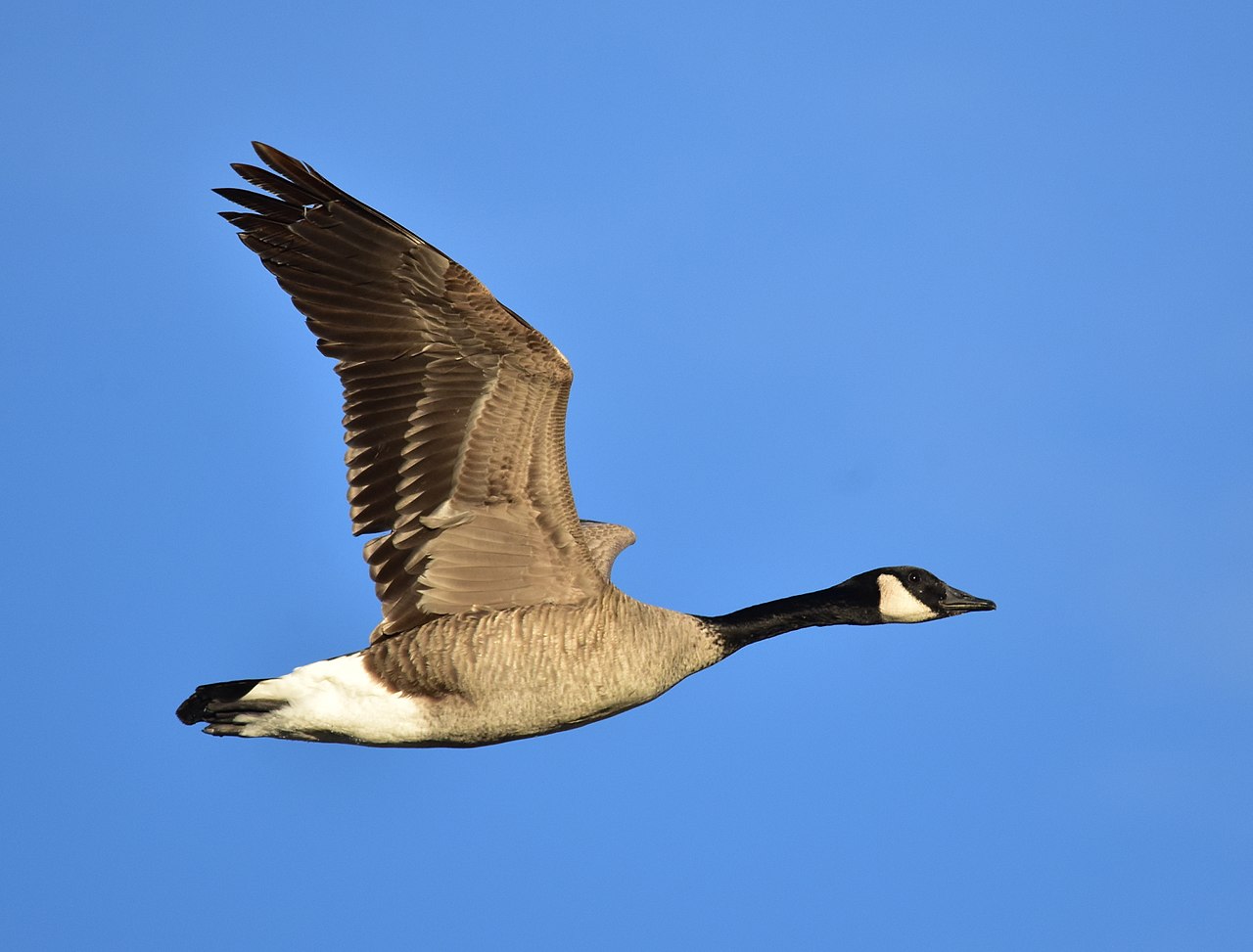
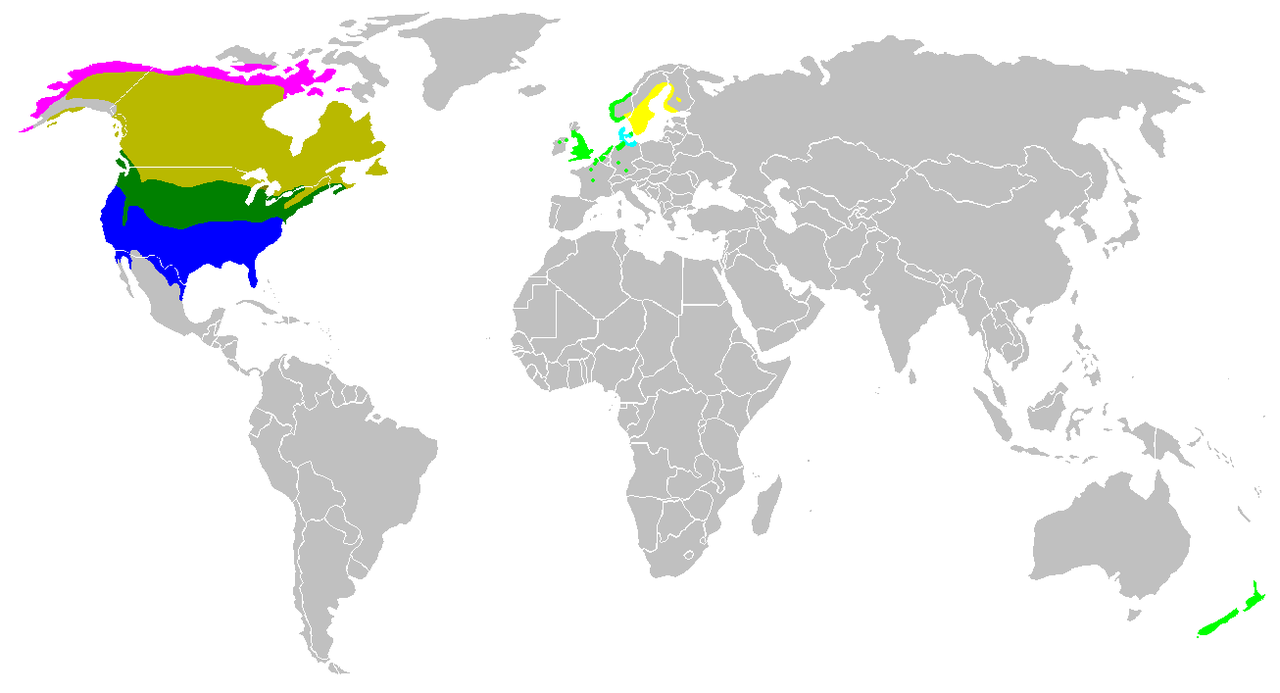
The Canada goose is a large species of goose with a black head and neck, white cheeks, white under its chin, and a brown body. It is native to the arctic and temperate regions of North America, and it is occasionally found during migration across the Atlantic in northern Europe. It has been introduced to France, the United Kingdom, Ireland, Scandinavia, New Zealand, Japan, Chile, Argentina, and the Falkland Islands. Like most geese, the Canada goose is primarily herbivorous and normally migratory; often found on or close to fresh water, the Canada goose is also common in brackish marshes, estuaries, and lagoons.
Region
North America (introduced in Europe and Australasia)
Typical Environment
Breeds widely across Canada and the northern United States, wintering farther south into the continental U.S. and northern Mexico. Introduced populations are established in the United Kingdom, much of northern and western Europe, New Zealand, and parts of East Asia. It favors freshwater lakes, ponds, rivers, and marshes, but also uses brackish estuaries and coastal lagoons. Highly adaptable, it often inhabits urban parks, golf courses, and agricultural fields where short grasses and open water are available.
Altitude Range
Sea level to 3000 m
Climate Zone
Temperate
Ease of Keeping
Beginner friendly: 2/5
Canada geese are iconic for flying in V-formations, which reduces energy use and helps with communication during long migrations. They form long-term pair bonds and are strongly defensive of nests and goslings. Urban populations have grown notably, with birds adapting to parks, golf courses, and reservoirs. Their distinctive honking calls keep flocks coordinated in flight and on the ground.


Profile view of the head

Leucistic Canada goose

Flying, New Jersey

On Spokane River, Washington state

Flock in flight

Flock swimming in Huntsville, Ontario

Canada goose in flight at Blenheim Palace, Oxfordshire

Approaching to beg for food in a Manchester park, a learned behavior

Canada Geese and their goslings, seen visiting Hartpury College campus in Gloucestershire

In New Zealand

Bathing, Oxfordshire, England

Fighting

Eating a flower at Downsview Park

Male Canada goose carefully watches nearby humans in Winnipeg.

Resting in a pond during spring migration, Ottawa, Ontario

A Canada goose in Daingerfield State Park in Austin County, Texas, United States


Canada geese instinctively nest on higher ground near water. This female is nesting on a beaver lodge.
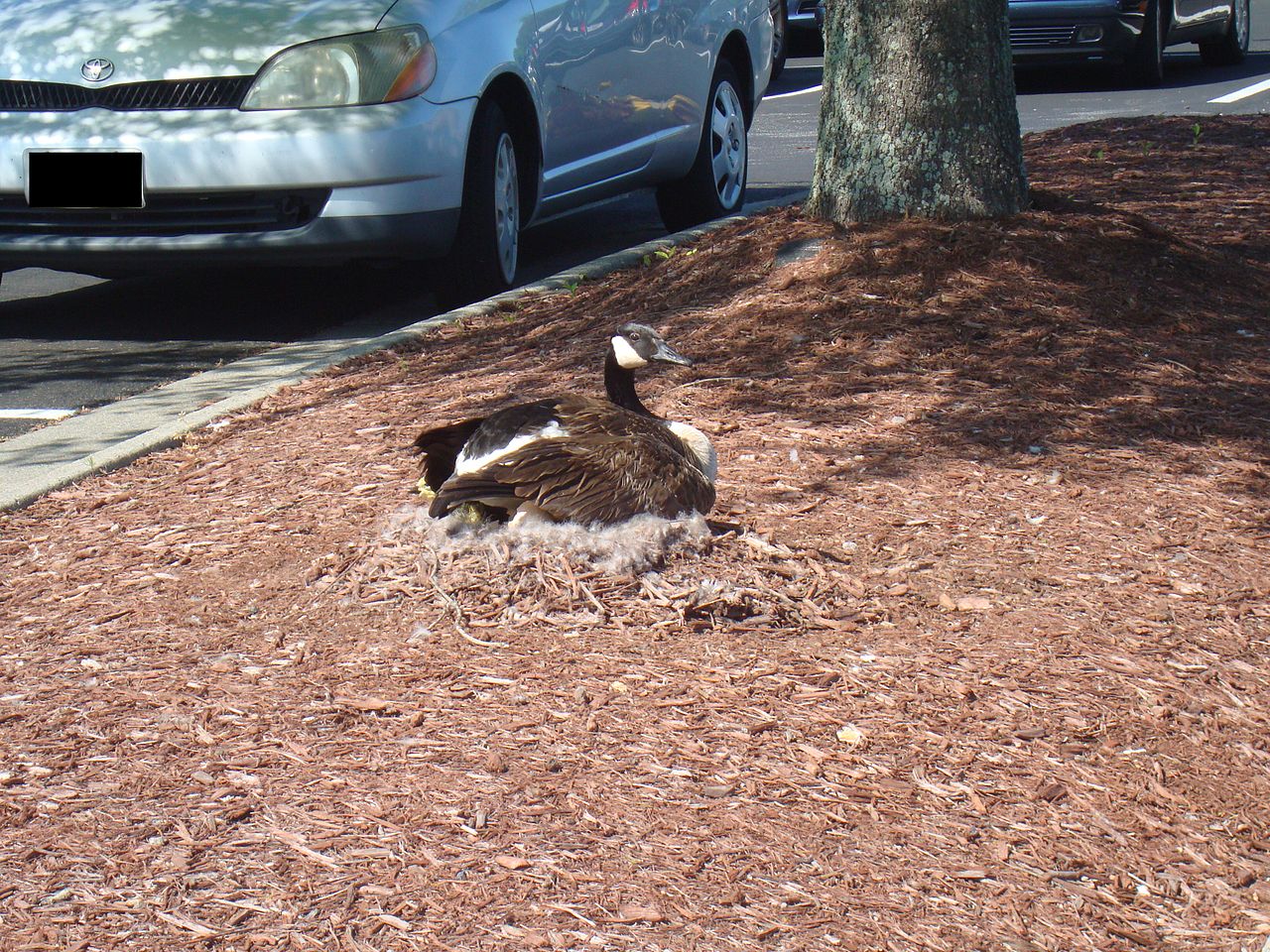
Nesting in a parking lot

Goose Hunt c. 1960

A feather from a Canada goose that was ingested into the engines of the Airbus A320 operating US Airways Flight 1549. Multiple Canada geese were ingested by the aircraft's engines, disabling the aircraft and leading to it successfully ditching in the Hudson River.
Temperament
social and vigilant, territorial when breeding
Flight Pattern
strong flier with steady wingbeats; often in V-formation
Social Behavior
Forms large flocks outside the breeding season and travels in coordinated groups. Pairs are monogamous and often remain together for life, nesting near water with both parents guarding the brood. They aggressively defend territories during nesting and lead goslings to feeding areas shortly after hatching.
Migratory Pattern
Partial migrant
Song Description
Loud, resonant honks and aahonk calls used to keep contact within flocks and coordinate movement. Also produces softer clucks and hisses at close range, especially when alarmed or defending young.
Plumage
Black head and long black neck with a crisp white cheek patch and chinstrap; brown upperparts with paler, finely barred flanks and a lighter breast; white undertail.
Diet
Primarily grazes on grasses, sedges, and aquatic vegetation; also takes seeds, grains, and agricultural crops such as corn and wheat. In urban settings it clips turf grasses and can browse ornamental plants. It occasionally consumes small invertebrates, especially by goslings, but animal matter is a minor component.
Preferred Environment
Feeds in open grassy areas near water, including meadows, park lawns, pastures, and crop fields. Also forages while dabbling in shallow wetlands and along shorelines where submerged vegetation is accessible.


