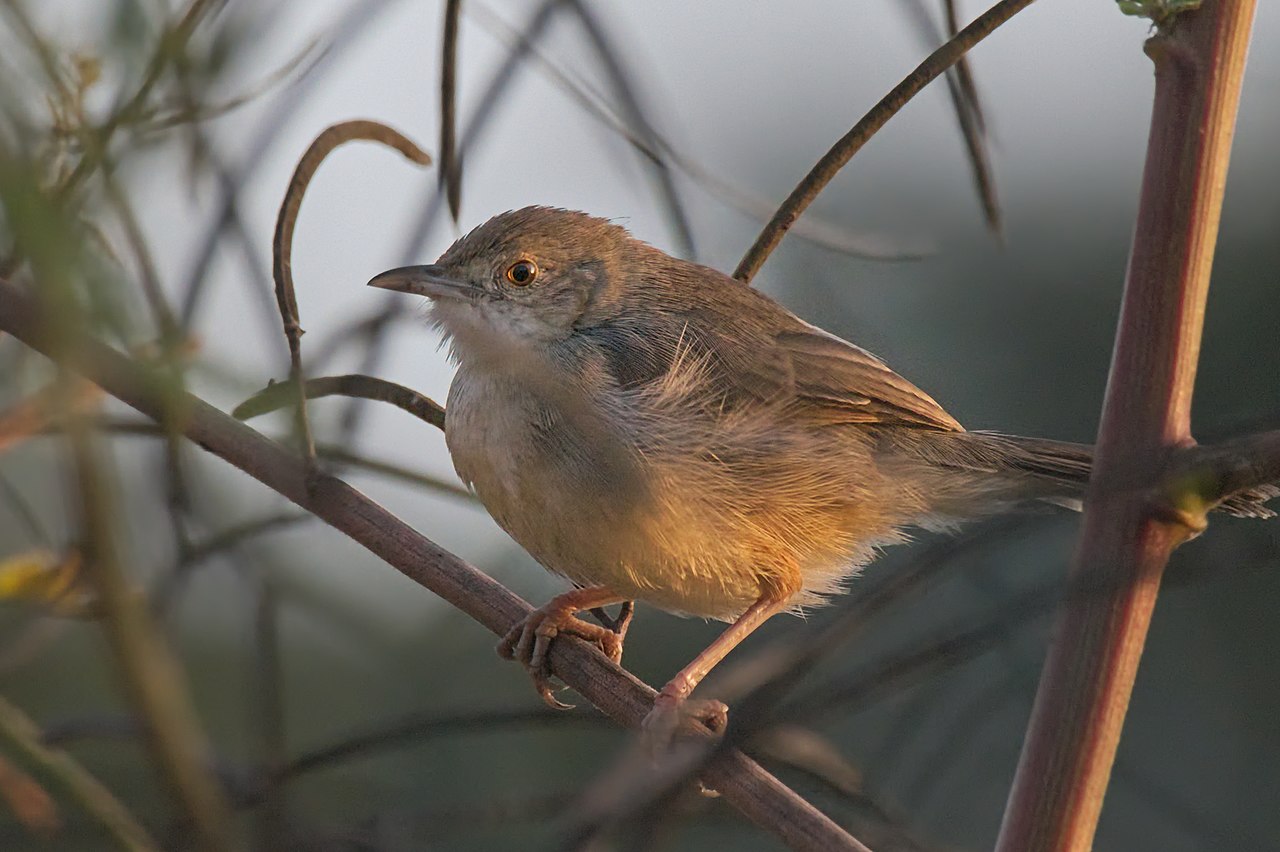
The brubru is a species of bushshrike found in most of Sub-Saharan Africa. It is the only member of the genus Nilaus.
Region
Sub-Saharan Africa
Typical Environment
Found widely from West Africa across the Sahel and savannas to East and southern Africa. It favors open woodland, thornveld, acacia savanna, and woodland edges, often in semi-arid to mesic zones. The species avoids dense closed forest but readily uses riparian strips and scattered trees in farmland and parks. It is largely sedentary within territories, with only local movements following resources.
Altitude Range
0–2200 m
Climate Zone
Tropical
Ease of Keeping
Beginner friendly: 2/5
The brubru is the sole member of the genus Nilaus, a small, boldly patterned bushshrike of sub-Saharan Africa. Its name mimics its distinctive buzzy, trilled call that often gives away its presence high in the canopy. Brubrus help control insect populations by gleaning caterpillars and beetles from foliage and bark. They are typically seen in pairs holding year-round territories.


Male N. a. massaicus
Temperament
solitary and territorial
Flight Pattern
short rapid wingbeats between perches
Social Behavior
Usually encountered singly or in pairs that defend year-round territories. Pairs build a small, neat cup nest well concealed on a branch fork using plant fibers, bark strips, and spider webs. Both sexes participate in nesting duties, and they may join mixed-species foraging parties while remaining territorial.
Migratory Pattern
Resident
Song Description
A distinctive buzzy, trilled series often rendered as a vibrating “brrr-brrru,” frequently repeated and carrying far. Calls include sharp ticks and rattles used in pair contact and territorial advertisement.
Plumage
Crisp, contrasting pattern with black upperparts, white shoulder patch and wingbar, and white underparts washed buff on the breast with rich rufous flanks and lower back. A bold black mask and crown are offset by a pale supercilium; tail is dark with white edges. Sexes are similar, with minor regional variation among subspecies.
Diet
Primarily hunts insects such as caterpillars, beetles, hemipterans, ants, and termites, and also takes spiders. It gleans prey from foliage and bark, probes into crevices, and occasionally sallies to catch flushed insects. Small quantities of berries or other soft fruits may be taken opportunistically.
Preferred Environment
Forages in the mid to upper canopy of open woodland, acacia thornveld, and along woodland edges. Frequently works from exposed perches, moving methodically through tree crowns and along branches.