

The brown falcon is a relatively large falcon native to Australia and New Guinea.
Region
Australasia
Typical Environment
Widespread across mainland Australia, Tasmania, and locally in New Guinea, favoring open country. It occupies grasslands, open woodlands, savanna, agricultural lands, heath, and the edges of wetlands. The species is common along roadsides where it uses posts and powerlines as hunting perches. It generally avoids dense forests but readily uses human-modified landscapes.
Altitude Range
Sea level to 1800 m
Climate Zone
Other
Ease of Keeping
Beginner friendly: 1/5
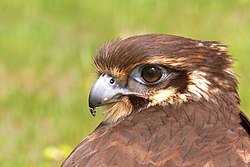
The brown falcon is a variable-plumaged raptor with morphs ranging from very dark chocolate-brown to pale cream. It often hunts by perching on poles or fence posts and swooping onto prey, rather than sustained hovering. Pairs typically use old stick nests built by other birds, and may return to the same territory year after year.


A brown falcon used for falconry in Tasmania



Temperament
solitary and territorial
Flight Pattern
soaring glider
Social Behavior
Usually seen alone or in pairs, maintaining territories especially during the breeding season. Uses old stick nests of corvids or other raptors placed high in trees or on structures. Clutch size is typically 2–4 eggs; both adults defend the nest, with the female doing most incubation.
Migratory Pattern
Partial migrant
Song Description
Vocalizations include a loud, cackling series of kek-kek notes and harsh chattering calls, especially near the nest. Also gives a drawn-out wail when alarmed or during territorial displays.
Plumage
Highly variable; upperparts usually dark brown with paler edges, underparts from heavily streaked cream to rich rufous or dark brown. Tail is barred and the underparts often show coarse streaking or blotching. The facial 'moustache' is faint compared to many falcons.
Diet
Takes small mammals, small birds, reptiles such as skinks and snakes, large insects, and occasionally carrion. Often hunts by sit-and-wait from poles, trees, or fence posts, dropping onto ground prey. Will also quarter low over open fields and seize prey on the ground, and may pirate food from other birds.
Preferred Environment
Feeds in open habitats like grasslands, pastures, croplands, and savanna, frequently along roadsides and fencelines. Utilizes perches that offer wide views, including powerlines and isolated trees.


