
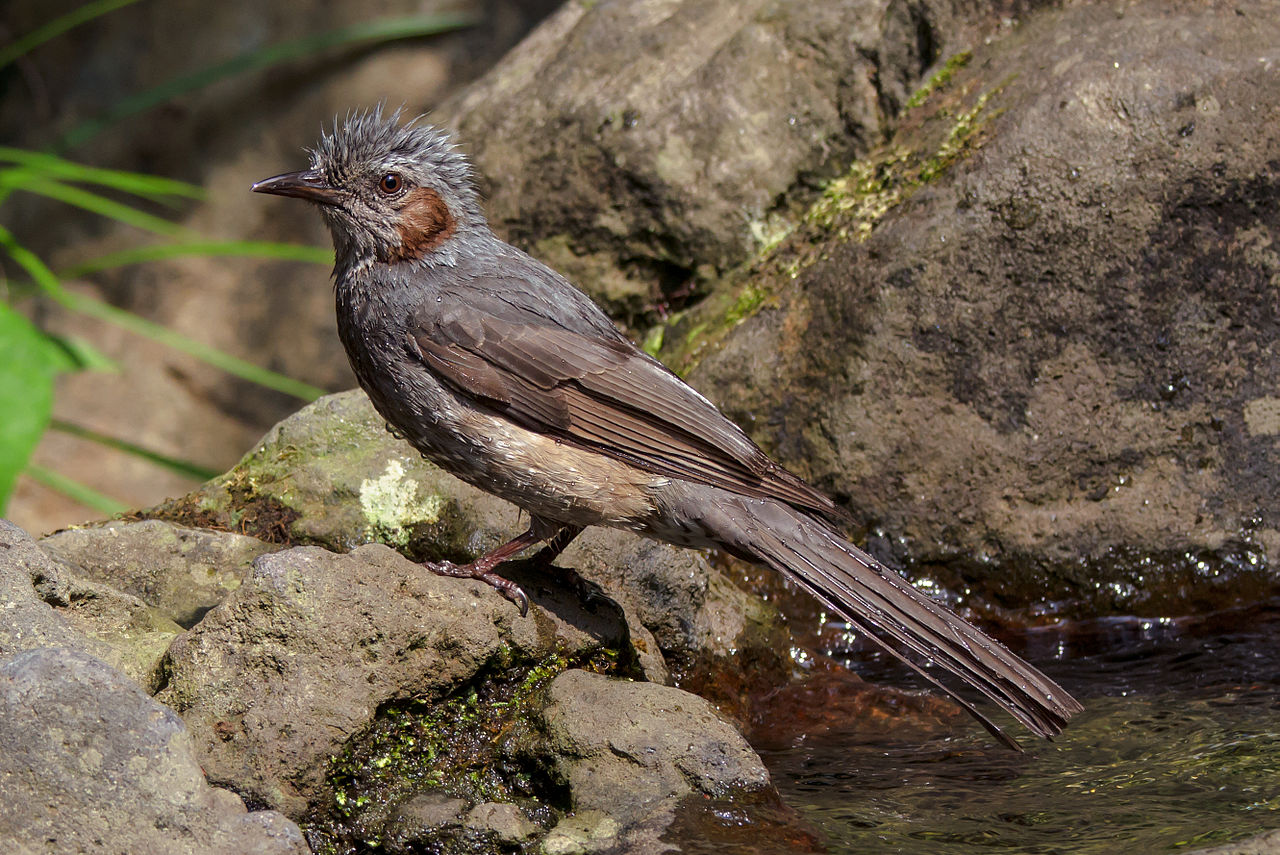
The brown-eared bulbul is a medium-sized bulbul native to eastern Asia. It is extremely common within the northern parts of its range and can be found from southern Sakhalin to the northern Philippines.
Region
East Asia
Typical Environment
Occurs from southern Sakhalin through Japan (Hokkaido to the Ryukyus) and the Korean Peninsula to eastern China, with movements extending to Taiwan and the northern Philippines. It occupies a wide variety of habitats including evergreen and deciduous forests, secondary growth, bamboo, farmland, orchards, and urban green spaces. The species readily exploits human-altered landscapes and is common in suburban parks and temple groves. It often shifts elevationally and latitudinally in winter to track fruit and milder conditions.
Altitude Range
0–2000 m
Climate Zone
Temperate
Ease of Keeping
Beginner friendly: 2/5
A loud, adaptable bulbul often seen in parks, gardens, and forest edges, it thrives in both cities and countryside. Its chestnut ear patch is a key field mark, and it frequently visits flowering trees for nectar, acting as a pollinator and seed disperser. In some areas it raids orchards and vegetable plots, which can bring it into conflict with farmers. Outside the breeding season it forms mobile flocks that track fruiting and flowering resources.


Adult, subspecies squamiceps, Kyoto (Japan)

Gumma-ken (Japan)

Feeding on cherry blossoms, Seongnam (South Korea)
Temperament
alert, noisy, and adaptable
Flight Pattern
strong, direct flight with rapid wingbeats
Social Behavior
Generally forms pairs during breeding, building a cup-shaped nest in trees or tall shrubs. Clutch size is typically 2–4 eggs, and both parents share incubation and feeding. Outside the breeding season it often gathers in loose, mobile flocks at fruiting or flowering trees.
Migratory Pattern
Partial migrant
Song Description
A loud, varied series of whistles, chatters, and harsh scolding notes that carry far. Calls are often sharp and metallic, while the song can be a jumble of phrases delivered from exposed perches.
Plumage
Overall grey-brown with fine pale scalloping on the underparts and a somewhat shaggy, slightly crested look.
Diet
Eats fruits and berries (such as persimmon, mulberries, and privet), nectar from flowers like camellia, and a variety of insects and other invertebrates. It also takes buds and young shoots, especially in early spring. By feeding on nectar and fruit, it helps pollinate plants and disperse seeds across its range.
Preferred Environment
Forages in forest canopies, hedgerows, orchards, and urban parks, often moving between flowering and fruiting trees. It will descend to shrubs and gardens and may glean insects from foliage or hawk them in short sallies.


