

The brown-capped babbler is a member of the family Pellorneidae.
Region
South Asia
Typical Environment
This species is confined to Sri Lanka, where it occupies lowland and mid-elevation forests across both wet and intermediate zones. It favors dense shrub layers, tangled undergrowth, bamboo, and lightly disturbed secondary forest. It also uses forest edges, riparian thickets, and shaded plantation understory (tea and rubber) with sufficient ground cover. The bird keeps to the lower strata, rarely venturing into open areas for long.
Altitude Range
0–1500 m
Climate Zone
Tropical
Ease of Keeping
Beginner friendly: 1/5
A secretive understory specialist endemic to Sri Lanka, the brown-capped babbler stays close to the ground, slipping through dense leaf litter and low thickets. Its clear, whistled calls are often heard before the bird is seen and are sometimes given in duets by a mated pair. By probing leaf litter for insects, it helps control forest-floor invertebrates and contributes to ecosystem health.


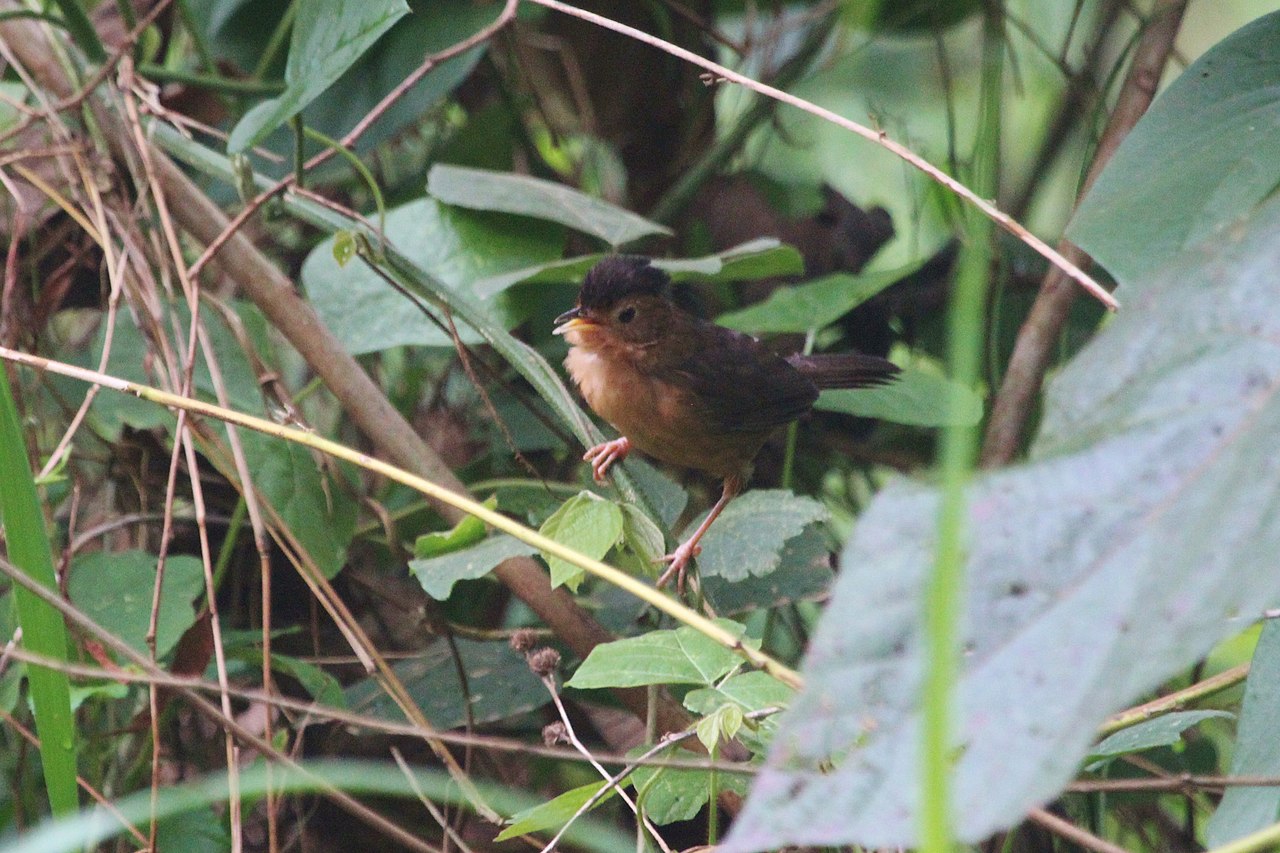
A brown-capped babbler that was found near the Kitulgala Police Station, Sri Lanka.
Temperament
solitary and territorial
Flight Pattern
short rapid wingbeats between low cover
Social Behavior
Typically found singly, in pairs, or family groups, moving silently through thick understory. Pairs maintain territories and may duet to reinforce bonds and advertise occupancy. The nest is a well-hidden dome or cup placed low in shrubs or among roots and banks; both parents care for the young.
Migratory Pattern
Resident
Song Description
A clear, whistled series of notes, often mellow and carrying through the forest. Calls are frequently given antiphonally by pairs, with phrases that rise or fall slightly and repeat at intervals.
Plumage
Warm brown upperparts with a distinctly darker brown crown, contrasting with paler buffy underparts and whitish throat. Feathers are soft and plain, aiding camouflage in leaf litter. A faint pale supercilium and slightly darker ear-coverts add subtle contrast.
Diet
Primarily feeds on insects and other small invertebrates such as beetles, ants, termites, spiders, and small snails. It forages by probing and flicking aside leaf litter and gleaning from low stems and roots. Occasionally takes small berries when available but remains largely insectivorous.
Preferred Environment
Usually feeds on or near the ground within dense shrubs, vine tangles, and bamboo clumps. Favours shaded forest floors, stream banks, and the undergrowth of plantations where leaf litter accumulates.


