

The brolga, formerly known as the native companion, is a bird in the crane family. It has also been given the name Australian crane, a term coined in 1865 by well-known ornithologist John Gould in his Birds of Australia.
Region
Australia and southern New Guinea
Typical Environment
Brolgas are widespread across northern and eastern Australia, from the tropical Top End and Cape York down through Queensland into parts of New South Wales, Victoria, and South Australia. They also occur in southern New Guinea. They favor open freshwater wetlands, floodplains, and shallow marshes, but will use seasonally flooded grasslands and agricultural fields. Nesting typically occurs on grassy mounds in shallow water or on small islets for protection from predators. Outside the breeding season they may gather in large flocks around reliable wetlands and feeding areas.
Altitude Range
Sea level to 1000 m
Climate Zone
Tropical
Ease of Keeping
Beginner friendly: 2/5
The brolga, once called the native companion, is a large Australian crane famed for its elegant courtship dances with leaps, bows, and wing displays. It is highly faithful to lifelong mates and often performs synchronized duets. Brolgas nest on mounded platforms in shallow wetlands and can live for decades, especially under managed care.


An 1865 brolga illustration from Birds of Australia by John Gould


Close up of the head

A pair of brolgas amongst other waterbirds in the Northern Territory
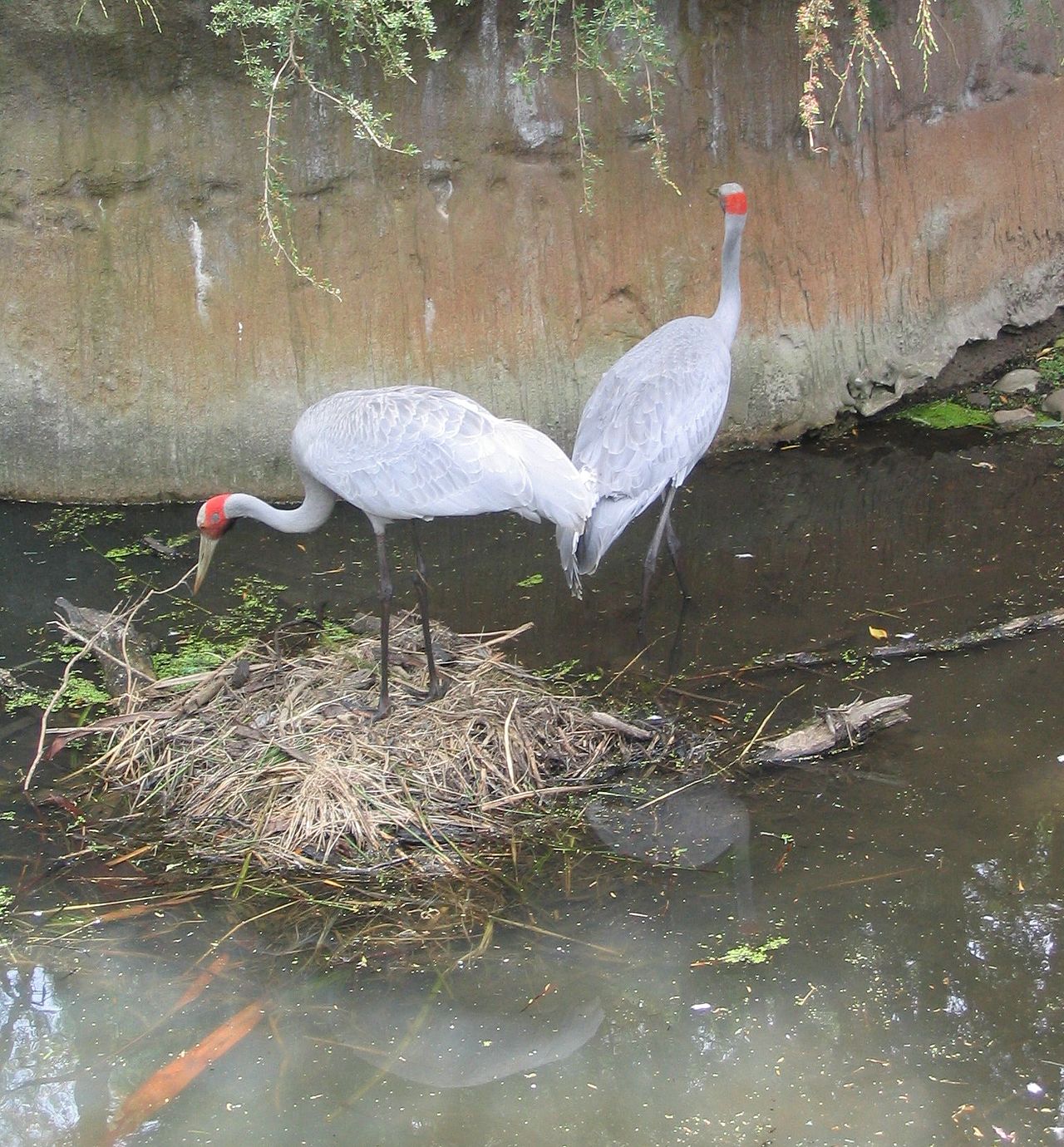
Pair at nest at Healesville Sanctuary near Melbourne

Egg of A. rubicunda

Brolgas on a corn field
Temperament
social and wary
Flight Pattern
strong flier with steady, deliberate wingbeats and soaring on thermals
Social Behavior
Brolgas form long-term monogamous pairs and perform elaborate dances that reinforce pair bonds. They nest solitarily or in loose neighborhoods, building mounded nests in shallow wetlands. Outside breeding, they form flocks that may number in the hundreds at key feeding and roosting sites.
Migratory Pattern
Partial migrant
Song Description
Their calls are loud, resonant trumpets that carry over long distances. Pairs often engage in synchronized duets, producing antiphonal, bugling sequences.
Plumage
Uniform pale grey plumage with a silvery sheen; flight feathers darker and appear blackish in flight.
Diet
They eat a varied mix of plant and animal matter, including tubers and rhizomes of sedges, seeds, grains, and bulbs. Animal prey includes insects, crustaceans, mollusks, frogs, and small reptiles. They probe soft mud with the bill and also glean from the surface or shallow water. In agricultural landscapes they will forage for spilled grain.
Preferred Environment
Feeding usually occurs in shallow wetlands, muddy margins, damp grasslands, and harvested fields. They favor areas with soft substrates where tubers are accessible and where visibility is good for detecting predators.


