

The boreal owl or Tengmalm's owl is a small owl in the "true owl" family Strigidae. It is known as the boreal owl in North America and as Tengmalm's owl in Europe after Swedish naturalist Peter Gustaf Tengmalm or, more rarely, Richardson's owl after Sir John Richardson.
Region
Northern Holarctic
Typical Environment
Found across boreal and montane conifer forests of North America and Eurasia, from Alaska and Canada through the northern U.S. mountains, and from Scandinavia across Siberia to northern Japan. It favors mature spruce, fir, and pine forests with scattered openings and abundant cavity sites. In more southerly latitudes it occurs in high-elevation spruce–fir zones. During years of prey scarcity, some individuals may irrupt southward into more temperate forests. It often occupies forest edges, riparian corridors within conifer woods, and areas with standing dead trees for nesting.
Altitude Range
Sea level to 3000 m
Climate Zone
Continental
Ease of Keeping
Beginner friendly: 1/5
Also called Tengmalm's owl in Europe, this small, nocturnal owl inhabits the boreal forests of the Northern Hemisphere. It nests in tree cavities, often those excavated by woodpeckers, and readily uses nest boxes. Its breeding success often tracks vole population cycles, leading to boom-and-bust years. The male’s clear, rhythmic hoots can carry long distances on cold spring nights.


Juvenile of Aegolius funereus
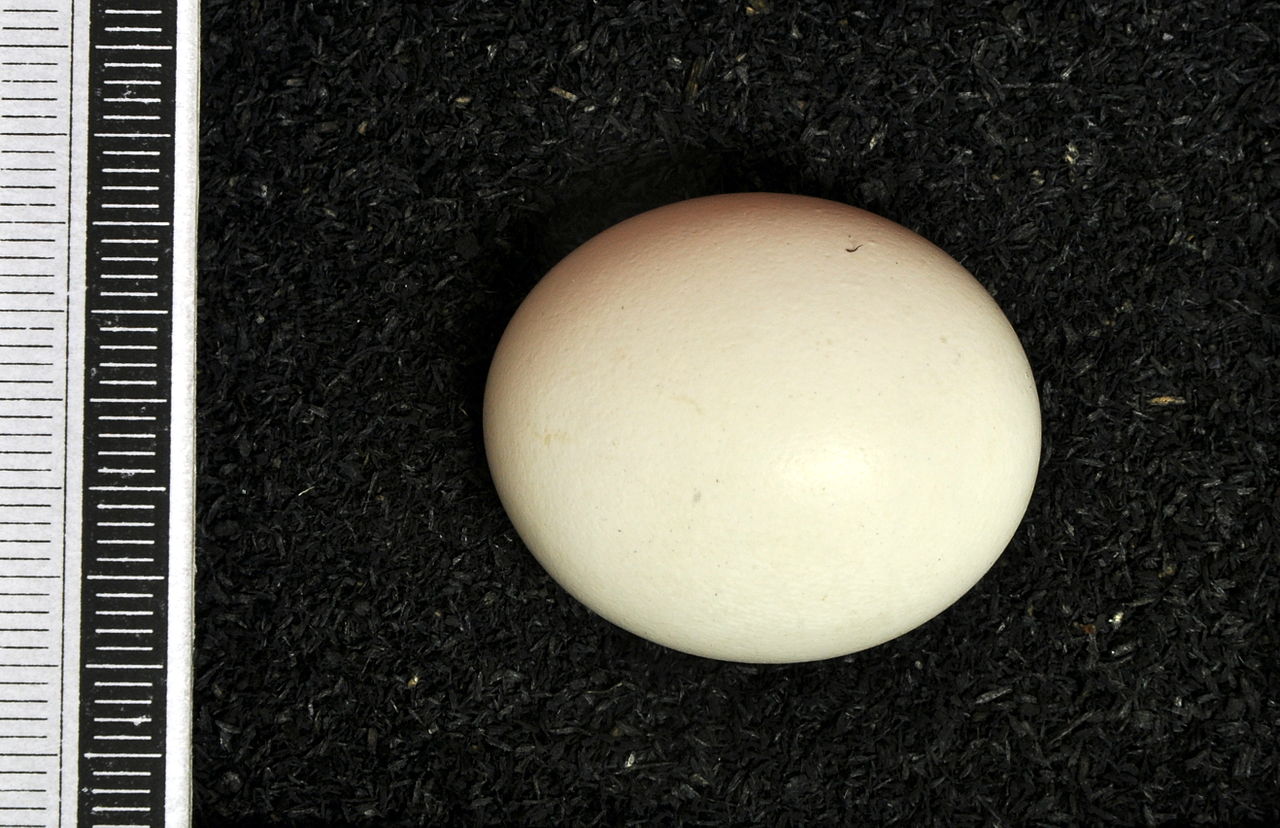
Egg, Collection Museum Wiesbaden
Temperament
solitary and territorial
Flight Pattern
silent flight with short rapid wingbeats and brief glides
Social Behavior
Typically solitary outside the breeding season; pairs form in spring. Nests in natural cavities or old woodpecker holes, and will accept nest boxes. The female incubates while the male provides food; in prey-rich years, polygyny may occur. Young fledge asynchronously and may disperse widely when vole numbers drop.
Migratory Pattern
Partial migrant
Song Description
The male gives a series of clear, evenly spaced hoots that accelerate slightly and carry far on calm nights. Contact and alarm calls include sharp squeaks and chattering notes. Vocal activity peaks at night during the breeding season.
Plumage
Mottled brown upperparts with fine white spotting on the crown and back; underparts whitish with brown streaking. Large, rounded head with a pale, square facial disc bordered by a darker rim. Short tail and densely feathered legs and toes.
Diet
Primarily hunts small mammals, especially voles, but also takes mice, shrews, and occasionally small birds and large insects. Hunts from a perch, listening intently and dropping silently onto prey detected by sound. Often caches surplus prey in cold weather near the nest or roost. Diet composition shifts with seasonal and regional prey availability.
Preferred Environment
Feeds along forest edges, clearings, and trails within dense conifer stands where sound travels well. Often hunts near openings or along riparian strips and forest gaps that concentrate small mammals.


