

The Bohemian waxwing is a starling-sized passerine bird that breeds in the northern forests of the Palearctic and North America. It has mainly buff-grey plumage, black face markings and a pointed crest. Its wings are patterned with white and bright yellow, and some of the wing feathers have red tips, the resemblance of which to sealing wax gives these birds their common name. The two or three subspecies show only minor differences in appearance. Females are similar to males, although young birds are less well-marked and have few or no waxy wingtips. Although the Bohemian waxwing's range overlaps those of the cedar and Japanese waxwings, it is easily distinguished from them by size and plumage differences.
Region
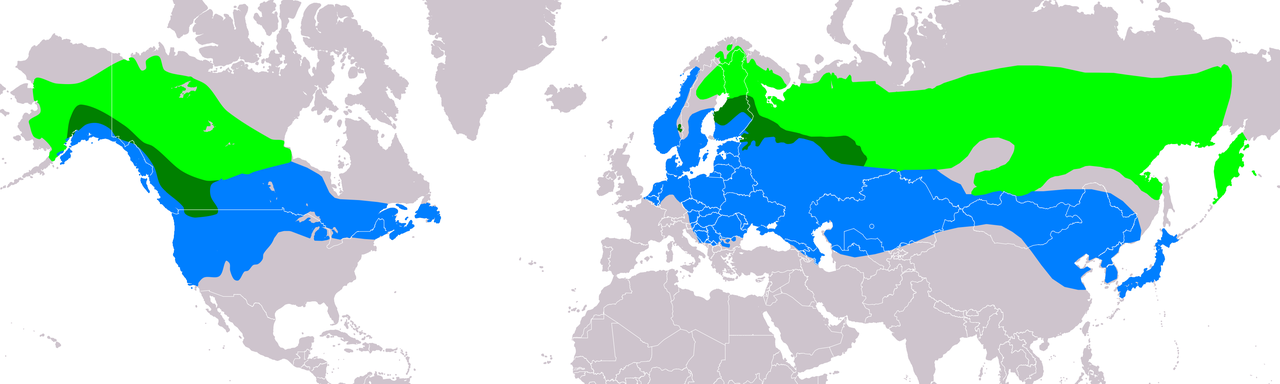
Boreal Eurasia and northern North America
Typical Environment
Breeds across the taiga from Scandinavia and northern Russia through Siberia, and in Alaska and western to central Canada. In winter it irrupts south into temperate Europe, East Asia, and the northern United States when fruit is abundant. Typical habitats include coniferous and mixed boreal forests, forest edges, willow thickets, and bog margins. In winter it readily uses towns, parks, orchards, and gardens with fruiting trees and shrubs.
Altitude Range
Sea level to 1500 m
Climate Zone
Continental
Ease of Keeping
Beginner friendly: 1/5
Named for the waxy red tips on the wing feathers, which resemble sealing wax, the Bohemian waxwing is famous for irruptive winter movements driven by berry crops. Flocks can number in the hundreds as they roam widely in search of fruit. They sometimes consume fermented berries and may appear briefly intoxicated. Their sleek crest and soft, silky plumage make them unmistakable among winter visitors.


B. g. pallidiceps in Ontario, Canada

B. g. pallidiceps female in Saskatchewan Canada.

The distinctive red wing tips


Northern coniferous forest breeding habitat.

A winter flock in Poland

Female on nest

Nest and eggs
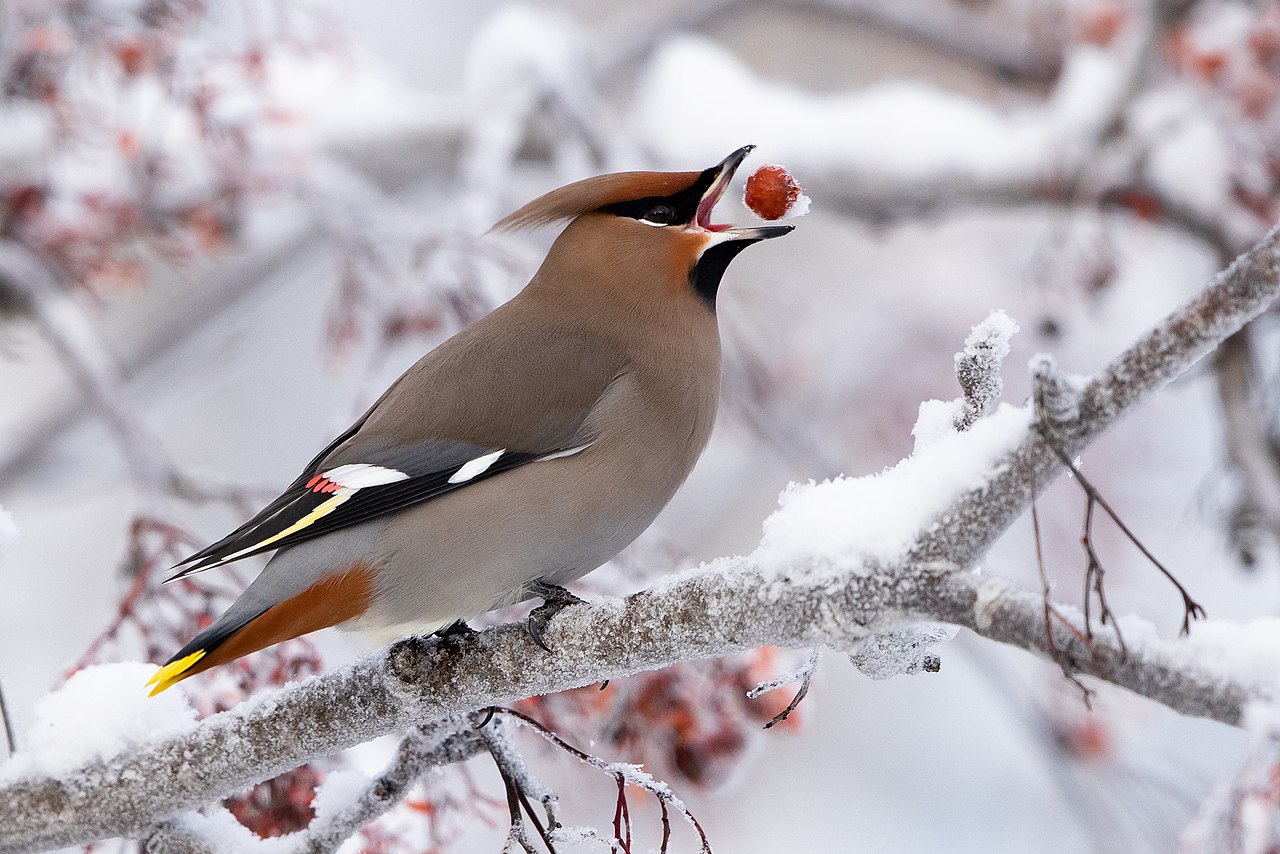
Eating a berry, Kenai National Wildlife Refuge, Alaska

The Eurasian sparrowhawk hunts Bohemian waxwings.


Temperament
social and nomadic
Flight Pattern
strong, direct flight with shallow undulations
Social Behavior
Highly gregarious outside the breeding season, forming large roaming flocks that track berry supplies. Courtship often involves passing berries between mates. Nests are usually placed high in conifers; both sexes share parental duties.
Migratory Pattern
Partial migrant
Song Description
Calls are high, thin, ringing trills and sibilant buzzy notes, often given in chorus by flocks. The song is simple and subdued compared to many passerines, with a shimmering, bell-like quality.
Plumage
Silky buff-gray with a prominent pointed crest, black mask and throat, white and yellow wing patterning, and rufous undertail coverts; some secondaries bear red, wax-like tips.
Diet
Primarily consumes fruit, especially rowan/mountain ash, juniper, crabapple, and hawthorn berries, which it swallows whole and later passes the seeds. In the breeding season it supplements with insects, including flies and beetles, caught by sallying or gleaning. It may feed intensively at a single tree until depleted, then move on in nomadic fashion.
Preferred Environment
Feeds in fruiting trees and shrubs along forest edges, riverine thickets, parks, and urban plantings. In summer it forages in boreal woodlands and boggy areas; in winter it readily visits towns and gardens with abundant berries.


