
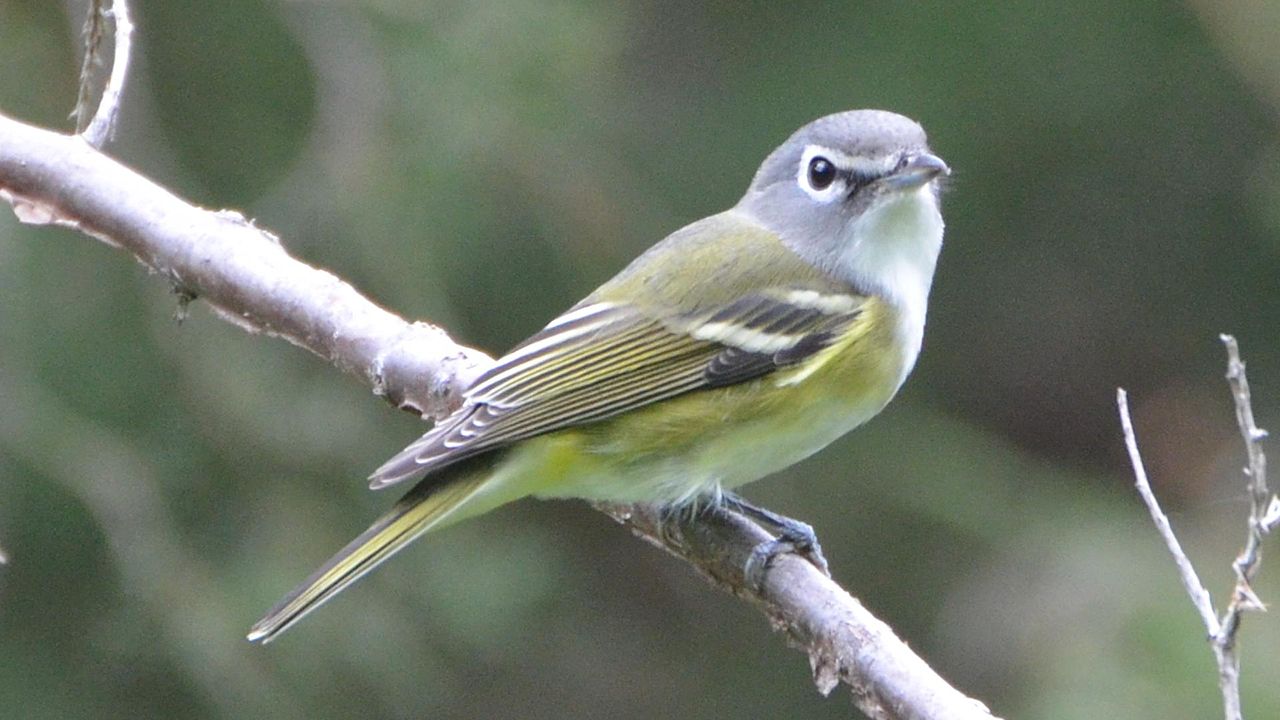
The blue-headed vireo is a migrating song bird found in North and Central America. There are currently two recognized subspecies that belong to the blue-headed vireo. It has a range that extends across Canada and the eastern coast of the United-States, Mexico and some of Central America. It prefers large temperate forests with a mix of evergreen trees and deciduous under growth.
Region
Eastern North America
Typical Environment
Breeds across southern Canada and the northeastern to upper midwestern United States, south through the Appalachian highlands. Winters in the southeastern United States, eastern Mexico, and parts of northern Central America. Prefers mature mixed coniferous–deciduous forests, including hemlock–hardwood and spruce–fir stands. Common along forest edges, riparian corridors, and in older secondary growth with a well-developed canopy.
Altitude Range
Sea level to 2000 m
Climate Zone
Temperate
Ease of Keeping
Beginner friendly: 1/5
The blue-headed vireo was once lumped with Cassin’s and Plumbeous vireos as the “Solitary Vireo,” but is now recognized as a distinct species with two subspecies. Its bold white “spectacles” and bluish-gray head make it one of the easiest vireos to identify. It weaves a deep, hanging cup nest suspended from a forked branch, and both sexes share incubation duties. In migration and winter it supplements its insect diet with berries, which helps it conserve energy.


Blue-headed vireo

Blue-headed vireo
Temperament
methodical and moderately territorial
Flight Pattern
short rapid wingbeats with bouncy, direct flights
Social Behavior
Typically seen singly or in pairs on territory during the breeding season. Monogamous pairs build a deep, hanging cup nest slung in a forked twig, and both sexes incubate and feed young. Outside breeding, it often joins mixed-species foraging flocks during migration and on wintering grounds.
Migratory Pattern
Seasonal migrant
Song Description
A series of clear, sweet, well-spaced phrases delivered at a measured pace, often sounding like short questions and answers. Calls include scolds and soft chatter given while foraging.
Plumage
Olive-green back with bluish-gray head and crisp white underparts washed yellow on the flanks; two bold white wing bars; clean white throat and spectacles.
Diet
Primarily consumes caterpillars, beetles, spiders, and other arthropods gleaned from foliage and twigs. Will hover-glean and occasionally sally short distances to snatch prey. In fall and winter it adds small fruits and berries such as dogwood and viburnum, providing essential sugars. This seasonal omnivory helps it maintain energy during migration and on wintering grounds.
Preferred Environment
Forages deliberately in the mid to upper canopy of mature mixed forests and along shaded edges. In winter, also uses second growth, wooded thickets, and semi-open forests.


