

The blue-footed booby is a marine bird native to subtropical and tropical regions of the eastern Pacific Ocean. It is one of six species of the genus Sula – known as boobies. It is easily recognizable by its distinctive bright blue feet, which is a sexually selected trait and a product of their diet. Males display their feet in an elaborate mating ritual by lifting them up and down while strutting before the female. The female is slightly larger than the male and can measure up to 90 cm (35 in) long with a wingspan up to 1.5 m (5 ft).
Region
Eastern Pacific Ocean
Typical Environment
Occurs along the tropical and subtropical eastern Pacific from the Gulf of California and Mexican coasts south to Peru, with major breeding colonies in the Galápagos and islands off Ecuador. Prefers offshore waters near productive upwelling zones but nests on arid coastal islands, cliffs, and flat rocky or sandy ground. Roosts on shorelines and island headlands and forages over continental shelf waters as well as farther offshore. Colonies are typically on predator-poor islands with open ground suitable for spacing nests.
Altitude Range
Sea level to 100 m
Climate Zone
Tropical
Ease of Keeping
Beginner friendly: 1/5
Blue-footed boobies are renowned for their vivid blue feet, a sexually selected signal of health that intensifies with a fish-rich diet. Their courtship includes an exaggerated foot-lifting dance and sky-pointing displays. Unlike many birds, they incubate eggs with their warm feet rather than a brood patch. They are expert plunge-divers and often hunt cooperatively, sometimes alongside other seabirds or dolphins.


On the Galápagos Islands


Clearly showing the white underparts unlike the dark brown wings and the blue legs

Neck and head of a blue-footed booby showing distinctive coloring and beak

Sula nebouxii - MHNT

Male (left) has a smaller pupil and slightly lighter feet and is smaller in size than the female

Showcasing different feet shades
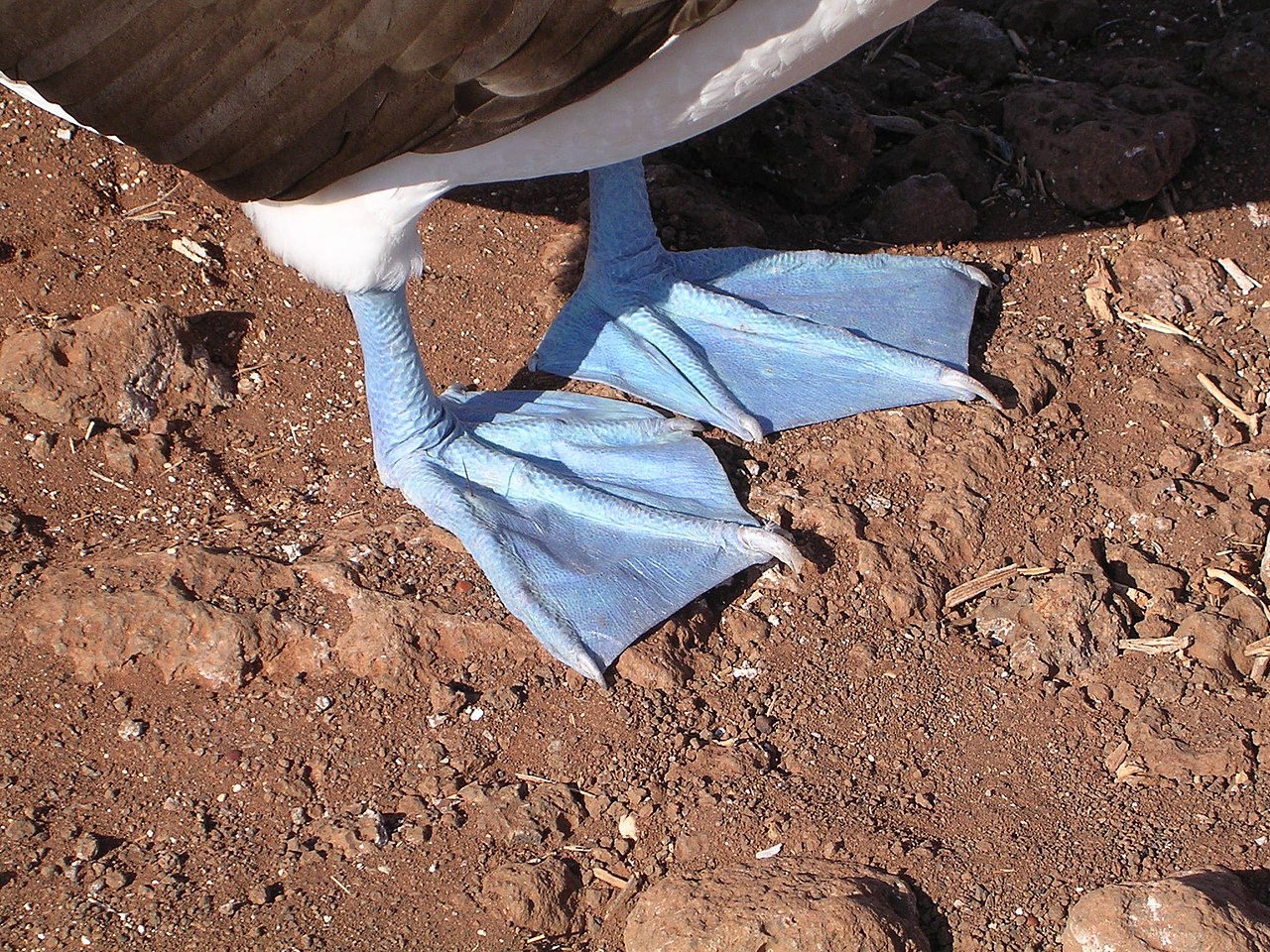
Detail of leg and feet

Feeding of a juvenile

Sequence showing plunge-diving from beginning to end

Blue-footed boobies fishing in a large group


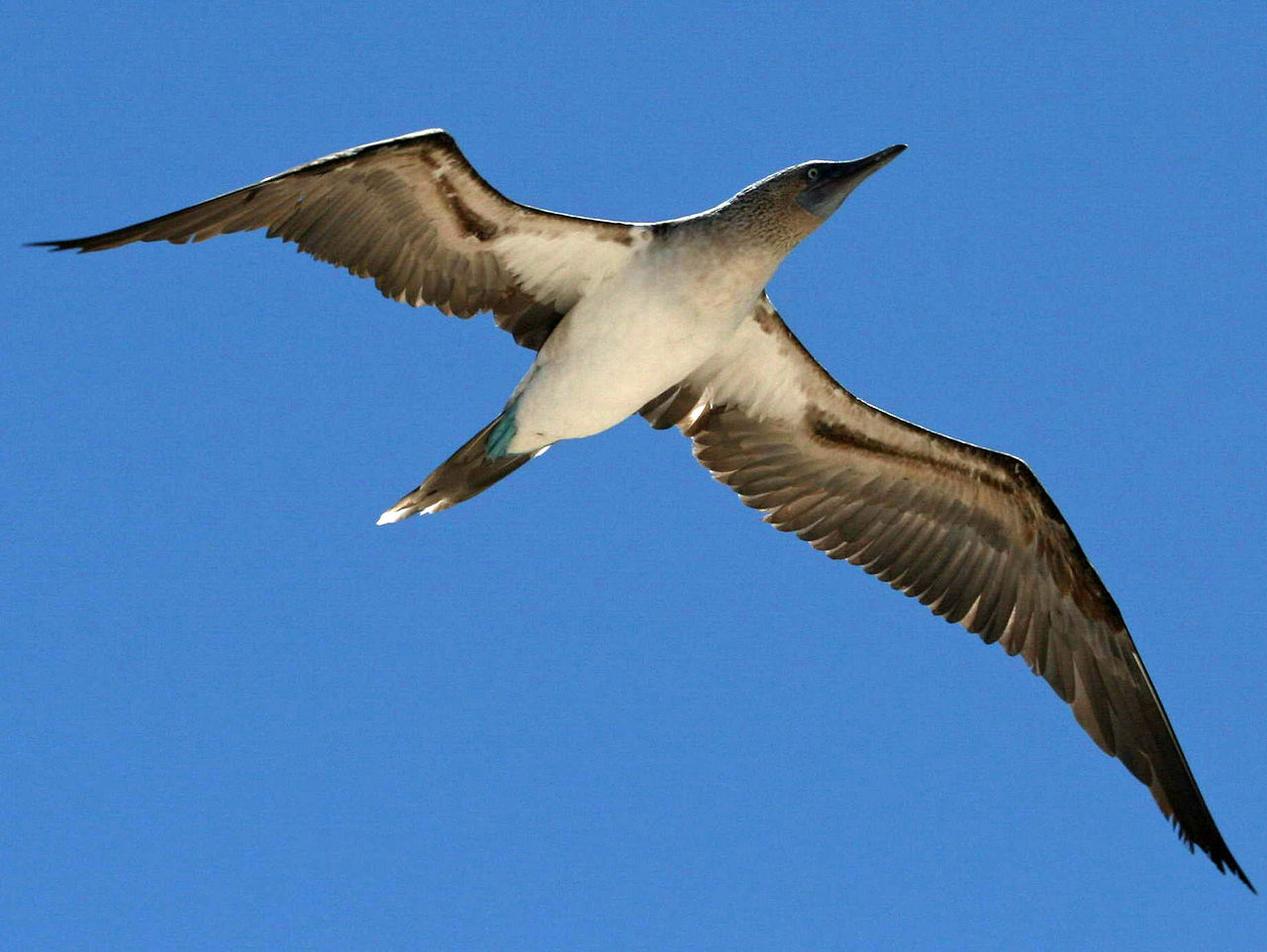
In flight
Temperament
social and active
Flight Pattern
strong flier with rapid wingbeats and glide; dramatic high-angle plunge-diver
Social Behavior
Highly colonial nesters, spacing nests on open ground and defending small territories. Courtship features foot-lifting, sky-pointing, and gifting of nest material. Lays 1–3 eggs with asynchronous hatching; both parents incubate using their feet and share chick-rearing duties. Sibling rivalry and occasional siblicide can occur when food is scarce.
Migratory Pattern
Resident
Song Description
Vocalizations differ by sex: males give high-pitched whistles and trills, while females produce lower, honking calls. Calls intensify during courtship and territory defense and are used to coordinate parental care.
Plumage
Brown to chocolate-brown upperparts with white underparts; head and neck often streaked or mottled brown and white. Long, pointed wings and a tapered tail; sleek, water-resistant plumage suited to plunge diving.
Diet
Feeds mainly on small schooling fish such as sardines, anchovies, and mackerel, and occasionally squid. Hunts by plunging from heights, folding wings to hit the water at speed and pursuing prey underwater. Often forages in groups and may associate with predatory fish or marine mammals that drive prey to the surface. Can dive to considerable depths and adjusts tactics based on prey availability.
Preferred Environment
Forages over productive coastal and offshore waters, especially near upwelling zones and around breeding islands. Frequently feeds along current lines, schooling fish aggregations, and near the continental shelf edge.


