

The blue-banded pitta is a species of bird in the family Pittidae. It is endemic to the island of Borneo, where it is found in all three countries that share the island: Malaysia, Brunei and Indonesia. Its natural habitat is subtropical or tropical moist lowland forest.
Region
Borneo
Typical Environment
Occurs throughout the island of Borneo across Malaysia (Sabah, Sarawak), Brunei, and Indonesia (Kalimantan). It favors primary and older secondary lowland evergreen dipterocarp forest, and also uses peat-swamp and heath (kerangas) forest where understory is dense. Most records are from shaded ravines, stream edges, and thickets with deep leaf litter. It keeps close to the forest floor, moving between tangles of roots and fallen logs and avoiding open areas.
Altitude Range
0–1200 m
Climate Zone
Tropical
Ease of Keeping
Beginner friendly: 1/5
A shy, ground-dwelling pitta, it is far more often heard than seen, giving a clear, mournful whistle from dense undergrowth. It was formerly placed in the broad genus Pitta but is now in Erythropitta based on plumage and genetic evidence. It forages by flipping leaf litter and probing soft soil with its sturdy bill. Habitat loss in lowland Borneo affects its availability, though it persists in some selectively logged forests.

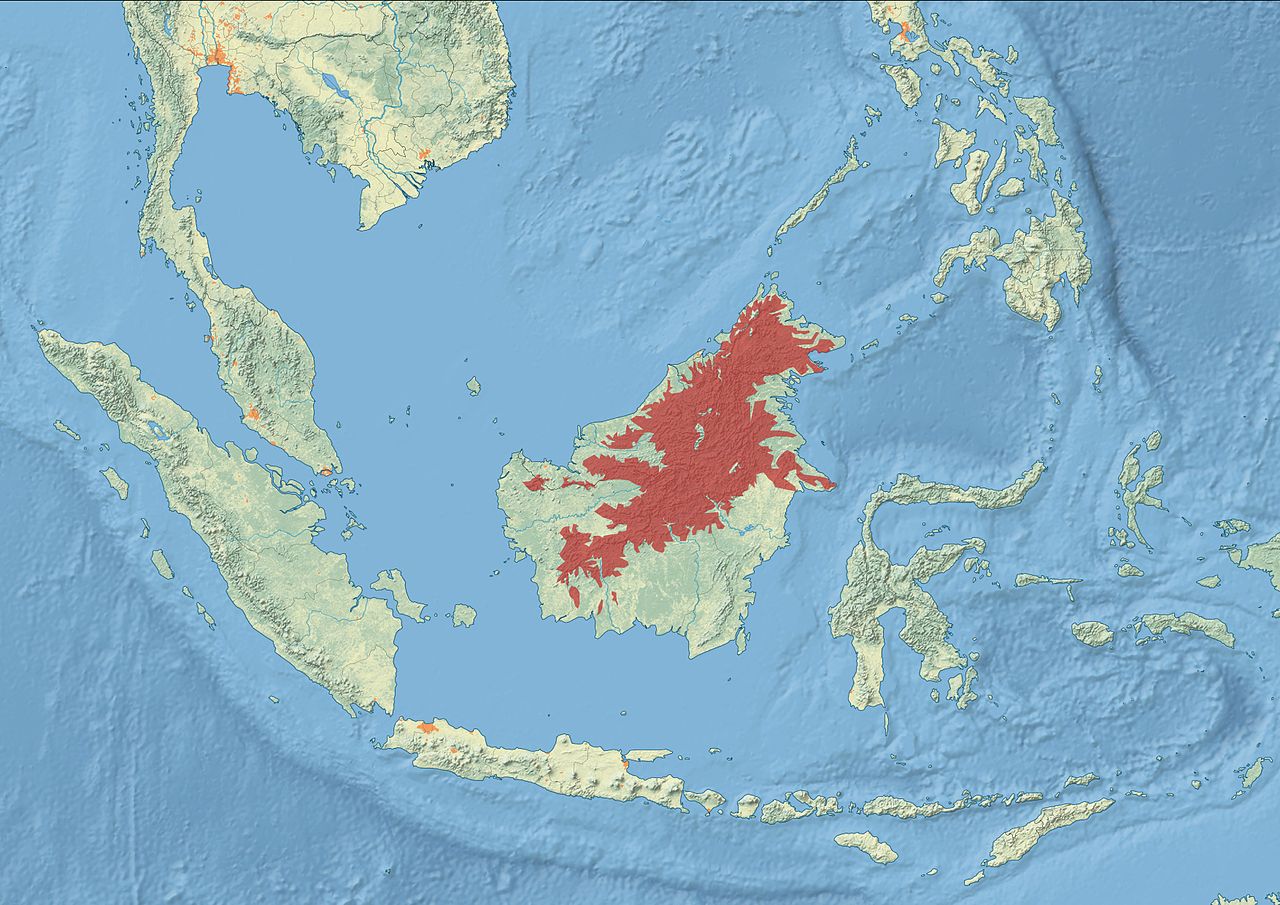

Illustration by Gould & Richter
Temperament
solitary and territorial
Flight Pattern
short rapid wingbeats, low to the ground
Social Behavior
Typically encountered singly or in pairs, maintaining territories within dense understory. Nesting is low, often a domed or cup-like structure placed on a bank, root mass, or sapling clump. Pairs are monogamous during the breeding season and defend nest sites vigorously. They spend much of the day quietly foraging on or just above the forest floor.
Migratory Pattern
Resident
Song Description
Song is a clear, ringing, mournful whistle given at intervals, often from a concealed perch. Calls include soft notes and a series of spaced, rising whistles that carry through dense forest.
Plumage
Male shows rich crimson underparts with a narrow electric-blue band across the lower breast, a dark head and mantle, and cleaner, darker upperparts; female is duller brown above with warmer, more mottled underparts and a less vivid blue band.
Diet
Feeds mainly on invertebrates such as ants, beetles, crickets, caterpillars, spiders, and earthworms. It occasionally takes small snails and other soft-bodied prey. Foraging involves hopping, pausing to listen, then probing and flicking aside leaf litter with strong bill and feet. Prey is swallowed whole or beaten against a perch or root before consumption.
Preferred Environment
Forages on shaded forest floors with deep leaf litter, near fallen logs, root tangles, and stream margins. Prefers dense understory in primary or older secondary lowland forest and avoids open, heavily disturbed areas.


