
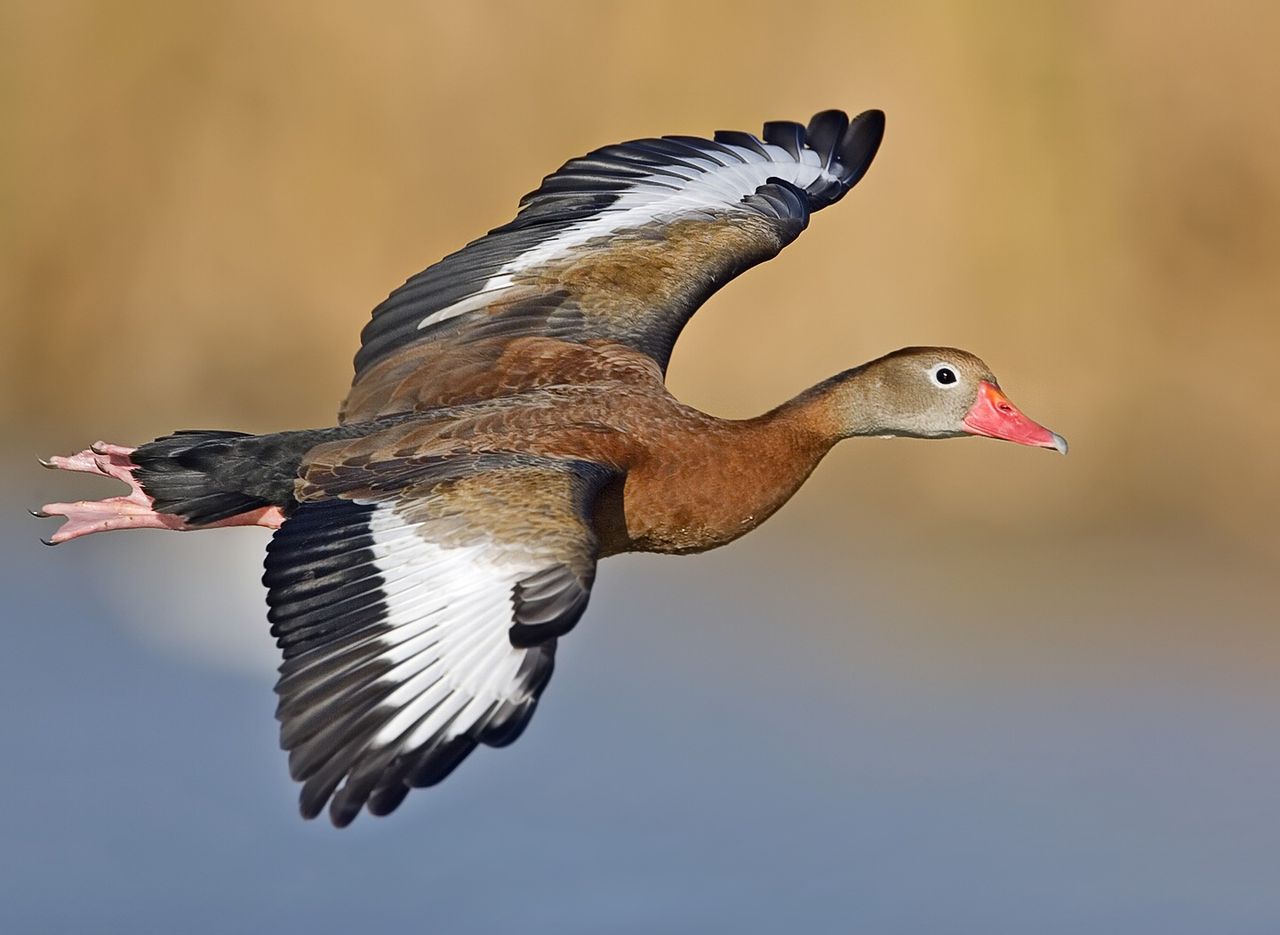
The black-bellied whistling duck, formerly called the black-bellied tree duck, is a whistling duck that before 2000 bred mainly in the southernmost United States, Mexico, and tropical Central to south-central South America. It can be found year-round in much of the United States. It has been recorded in every eastern state and adjacent Canadian province. Since it is one of only two whistling duck species native to North America, it is occasionally just known as the "whistling duck" or "Mexican squealer" in the southern USA.
Region
Americas
Typical Environment
Occurs from the southern United States through Mexico and Central America into northern and south-central South America. It frequents freshwater wetlands, shallow lakes, marshes, reservoirs, and slow-moving rivers. The species readily uses agricultural landscapes such as rice fields and flooded pastures. It perches and roosts in trees near water and adapts well to suburban parks and golf-course ponds.
Altitude Range
Sea level to 1500 m
Climate Zone
Subtropical
Ease of Keeping
Beginner friendly: 2/5
A long-legged, tree-perching duck known for its loud, musical whistles, it often gathers in conspicuous flocks on ponds and agricultural fields. Pairs tend to form strong, long-term bonds and readily use nest boxes. The species has expanded northward in the United States in recent decades. Its bold white wing stripe is striking in flight and helps with quick identification.


A black-bellied whistling duck in the water


Temperament
social and active
Flight Pattern
strong flier with steady wingbeats
Social Behavior
Often forms large, noisy flocks outside the breeding season. Pairs are largely monogamous and may remain together across seasons. Nests are typically in tree cavities or nest boxes, occasionally on the ground near water. Egg-dumping (multiple females laying in one nest) is not uncommon.
Migratory Pattern
Partial migrant
Song Description
Vocal and expressive, giving clear, whistled notes and repeated pe-chee or squeee calls. Flocks are often detected by sound before being seen. Calls carry well over open water and fields.
Plumage
Rich chestnut body with a contrasting black belly, gray face and neck, and a bold white wing patch visible at rest and in flight.
Diet
Primarily consumes seeds and grains, including grasses and agricultural crops like rice and corn. Also takes aquatic vegetation and seeds of sedges and smartweeds. Will supplement with aquatic invertebrates and small snails, especially during breeding and molt. Forages by dabbling, tipping-up, and grazing on land.
Preferred Environment
Feeds in shallow wetlands, flooded fields, rice paddies, and pond margins. Also grazes in damp pastures and along reservoir edges. Often forages in groups where food is abundant.


