

The bee hummingbird, zunzuncito or Helena hummingbird is a species of hummingbird, native to the island of Cuba in the Caribbean. It is the smallest known bird. The bee hummingbird feeds on nectar of flowers and bugs found in Cuba.
Region
Caribbean
Typical Environment
Occurs primarily on the main island of Cuba and the nearby Isla de la Juventud. It favors forest edges, secondary growth, coastal scrub, and mogote (karst) habitats with abundant flowering plants. The species also uses gardens, plantations, and hedgerows when nectar sources are available. Nesting typically happens in sheltered shrubs or low branches near reliable nectar plants.
Altitude Range
Sea level to 700 m
Climate Zone
Tropical
Ease of Keeping
Beginner friendly: 1/5
The bee hummingbird is the smallest living bird, native only to Cuba and the Isla de la Juventud. It beats its wings at extraordinary speeds and has a humming, insect-like flight. By visiting hundreds of flowers daily, it is an important pollinator in its habitats. Females build thimble-sized nests bound with spider silk.


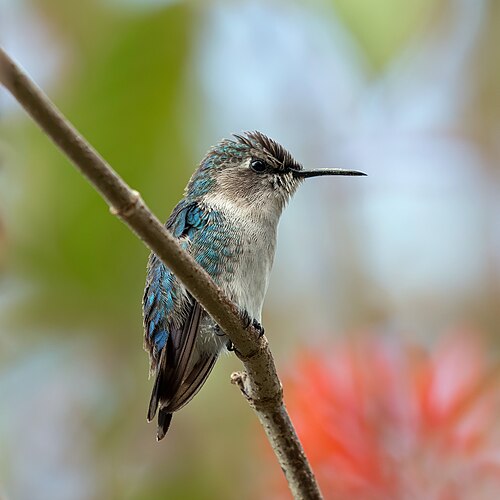

Bee hummingbird feeding on Hamelia patens


Side view of the nest
Temperament
solitary and territorial
Flight Pattern
hovering with very rapid wingbeats; swift, darting movements
Social Behavior
Males defend rich nectar patches aggressively during the breeding season and do not assist with nesting. Females build a tiny cup nest from plant down and spider silk and rear the young alone, typically two eggs. Courtship involves aerial displays and rapid, buzzing flights.
Migratory Pattern
Resident
Song Description
Vocalizations are thin, high-pitched tsip or tsee notes, often delivered while foraging. The whirring hum of the wings is conspicuous and insect-like, especially during display flights.
Plumage
Male in breeding plumage shows glittering iridescent pink-red head and throat with metallic blue-green upperparts and pale underparts; female is green above and whitish below with darker tail and white tips.
Diet
Primarily feeds on nectar from a variety of tubular and small flowers, using a long, extendable tongue. Also consumes small insects and spiders for protein, especially during breeding. It plays a key role in pollination, transferring pollen between flowers as it hovers and feeds.
Preferred Environment
Forages along forest edges, coastal thickets, gardens, and plantations where flowering shrubs and trees are abundant. Often selects territories with a continuous succession of blooms and perches for short rests between feeding bouts.


