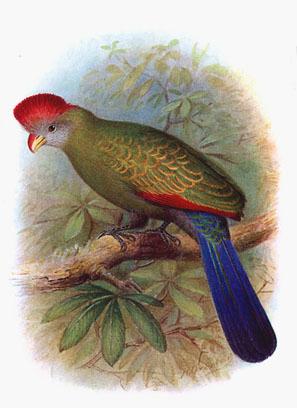
The Banggai golden bulbul is a species of passerine bird in the bulbul family Pycnonotidae. It is endemic to Banggai Island in Indonesia. Its natural habitat is subtropical or tropical moist lowland forests.
Region
Banggai Islands, Wallacea
Typical Environment
This species is confined to Banggai Island and nearby islets, occupying primary and well-developed secondary lowland forest. It frequents forest edges, riverine strips, and fruiting trees in semi-open areas, and may enter gardens adjacent to forest. It typically forages from the lower canopy to mid-story, occasionally descending to the understory where fruit is abundant. It relies on structurally complex habitats that provide both fruiting plants and insect prey.
Altitude Range
Sea level to 800 m
Climate Zone
Tropical
Ease of Keeping
Beginner friendly: 2/5
The Banggai golden bulbul was formerly grouped within a wider 'golden bulbul' complex but is now treated as a distinct island endemic. It inhabits lowland forests and often visits edges and secondary growth to feed on fruiting trees. Its very restricted range makes it sensitive to habitat loss and forest degradation.
Temperament
active and moderately territorial
Flight Pattern
short rapid wingbeats with brief undulations
Social Behavior
Usually seen singly or in pairs, sometimes in small family groups, and may join mixed-species flocks when fruiting trees are active. Pairs maintain small territories during breeding, building a neat cup nest in shrubs or small trees. Both sexes likely share in nest care typical of bulbuls.
Migratory Pattern
Resident
Song Description
Song is a series of clear, fluty whistles interspersed with mellow notes, delivered from mid-canopy perches. Calls include sharp chacks and soft chattering contact notes, becoming more frequent near fruit sources.
Plumage
Bright golden-yellow underparts with more olive-yellow upperparts; wings and tail slightly duskier with olive-brown tones. Plumage appears sleek with a subtle gloss in good light and lacks a crest. Lores can be dusky, giving a faint mask, and the vent area is often paler yellow.
Diet
Primarily consumes small fruits and berries, including figs and other soft, pulpy fruits. Supplements diet with insects, spiders, and other small invertebrates gleaned from foliage and bark. Occasionally takes nectar or sips from flowers, especially when fruit is scarce.
Preferred Environment
Feeds in the mid-story and lower canopy, often at fruiting trees along forest edges and in secondary growth. Will use semi-open habitats adjacent to intact forest, but prefers areas with continuous cover and diverse fruiting plants.